Blog

  • Discover The Top Currency Pairs To Trade In 2026

    Discover The Top Currency Pairs To Trade In 2026

    In our every day life, we always try to make the right choice. This is especially valid when we invest our capital. The forex trading landscape presents numerous opportunities for traders aiming to take advantage of the variances in currency exchange rates. Recognizing which currency pairs to focus on is essential for both beginner and experienced traders. This article explores the best currency pairs to trade, highlighting important features, strategies, and optimal timings that can improve success in the forex market. Also, we will take a look how the algorithmic trading relays to trading the best currency pairs.

    Quick Reference: Top Currency Pairs at a Glance

    Currency PairAvg Daily RangeTypical SpreadVolatility LevelBest ForMarket Share
    EUR/USD80-100 pips0.0-0.2 pipsLow-MediumScalping, Day Trading24.0%
    USD/JPY50-70 pips0.1-0.5 pipsLowSwing Trading, Algo Trading13.2%
    GBP/USD100-150 pips0.5-1.5 pipsHighDay Trading, Momentum9.6%
    AUD/USD60-80 pips0.4-0.8 pipsMediumCommodity Trading5.4%
    USD/CAD70-90 pips0.5-1.0 pipsMediumOil Trading Correlation4.4%
    USD/CNH60-100 pips1.0-2.0 pipsMedium-HighAsian Session Trading4.1%
    USD/CHF60-80 pips0.3-0.8 pipsLowSafe Haven Trading3.6%
    EUR/GBP50-80 pips0.6-1.2 pipsMediumEuropean Session2.0%

    *Data based on Bank for International Settlements 2019 Triennial Survey

    How to Read This Table:

    Avg Daily Range: Typical pip movement in 24 hours (higher = more trading opportunities)

    Typical Spread: Cost per trade in pips (lower = cheaper to trade)

    Volatility Level: Price movement intensity (match to your risk tolerance)

    Best For: Recommended trading styles for each pair

    What Are the Best Currency Pairs to Trade in Forex
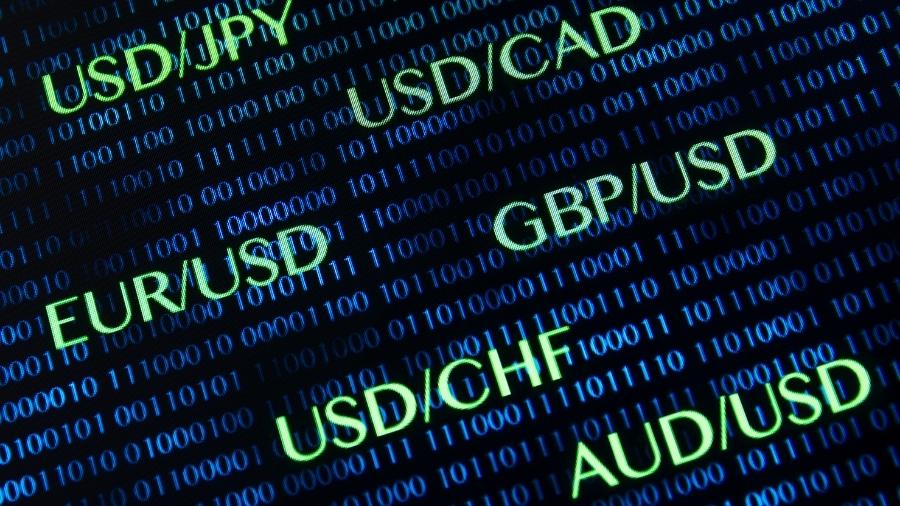
    Forex major currency pairs in the context of best currency pairs to trade

    In forex, selecting the best currency pairs is key to aligning with market trends and achieving efficient, cost-effective trades. Below are some of the top pairs:

    • EUR/USD – Known for high liquidity, this pair typically offers tighter spreads, making it suitable for day trading and scalping.
    • GBP/USD – Known for volatility, it’s ideal for those who trade during the overlap of London and New York sessions.
    • USD/JPY – A lower spread pair, influenced by major economic releases from Japan and the U.S.
    • AUD/USD – Tied to commodity trends, this pair is popular for trading during the Asian session.
    • EUR/JPY – A cross pair that reflects trends in both European and Asian markets, often with good volatility for swing trading.

    These pairs are well-suited for different trading styles due to their liquidity and predictable trends, making them accessible and attractive to a range of traders.

    Now, let’s look more into details.

    Understanding Major Currency Pairs

    Major currency pairs are generally recognized as those that feature the US dollar (USD) either as the base or quote currency. These pairs include well-known combinations like EUR/USD, GBP/USD, and USD/JPY. The most favorable currency pairs for trading typically demonstrate significant liquidity and steady volatility, making them suitable for traders who aim to efficiently enter and exit positions. Major pairs see active trading activity, which usually results in narrower spreads and greater trading volumes, thus providing numerous opportunities for forex traders.

    Characteristics of Low Volatility Forex Pairs

    Low volatility forex pairs are typically characterized by their stable exchange rates and minimal price fluctuations. Here are some key characteristics:

    1. Stable Price Movements: Low volatility pairs have smaller daily price ranges, leading to fewer sharp price swings. This makes them appealing to traders seeking steadier, less risky positions, especially over longer periods.
    2. Reduced Risk, Lower Profit Potential: With fewer price spikes, low volatility pairs tend to carry lower trading risks. However, this stability usually means limited opportunities for substantial profits compared to more volatile pairs.
    3. Strong, Stable Economies: These pairs often involve currencies from countries with robust and mature economies that experience less economic or political uncertainty. For example, pairs like EUR/CHF (Euro/Swiss Franc) and USD/SGD (U.S. Dollar/Singapore Dollar) reflect this characteristic.
    4. Suitable for Conservative Strategies: Due to their stability, low volatility pairs are ideal for traders who prefer conservative strategies, like carry trading or long-term holding, where small, consistent gains are more desirable than rapid profits.
    5. Wider Spreads in Minor Pairs: Some low volatility pairs might not be as frequently traded as major pairs, leading to wider spreads, which can impact costs slightly. This is particularly common with certain minor or exotic pairs that experience lower trading volume.

    Why Trade Liquid Currency Pairs

    Trading liquid currency pairs is crucial for any trader looking to minimize risks and maximize profits. High liquidity means that a currency pair can be bought or sold without causing a significant impact on its exchange rate. This characteristic enables traders to execute trades quickly and with less slippage.

    Major currency pairs, such as the EUR/USD and GBP/USD, are examples of highly liquid currency pairs that are traded extensively in the forex market. The availability of numerous trading opportunities in these pairs makes them attractive to both beginner and seasoned traders.

    For traders looking to leverage algorithmic trading, EA Trading Academy’s Top 10 Robots App offers a suite of high-performance EAs. These tools can greatly reduce the time spent on trade execution and increase the likelihood of capturing profitable opportunities in real-time.

    How to Choose the Best Currency Pairs to Trade

    Evaluating Trading Volume and Liquidity
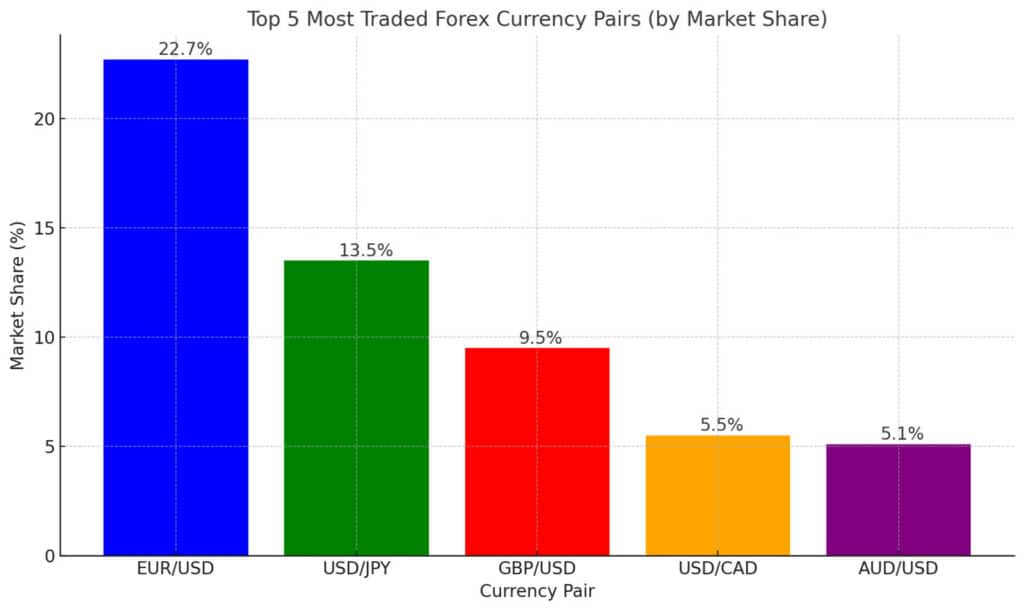
    Top 5 Most Traded Forex Currency Pairs by Market Share

    When selecting the best currency pair to trade, evaluating trading volume and liquidity is essential. Trading volume refers to the number of transactions executed within a specific timeframe, while liquidity indicates how easily a currency can be bought or sold in the market.

    Pairs with high trading volume are generally more liquid, making it easier for traders to enter and exit positions without significant price changes. Traders should focus on actively traded currency pairs as they tend to have tighter spreads and reduced trading costs, ultimately leading to more efficient trading outcomes.

    Analyzing Volatility in Forex Pairs

    Volatility plays a significant role in identifying which forex pairs to trade. Traders must analyze both historical volatility and current market conditions to gauge the potential for price movements. High volatility pairs can offer substantial profit opportunities due to larger price swings, but they also come with increased risk.

    Conversely, low volatility pairs may provide a safer trading environment but could result in smaller returns. A trader’s choice of currency pair should align with their risk tolerance and trading strategy.

    Identifying Your Trading Strategy

    Choosing the right currency pair also requires a clear understanding of one’s trading strategy. Different trading strategies, such as scalping, day trading, or swing trading, may necessitate trading specific pairs based on their characteristics.

    For instance, traders who prefer to scalp might opt for highly liquid pairs like the EUR/USD or GBP/USD, while those utilizing a longer-term strategy may look for pairs that demonstrate consistent movements over days or weeks. Ultimately, identifying a trading strategy will guide traders in selecting the most suitable currency pairs for their trading endeavors.

    One effective method for selecting currency pairs involves analyzing relative strength and market trends. Here’s a practical example based on a live trading scenario:

    Example: Imagine you’re deciding between EUR/USD and USD/JPY as the London session opens. You notice:

    • EUR/USD is trending upward, indicating a stronger Euro relative to the USD.
    • USD/JPY is also rising, which suggests the USD is stronger than the JPY.

    Given these conditions, EUR/JPY might be the best choice, as it combines the strength of the Euro over the Yen. This method can often reveal the most favorable currency pair for the session, maximizing potential gains by aligning with current trends.

    This example highlights the importance of monitoring multiple pairs to identify the strongest pair based on relative performance. Check out this video for better understanding on the above example and how to execute it in real world.
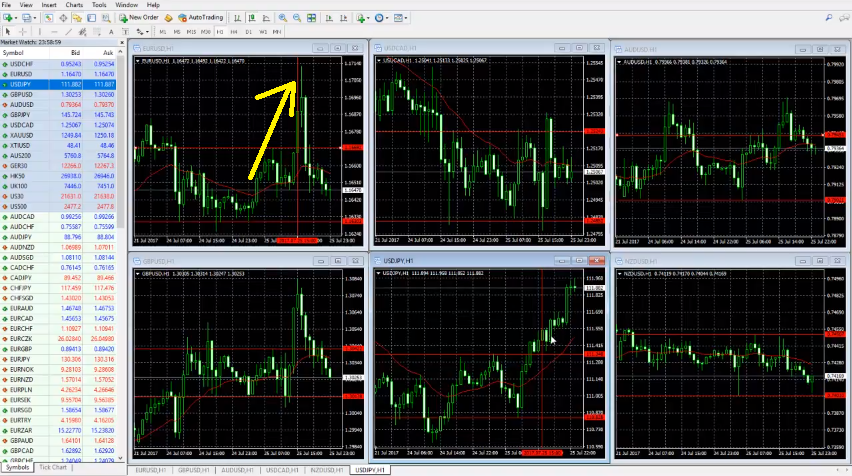
    How to choose best currency pair to trade

    Matching Currency Pairs to Trading Strategies

    Different trading strategies work best with specific currency pairs. Here are popular strategies and the pairs best suited for each: Here’s a breakdown of common trading strategies and their ideal currency pairs:

    1. Scalping:
      • Ideal Pairs: EUR/USD, USD/JPY
      • Why: High liquidity in these pairs supports rapid entry and exit, while tight spreads ensure minimal transaction costs.
      • Example: A scalper in the London session could quickly enter and exit EUR/USD based on small price movements, using high trade volume to capitalize on minor fluctuations.
    2. Day Trading:
      • Ideal Pairs: GBP/USD, EUR/USD
      • Why: The GBP/USD pair’s volatility during session overlaps gives day traders the quick, profitable moves they need within a single trading day.
      • Example: Day trading GBP/USD at the beginning of the London-New York overlap often means riding high volatility, allowing traders to capitalize on intraday momentum.
    3. Swing Trading:
      • Ideal Pairs: AUD/USD, EUR/JPY
      • Why: Swing traders aim to capture larger moves over a few days. Pairs like AUD/USD, affected by commodity cycles, and EUR/JPY, with its high volatility, offer sustained trends.
      • Example: A swing trader could enter EUR/JPY based on trend indicators, holding the position as it aligns with broader price movements over several days.
    4. Position Trading:
      • Ideal Pairs: USD/JPY, EUR/USD
      • Why: Position traders often base decisions on economic fundamentals. The relative stability and response of these pairs to long-term trends make them suitable for multi-week holdings.
      • Example: A position trader might buy USD/JPY based on U.S. interest rate hikes, holding the position as broader economic trends unfold over weeks or months.

    These matches help traders align their strategies with pairs most likely to provide favorable conditions, optimizing their approach based on market behavior and trading goals.

    What Are the Benefits of Trading Major Currency Pairs

    High Liquidity and Low Spreads

    One of the primary benefits of trading major currency pairs lies in their high liquidity and low spreads. High liquidity ensures that trades can be executed quickly, minimizing the risk of slippage. Low spreads, which represent the difference between the buying and selling prices, mean that traders can enter and exit positions at a lower cost. This combination is particularly advantageous for forex traders who seek to maximize their profitability while minimizing trading expenses.

    Consistency in Exchange Rates

    Major currency pairs tend to exhibit more consistent exchange rates compared to exotic pairs. This stability is largely due to the robust economic foundations of the countries involved, leading to predictable movements based on economic indicators and geopolitical events. For traders, this consistency can enhance the reliability of trading signals and strategies, making it easier to anticipate market movements and adjust trading decisions accordingly.

    Availability of Trading Opportunities

    The abundance of trading opportunities available in major currency pairs is another compelling reason for their popularity. With high trading volumes and a variety of factors influencing exchange rates, traders can find numerous entry and exit points throughout the trading session. This constant activity allows traders to capitalize on short-term price movements and engage in frequent trading without the limitations often associated with minor or exotic pairs.

    When is the Best Time to Trade Forex Currency Pairs

    Understanding when each currency pair is most active can dramatically improve your trading results. Here’s a breakdown of average pip movement during each major trading session:

    Currency PairTokyo Session (00:00-09:00 GMT)London Session (08:00-17:00 GMT)New York Session (13:00-22:00 GMT)Best Trading Window
    EUR/USD76 pips114 pips ⭐92 pipsLondon/NY overlap (13:00-17:00 GMT)
    GBP/USD92 pips127 pips ⭐99 pipsLondon/NY overlap (13:00-17:00 GMT)
    USD/JPY51 pips ⭐66 pips59 pipsTokyo/London overlap (08:00-09:00 GMT)
    AUD/USD77 pips ⭐83 pips81 pipsAsian session (00:00-03:00 GMT)
    NZD/USD62 pips ⭐72 pips70 pipsAsian session (00:00-04:00 GMT)
    USD/CAD57 pips96 pips ⭐96 pipsLondon/NY sessions (13:00-22:00 GMT)
    USD/CHF67 pips102 pips ⭐83 pipsLondon session (08:00-17:00 GMT)
    EUR/JPY102 pips129 pips ⭐107 pipsLondon session (08:00-17:00 GMT)
    GBP/JPY118 pips151 pips ⭐132 pipsLondon session (08:00-17:00 GMT)
    EUR/GBP78 pips61 pips ⭐47 pipsLondon open (08:00-12:00 GMT)

    ⭐ = Highest activity period for that pair

    Session Overlap Windows (Maximum Liquidity)

    Overlap PeriodTime (GMT)Most Active PairsWhy Trade This Window
    Tokyo/London08:00-09:00USD/JPY, EUR/JPY, GBP/JPYAsian-European crossover, excellent for yen pairs
    London/New York13:00-17:00EUR/USD, GBP/USD, USD/CADHighest global volume, tightest spreads
    Sydney/Tokyo00:00-06:00AUD/USD, NZD/USD, AUD/JPYBest for Oceanic currency pairs

    Key Takeaway: The London/New York overlap (13:00-17:00 GMT) consistently offers the most liquidity across major pairs. If you can only trade during one window, make it this one.

    Understanding Trading Sessions

    The forex market operates 24 hours a day, divided into several trading sessions including the Asian, European (London), and North American (NY) sessions. Each session presents unique trading opportunities and characteristics based on the currencies being traded and the level of market activity.

    Understanding the dynamics of these trading sessions is crucial for forex traders, as it can help them determine the best times to trade specific currency pairs. For instance, the overlap between the London and NY sessions often results in increased volatility and trading volume, making it an ideal time for traders to engage in the market.

    If you want to understand how the London, NY & Tokyo Trading System works and take advantage of it, our Forex Trading Learning Course is what you need.

    Trading Forex at Night: Pros and Cons

    Trading forex at night, particularly during the Asian session, offers both advantages and disadvantages. On the one hand, the Asian session can provide opportunities to trade pairs involving the Japanese yen (JPY), Australian dollar (AUD), and New Zealand dollar (NZD), which may not see significant movement during other sessions.

    However, the overall trading volume is generally lower at night, which can lead to wider spreads and less favorable trading conditions. Traders must weigh these pros and cons when deciding whether to engage in night trading and should consider their own trading strategies and objectives.

    Timing Your Trades for Maximum Impact

    Timing is crucial in forex trading, as entering or exiting a trade at the right moment can significantly impact overall profitability. Successful traders often utilize a combination of technical and fundamental analysis to inform their trading decisions, allowing them to identify optimal entry and exit points based on market trends and economic indicators.

    By understanding the best times to trade specific currency pairs and aligning their strategies accordingly, traders can maximize their potential for success in the competitive forex market.

    How to Develop a Trading Strategy for Forex Pairs

    Incorporating Technical Analysis in Your Strategy

    To develop a successful trading strategy for forex pairs, incorporating technical analysis is essential. This approach involves analyzing historical price data and identifying patterns that can help predict future price movements.

    Traders often use various tools, including charts, indicators, and trend lines, to assess potential entry and exit points. By leveraging technical analysis, traders can create a systematic approach to trading different currency pairs, enhancing their decision-making process and potential profitability.

    Using Fundamental Analysis to Inform Trading Decisions

    In addition to technical analysis, fundamental analysis plays a significant role in developing a robust trading strategy. This approach focuses on evaluating economic indicators, geopolitical events, and market sentiment to understand how these factors impact currency values.

    By staying informed on economic news releases, such as interest rate changes or employment reports, traders can make more informed decisions regarding their trading activities. Combining both technical and fundamental analysis allows traders to create a well-rounded strategy that considers various aspects of the forex market.

    Backtesting Your Forex Trading Strategy

    Backtesting is an invaluable step in the development of a trading strategy for forex pairs. This process involves applying a trading strategy to historical data to assess its effectiveness and potential profitability.

    By analyzing past performance, traders can identify strengths and weaknesses in their strategy, allowing for adjustments that can enhance future trading outcomes. Backtesting provides traders with the confidence to execute their strategies in real-time, knowing that they are based on data-driven insights and historical trends.

    Understanding Trading Costs: Why Spreads Matter More Than You Think

    One of the most overlooked factors in currency pair selection is the cost of trading. While it might seem like a small detail, spreads can make the difference between a profitable trading strategy and one that slowly drains your account.

    What Is a Spread?

    The spread is the difference between the bid price (what you receive when selling) and the ask price (what you pay when buying). It’s essentially the broker’s fee for executing your trade, and it’s measured in pips.

    Example:

    • EUR/USD bid: 1.0850
    • EUR/USD ask: 1.0852
    • Spread: 0.0002 or 2 pips

    Typical Spreads for Major Currency Pairs

    Currency PairAverage Spread (Standard Account)Average Spread (Raw/ECN Account)
    EUR/USD0.8-1.2 pips0.0-0.2 pips
    USD/JPY0.8-1.0 pips0.1-0.5 pips
    GBP/USD1.0-2.0 pips0.5-1.5 pips
    AUD/USD1.0-1.5 pips0.4-0.8 pips
    USD/CAD1.2-1.8 pips0.5-1.0 pips
    USD/CHF1.0-1.5 pips0.3-0.8 pips
    EUR/GBP1.2-2.0 pips0.6-1.2 pips
    EUR/JPY1.5-2.5 pips0.8-1.5 pips

    Note: Raw/ECN accounts typically charge a commission per trade ($3-7 per lot) but offer significantly tighter spreads.

    Why Spreads Matter: A Real-World Example

    Let’s compare two traders with identical strategies, but trading different pairs:

    Trader A (EUR/USD with 0.2 pip spread):

    • Trading style: Scalping
    • Trades per day: 20
    • Position size: 1 standard lot per trade
    • Daily spread cost: 20 trades × $2 per pip × 0.2 pips = $8
    • Monthly spread cost (20 trading days): $160

    Trader B (EUR/GBP with 1.5 pip spread):

    • Trading style: Scalping (same strategy as Trader A)
    • Trades per day: 20
    • Position size: 1 standard lot per trade
    • Daily spread cost: 20 trades × $10 per pip × 1.5 pips = $300
    • Monthly spread cost (20 trading days): $6,000

    Same strategy, different pair: Trader B pays $5,840 MORE per month in trading costs. This is why scalpers almost exclusively trade EUR/USD or USD/JPY—the lower spreads are essential for profitability.

    How Spreads Impact Different Trading Styles

    Scalpers (holding trades for seconds to minutes):

    • Spread impact: CRITICAL
    • Why: Your profit target might only be 5-10 pips, so a 1.5 pip spread immediately eats 15-30% of your target
    • Recommendation: Only trade pairs with spreads under 0.5 pips (EUR/USD, USD/JPY on ECN accounts)

    Day Traders (holding trades for hours):

    • Spread impact: MODERATE
    • Why: Your profit targets are typically 20-50 pips, so spread represents 2-8% of your target
    • Recommendation: Stick to major pairs with spreads under 1.5 pips

    Swing Traders (holding trades for days to weeks):

    • Spread impact: LOW
    • Why: Your profit targets are 100-300+ pips, so spread represents less than 2% of your target
    • Recommendation: Any major or minor pair is acceptable; focus on the best technical setup rather than spread optimization

    Break-Even Distance: How Far Price Must Move

    When you enter a trade, the market must move enough to overcome the spread before you’re in profit:

    PairSpreadBreak-Even Distance (to see $0 P/L)
    EUR/USD0.2 pipsPrice must move 0.2 pips in your favor
    GBP/USD1.5 pipsPrice must move 1.5 pips in your favor
    EUR/GBP2.0 pipsPrice must move 2.0 pips in your favor

    The wider the spread, the longer you’re “underwater” on the trade, which increases your exposure to adverse price movements.

    Spread Widening: When Costs Spike

    Spreads aren’t fixed—they can widen dramatically during:

    Major Economic News Releases:

    • EUR/USD spread might spike from 0.2 pips to 5-10 pips during NFP or FOMC announcements
    • Strategy: Avoid trading 10-15 minutes before and after major news

    Low Liquidity Periods:

    • Asian session Sunday night openings can see spreads 2-3x wider than normal
    • Strategy: Wait 30-60 minutes after market open for spreads to normalize

    High Volatility Events:

    • Brexit votes, elections, unexpected central bank decisions
    • Strategy: Reduce position sizes or avoid trading entirely during these periods

    Algorithmic Trading & Spread Costs

    If you’re using Expert Advisors or automated trading systems, spread costs become even more critical:

    High-Frequency EAs:

    • May execute 50-100+ trades per day
    • Spread costs can exceed $500-1,000 per day on wide-spread pairs
    • Solution: Test EAs exclusively on EUR/USD or USD/JPY with ECN pricing

    Grid or Martingale Systems:

    • Open dozens of positions simultaneously
    • Spread costs multiply quickly with each new position
    • Solution: Calculate total spread cost into backtest results—many systems become unprofitable when real spreads are applied

    Breakout EAs:

    • Often trigger during high-volatility periods when spreads widen
    • Standard backtests don’t account for spread widening
    • Solution: Add a 2-3x spread multiplier to your backtest to simulate real news conditions

    Action Steps: Reducing Your Spread Costs

    1. Compare Broker Spreads: Different brokers offer vastly different spreads. Check live spreads during your trading hours (not just advertised “typical” spreads).
    2. Consider ECN/Raw Spread Accounts: If you trade frequently, the lower spreads on ECN accounts can save thousands per year, even after commissions.
    3. Track Your Spread Costs: Add a column to your trading journal showing spread cost per trade. Calculate it monthly. This awareness alone can improve pair selection.
    4. Avoid Wide-Spread Pairs for Short-Term Trading: If you’re scalping or day trading, pairs with 2+ pip spreads will erode profitability. Save those for swing trades.
    5. Use Limit Orders: Market orders during volatile periods can result in wider spreads. Limit orders give you price certainty.

    Recommended Pairs by Spread Cost

    Lowest Spread Costs (Best for Scalping/Day Trading):

    1. EUR/USD (0.0-0.2 pips on ECN)
    2. USD/JPY (0.1-0.5 pips on ECN)
    3. GBP/USD (0.5-1.5 pips on ECN)

    Moderate Spread Costs (Acceptable for Day/Swing Trading):

    1. AUD/USD (0.4-0.8 pips)
    2. USD/CAD (0.5-1.0 pips)
    3. USD/CHF (0.3-0.8 pips)

    Higher Spread Costs (Swing Trading Only):

    1. EUR/GBP (0.6-1.2 pips)
    2. EUR/JPY (0.8-1.5 pips)
    3. GBP/JPY (1.0-2.0 pips)

    By understanding and accounting for spread costs, you’ll make more informed decisions about which currency pairs to trade and when. For algorithmic traders especially, this single factor can determine whether your EA is profitable or bleeds your account slowly.

    Conclusion: Building a Successful Forex Strategy

    Trading the best currency pairs requires a balanced approach that combines effective pair selection, strategic alignment, and cutting-edge technology. By focusing on major pairs and leveraging algorithmic tools like expert advisors, traders can improve their performance, minimize risks, and achieve more consistent outcomes.

    Explore EA Trading Academy’s Top 10 Robots App to see how automated trading can enhance your trading experience. With these EAs, you can streamline your trades, reduce errors, and set the stage for successful trading in today’s dynamic forex market.

  • Forex Swing Trading Strategy Explained + FREE USDJPY Robot

    Are you looking for a trading approach that allows you to capitalize on market movements without the constant screen-watching that day trading demands? Swing trading strategy might just be the strategy you’re after. Known for balancing flexibility with profitability, swing trading strategy focuses on capturing short- to medium-term price changes. This strategy gives traders the chance to catch significant “swings” within larger trends, all while holding positions for days or even weeks.

    In this article, we’ll uncover the fundamentals of swing trading and break down everything you need to start your trading experience with swing trading strategy. Expect to discover:

    • What swing trading strategy really is and why it’s a popular choice for traders seeking a middle ground between day trading and long-term investing.
    • Essential indicators used in swing trading to spot prime entry and exit points.
    • Timeframes best suited for swing trades and how to adapt these to different market conditions.
    • How expert advisors (EAs) can automate swing trading strategies for greater precision and consistency, even as you sleep.
    • A practical example of a USD/JPY swing trade EA that you can backtest and deploy in real time (there is a link in the section to get the FREE robot) .

    Whether you’re a trader eager to refine your strategies or someone intrigued by algorithmic trading, this article will guide you through executing swing trades with efficiency and confidence. Let’s begin!

    What Is Swing Trading Strategy

    Swing trading is a medium-term trading style that captures short-term price movements within a larger trend. Due to this, it suits perfectly traders looking to avoid the intensity of day trading but also not committed to long-term investing. Unlike day trading, which requires constant monitoring to open and close positions within a single day, swing trading allows positions to remain open for several days or weeks. This approach gives traders time to capitalize on price movements across multiple sessions. To do it, they rely heavily on technical analysis for market entry and exit decisions.

    The primary objective of swing trading is to take advantage of price swings—distinct upward or downward movements in price. Swing traders aim to predict these shifts by examining chart patterns, historical performance, and momentum indicators. Then they make strategic entries when conditions are favorable. While it doesn’t require as much time commitment as day trading, swing trading still benefits from periodic monitoring to adjust strategies as market conditions change.

    Swing trading is a medium-term trading style focusing on capturing price movements within a broader trend, with trades lasting from days to weeks. It often uses technical indicators for strategic entry and exit points, making it popular among traders seeking balance between day trading and long-term investing.

    Key Indicators Used in Swing Trading Strategy

    Effective swing trading requires a reliable set of indicators that can provide insights into price trends, potential reversals, and overbought or oversold market conditions. Below are some of the most common indicators which traders use in swing trading:

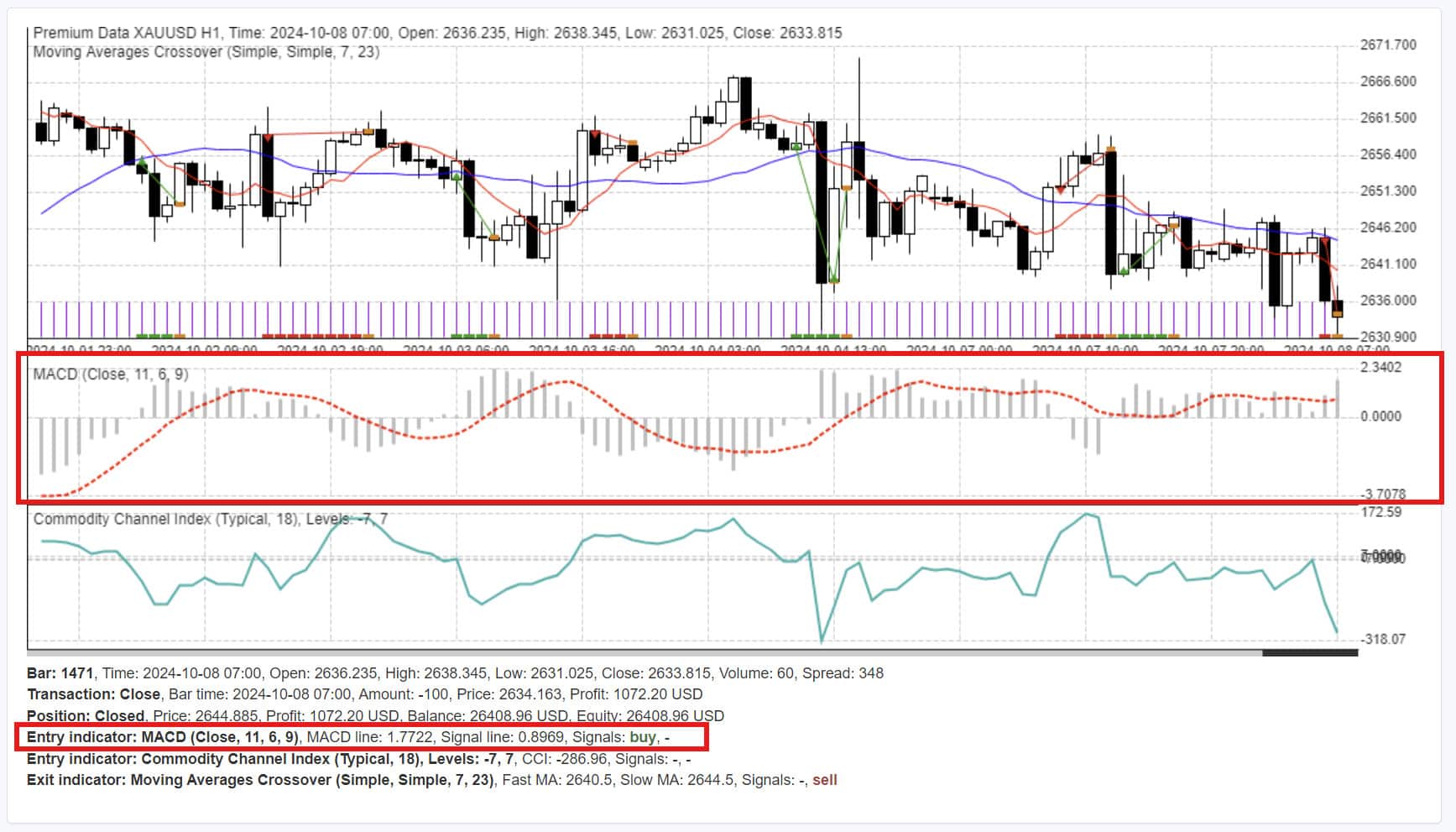
    MACD (Moving Average Convergence Divergence): MACD is widely used for identifying shifts in momentum, which can signal reversals. By tracking the difference between two moving averages (usually 12-day and 26-day), MACD helps traders spot buy and sell signals as the shorter average crosses above or below the longer average.

    Moving Averages: Moving averages, particularly the 50-day and 200-day averages, help in identifying long-term trend directions. For example, when the 50-day moving average crosses above the 200-day average, it suggests an upward trend—a signal swing traders may consider as an entry point.

    Relative Strength Index (RSI): RSI measures the magnitude of recent price changes, signaling overbought or oversold conditions. When the RSI exceeds 70, it indicates the asset may be overbought, signaling a potential reversal. Conversely, an RSI below 30 suggests the asset is oversold, presenting a possible buying opportunity.

    Selecting the Ideal Timeframe for Swing Trading

    To select the right timeframe is crucial in swing trading. Different timeframes cater to different trading goals and risk tolerance levels. Swing trading generally operates within higher timeframes than day trading, balancing detail and long-term insight.

    1. Common Timeframes: Swing traders typically work with 4-hour to daily (1D) charts. These timeframes offer detailed information on market trends and avoid the “noise” often present in shorter timeframes. Using these larger windows helps capture sustained price swings, reducing false signals that can occur in highly volatile, low-timeframe data.
    2. Key Tips for Selecting Timeframes:
      • Higher Timeframes: For traders aiming to minimize screen time, a daily timeframe might be suitable, enabling a less hands-on approach.
      • Mid-Level Timeframes (4H): For those looking to balance trade frequency and detail, 4-hour charts offer a clearer picture of price trends without as many minor fluctuations.
      • Lower Timeframes (M15): While not traditional for swing trading, shorter timeframes are also an option in specific strategies, especially in high-volatility assets.

    Ready to explore the benefits of algorithmic swing trading strategy ? With Expert Advisor Studio you can generate your own EAs tailored for swing trading. Using the strategy builder, traders can backtest and refine their strategies, paving the way for automated, efficient, and successful swing trading.

    Algorithmic Swing Trading

    algorithmic trading strategies and EAs

    The integration of algorithmic trading with swing trading strategies provides a powerful synergy. It combines swing trading’s focus on medium-term price moves with the precision and consistency of automated systems. With the employment of expert advisors (EAs) to handle the entry, exit, and management of swing trades, traders can enhance both the effectiveness and efficiency of their strategies.

    Efficiency Through Automation

    Swing trading relies on technical indicators and price patterns, often demanding timely execution to capitalize on each swing. Algorithmic trading enables this by automating these trades, removing the need for traders to constantly monitor charts. EAs execute trades immediately when criteria are met, increasing the likelihood of capturing profitable swings without delay.

    Enhanced Precision and Objectivity

    One of swing trading’s challenges is maintaining objectivity amid fluctuating price moves. EAs resolve this by following strict, pre-set rules without emotional biases. This precision is particularly advantageous in swing trading, where hesitation or impulsive decisions can significantly impact outcomes. With algorithmic trading, every trade is executed according to the strategy’s logic, leading to consistent results over time.

    Continuous Operation and Opportunity Capture

    The nature of swing trading involves holding positions for days to weeks. Round the clock oversight is pretty much impossible for manual traders. Algorithmic trading ensures trades are monitored and managed continuously, even when the trader is offline. EAs can automatically adjust stops, close positions, or open new trades according to evolving market conditions. Like this, they utilize every swing trading opportunity.

    Streamlined Backtesting and Optimization

    Algorithmic systems like Expert Advisor Studio allow swing traders to rigorously backtest their strategies on historical data, refining parameters for better performance. This not only builds confidence in the strategy but also offers insights into potential adjustments, ensuring the swing trading strategy remains effective across different market scenarios.

    In short, algorithmic trading amplifies the efficiency, precision, and consistency that are essential in swing trading. Because of this, it is a valuable tool for traders looking to capitalize on market swings without manual effort.

    Practical Example: USDJPY Algorithmic Swing Trading Strategy from Expert Advisor Studio

    This practical example, derived from EA Trading Academy’s Top 10 Robots App, illustrates how swing trading can be set up and tested in real-time using Expert Advisor Studio. The example highlights a strategy designed for the USD/JPY currency pair, using specific indicators to capture profitable price movements.

    1. Strategy Overview:
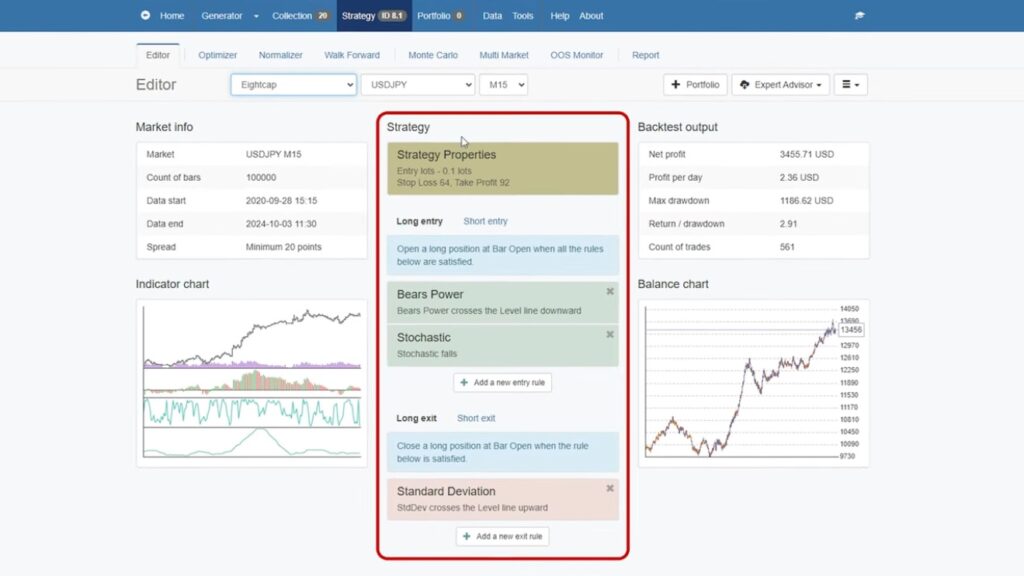
      • Indicators Used: The strategy utilizes two main indicators—Bears Power and Stochastic—to determine entry and exit points.
      • Entry Signal: A long position is initiated when the Bears Power indicator crosses a defined level downward. At the same time Stochastic shows a downward trend as confirmation. This two-indicator combination aims to ensure that the trade is entered during a low point, capturing upward price momentum.
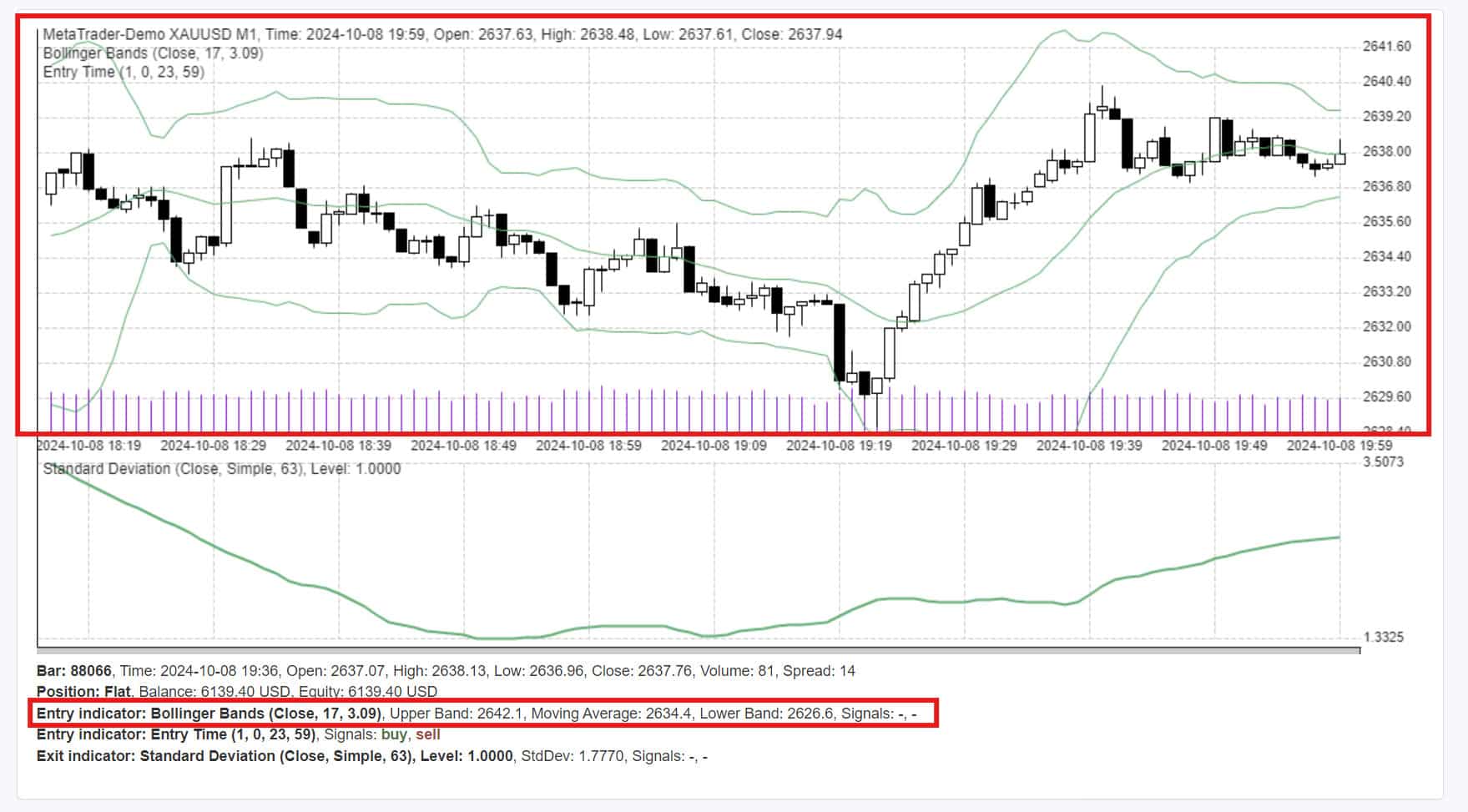
      • Exit Signal: The strategy uses the Standard Deviation indicator to exit trades when it crosses upward. This safeguards profits or cuts losses as the trade completes its swing.
      • Risk Management: With a stop loss of 64 pips and a take profit of 92 pips, this strategy is designed to maintain a balanced risk-reward ratio. It supports effective risk management while pursuing profit opportunities​(Swing Trading Strategy).
    2. Testing and Execution:
      • Backtested using Eightcap data, the strategy has demonstrated strong performance over a one-year period, delivering a reliable setup that adapts to various market conditions. Once generated in EA Studio, the strategy’s code can be exported to MetaTrader 4 or 5. And it is ready for immediate deployment in either a demo or live trading environment.
      • Note: The example highlights the advantages of algorithmic trading for swing traders, as EAs automate entries, exits, and other parameters, allowing for smoother trade management without manual oversight.

    Check out this video for to see how we discovered and analyzed this swing trade ea.

    And if you want to test this robot yourself, you can download it completely for FREE from this link.

    Conclusion: Swing Trading Strategy with Algorithmic Precision

    Swing trading offers a flexible way to profit from market movements over short to medium-term periods. By automating the strategy with tools like EA Studio, traders can enhance their efficiency and remove the emotional aspects of trading.

    For those interested in automated trading solutions, check out EA Studio and start experimenting with this swing trade EA today. Don’t forget to backtest on demo accounts and optimize the strategy to suit your trading style!

  • Mastering the Stochastics Trading Strategy for Algorithmic Forex Success

    Mastering the Stochastics Trading Strategy for Algorithmic Forex Success

    In the world of algorithmic forex trading, the Stochastics trading strategy stands out for its effectiveness in identifying market reversals and entry points based on overbought and oversold conditions. Using trading strategy builders like Expert Advisor Studio, traders can efficiently generate and test multiple stochastic-based strategies, ensuring robustness before deployment. In this article, we’ll dive into the setup, testing, and deployment of a Stochastics trading strategy using EA Studio, focusing on key steps that traders can take to refine and validate their approach.

    This guide is especially suited for those interested in building algorithmic trading systems using stochastic indicators, leveraging advanced tools for strategy generation, and prioritizing demo testing to ensure successful live trading. Stay with us to grab the FREE Robots and Collections.

    Understanding the Stochastic Oscillator in Forex Trading

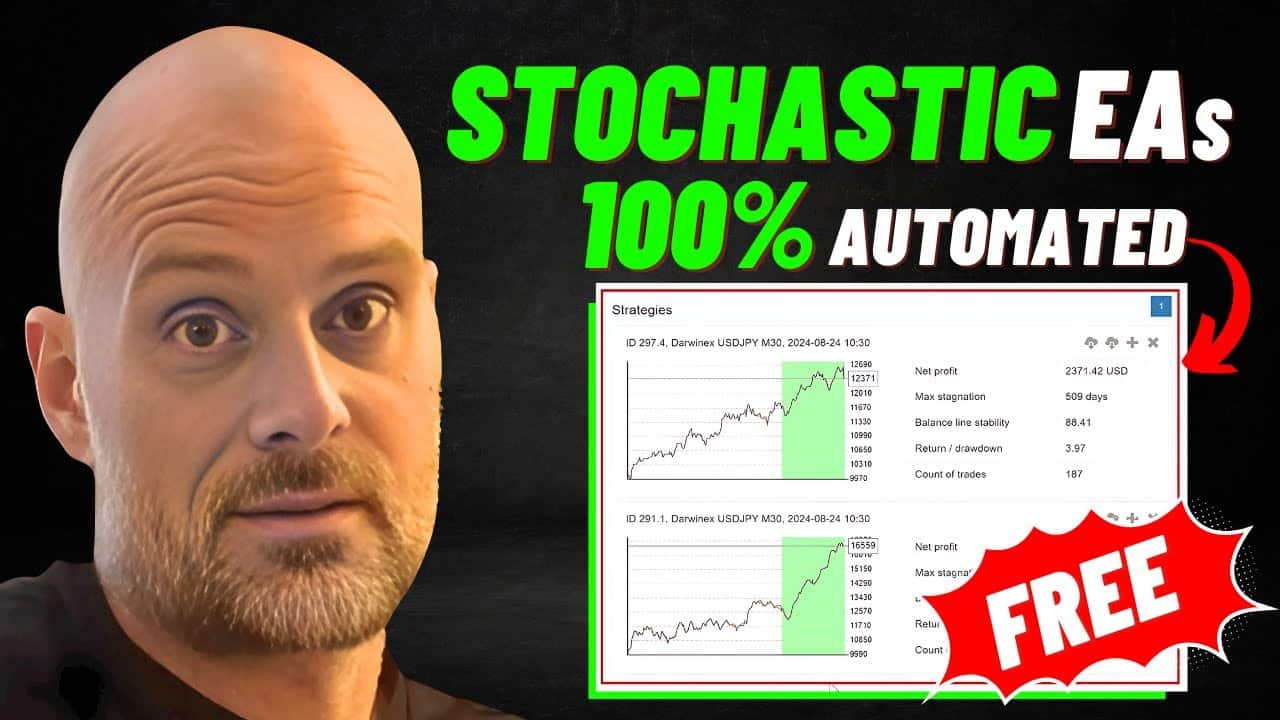
    Check out the video below to see how you can create this Stochastics trading strategy in EA Studio. And if you like it, you can download for FREE the ready-to-use EAs here.

    How the Stochastic Oscillator works

    The Stochastic Oscillator is a momentum indicator that compares a specific closing price to the price range over a set period. This oscillator helps traders detect overbought and oversold levels in the market. This typically indicates potential trend reversals or opportunities for trend continuation. In forex trading, the stochastic oscillator’s overbought and oversold signals help define entry and exit points.

    Core Components of the Stochastic Oscillator:

    1. %K Line: This is the primary line representing the latest closing price relative to the range of high and low prices over a specified period, typically 14. This line reacts to market changes rapidly, signaling when price moves approach the range’s high or low boundaries.
    2. %D Line: A moving average of the %K line, usually calculated over three periods. Known as the “slow” line, it smooths out fluctuations, providing clearer signals and reducing the impact of market noise.
    3. Overbought and Oversold Zones: Readings above 80 typically indicate an overbought condition, signaling a potential sell. At the same time, readings below 20 suggest oversold conditions, indicating a potential buy.

    Optimizing Stochastic Oscillator Settings

    To optimize the Stochastic Oscillator, traders can adjust the %K, %D, and “slowing” settings based on the currency pair, timeframe, and specific market conditions. This customization helps in capturing accurate signals tailored to particular trading environments. For example, in short-term trading, settings may be adjusted to quickly respond to price changes, while longer periods smooth out fluctuations, ideal for trending markets.

    The oscillator’s adaptability makes it a valuable tool for traders using automated strategies. By leveraging EA Studio, traders can automate strategy generation, testing, and filtering processes, transforming stochastic insights into actionable trading systems.

    Do you want to learn how to create your own stochastics trading strategy without any programming skills required? Make sure to enroll in our 21-Day Free Algo Trading Course—an intensive 3-week free algo trading program to learn everything about Expert Advisors, Strategy Builders and Algorithmic Trading! As part of the 21-Day Free Algo Trading Course, you will receive an exclusive 15-day free trial access to EA Studio, where you can generate and export as many Expert Advisors as you wish.

    Setting Up EA Studio to Generate Stochastics Trading Strategies

    EA Studio is a sophisticated tool that simplifies the strategy generation process. Due to that traders can focus solely on their chosen indicator—in this case, the Stochastic Oscillator. Below is a step-by-step guide to setting up EA Studio for stochastic-based strategy generation.

    Step 1: Import Historical Data and Define Timeframes

    • Data Selection: Begin by importing historical price data from reliable brokers, such as Darwinex or BlackBull Markets, into EA Studio. This data should include comprehensive historical information for your chosen currency pairs, such as USD/JPY or EUR/USD.
    • Choose a Timeframe: Shorter timeframes, such as M30 or H1, often work well with stochastic strategies because they allow the oscillator to capture minor reversals. Using these timeframes also ensures that signals are frequent enough to provide ample trading opportunities, making the strategy effective for short- to medium-term trading.

    Step 2: Configuring Entry and Exit Rules with the Stochastic Indicator

    EA Studio’s Generator feature allows you to define specific parameters for strategy generation.

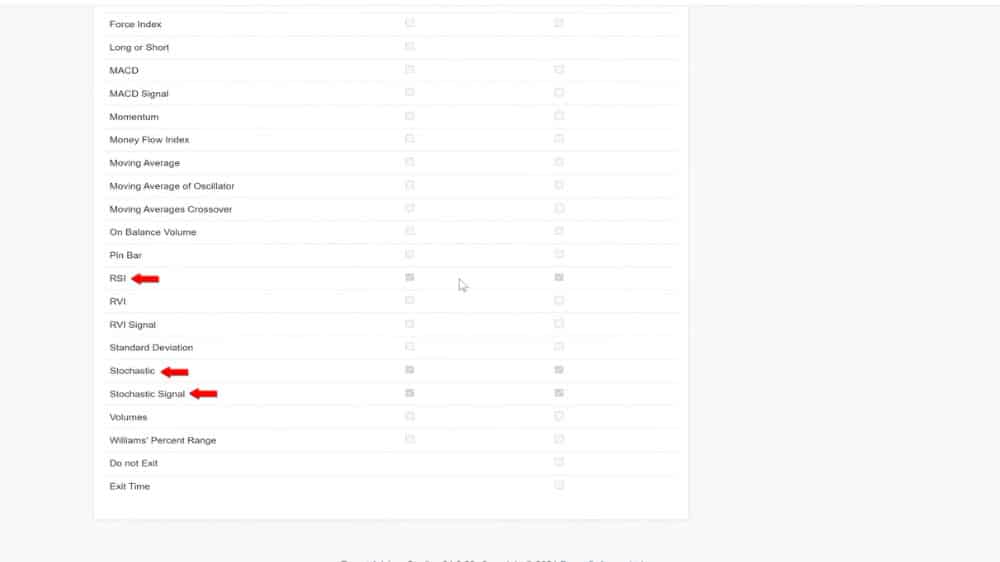
    • Indicator Selection: In the indicator settings, turn off all other indicators except the Stochastic Oscillator. By isolating the stochastic, EA Studio generates strategies based solely on this indicator, ensuring that trades are triggered based on overbought and oversold levels.
    • Define Stop Loss and Take Profit: Set ranges for both Stop Loss and Take Profit, typically between 20 and 200 pips depending on volatility. Adjusting these levels is essential to maintain an appropriate risk-to-reward ratio. Traders using volatile currency pairs might opt for wider ranges, while more stable pairs can use tighter stop levels.
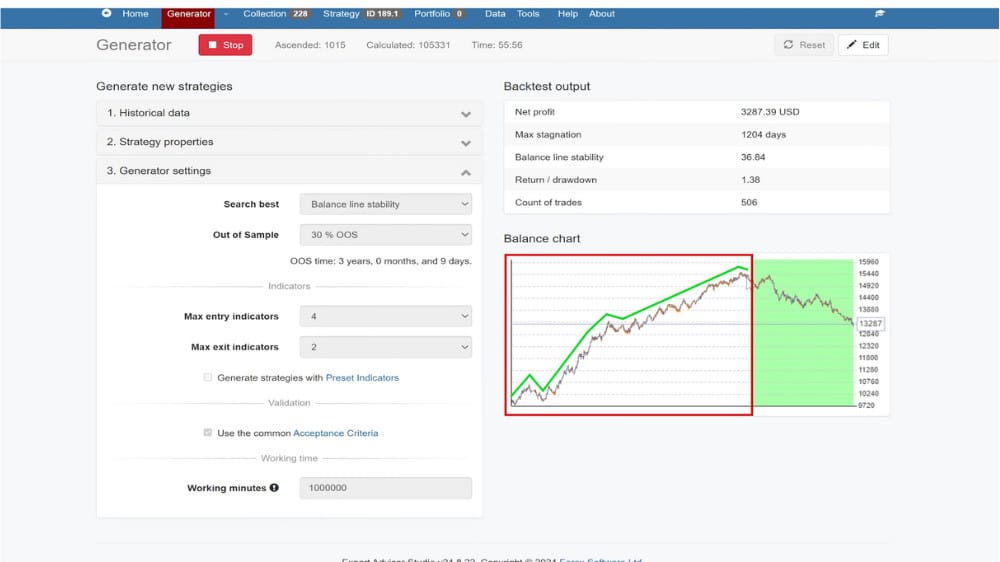
    • In-Sample and Out-of-Sample Split: A split of 70/30 between in-sample and out-of-sample data allows for robust testing, helping the system assess how well strategies adapt to unseen market conditions.

    Step 3: Set Acceptance Criteria for Effective Stochastic Oscillator Strategy Generation

    In EA Studio’s Generator settings, input acceptance criteria to guide the generation process:

    • Minimum Profit Factor: A minimum profit factor of 1.2 ensures that generated strategies meet a baseline profitability level.
    • Trade Count Requirement: Set a minimum trade count of 100 to ensure the strategy’s reliability. The number of trades should provide enough data points for statistical validity, making it easier to assess the strategy’s true performance.
    • Generator Run Time: Allow the generator to run for an extended period (at least one hour) to gather a diverse range of stochastic oscillator strategies. The more strategies generated, the more options you’ll have for selecting and filtering reliable candidates.

    This setup ensures EA Studio generates a robust collection of stochastic-based strategies, which can then be filtered and tested further.

    EA Studio is a sophisticated tool that simplifies the strategy generation process. Generate thousands of Expert Advisors with EA Studio and benefit from the emotions-free advantage of the trading robots/ Expert Advisors.

    Filtering and Validating Stochastics Trading Strategies in EA Studio

    Once EA Studio has generated a collection of strategies, the next step is to filter and validate them, narrowing the selection to those with the greatest potential for profitability. This filtering process is essential in ensuring strategies remain robust under varying market conditions.

    1. Out-of-Sample Testing

    Out-of-sample testing is essential for identifying strategies that can perform in unseen market conditions. Using the 30% out-of-sample data split, assess each strategy’s performance and filter out those that fail to maintain profitability.

    • Profit Factor and Stability: Retain strategies with a minimum profit factor of 1.1 in the out-of-sample data. Strategies showing consistent stability in out-of-sample segments indicate a lower risk of overfitting and greater adaptability.
    • Drawdown Management: Pay close attention to drawdown levels. High drawdown in out-of-sample testing may indicate vulnerability to market shifts, while moderate drawdown levels point to better resilience.

    2. Multi-Market Testing for Broader Adaptability

    By testing your strategies on alternative markets or currency pairs, you can determine if they maintain profitability across varying conditions.

    • Cross-Currency Testing: Test the strategy on similar currency pairs, such as GBP/USD, to assess cross-market viability. Strategies that perform well across different pairs show flexibility, which is valuable for adapting to changing market conditions.
    • Broker Data Testing: Different brokers can have slight data variations. Running strategies on alternative data sources, such as BlackBull and Darwinex, ensures they aren’t overly sensitive to minor data discrepancies.

    3. Advanced Filtering Options

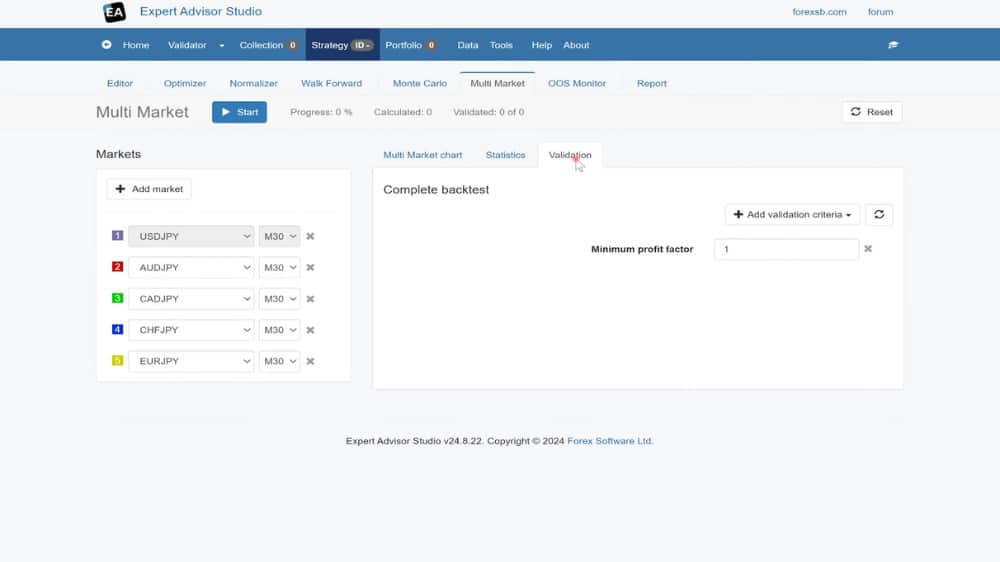
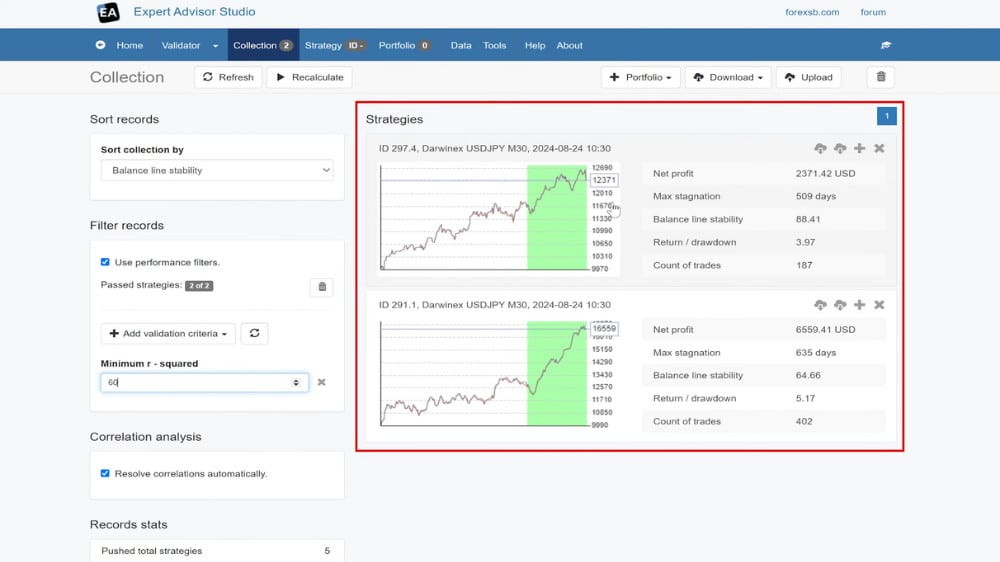
    EA Studio’s advanced filters, such as R-squared, can help refine the selection further.

    • Use R-squared for Consistency: Setting R-squared > 70 can focus the selection on strategies with smooth equity curves, minimizing fluctuations.
    • Manual Inspection: Review strategy equity curves and performance metrics manually, dismissing those with erratic patterns or excessive volatility. Strategies with smooth curves are more likely to perform consistently in live trading.

    Following these filtering methods results in a smaller, more reliable selection of Stochastics-based strategies, ready for demo testing.

    Demo Testing Stochastics Trading Strategies

    Testing strategies on a demo account allows for risk-free performance validation under real-time market conditions. This step is critical to confirm strategy effectiveness before transitioning to live trading. To test the stochastic oscillator strategy on the demo account, you need to:

    1. Export to MetaTrader and Configure for Demo Testing: Export each validated strategy to MetaTrader 4 or MetaTrader 5. Configure settings such as lot size, timeframe, and currency pair to match the setup used in EA Studio, ensuring accuracy and consistency during demo testing.

    2. Monitor Performance Over a Set Period: Track performance for at least 4-6 weeks to capture different market conditions. Observe profit factor, win rate, drawdown, and other metrics. If certain strategies struggle in demo trading, consider making adjustments to parameters, such as lowering risk exposure or modifying Stop Loss and Take Profit levels.

    3. Assess Criteria for Live Deployment: Before transitioning to live trading, ensure that strategies meet specific benchmarks. Strategies with a profit factor above 1.2, a drawdown below 10%, and a stable equity curve indicate better live performance potential. Retain only those meeting these criteria, as they are likely to provide consistent returns.

    Enhancing Stochastics Trading Strategies with Additional Indicators and Tools

    Improving Stochastic strategies can be achieved by combining them with additional indicators or using advanced techniques to adapt to market dynamics.

    1. Combining Stochastic with Indicators like CCI or MFI

      • Adding complementary indicators can improve the reliability of stochastic signals. For example, combining the Stochastic Oscillator with the Commodity Channel Index (CCI) ensures that trades align with momentum. Such combinations help filter out false signals and make the strategy more resilient in volatile conditions.
    2. Use Walk-Forward Optimization for Continuous Adaptation

      • Walk-forward optimization is a technique that tests the strategy over different market segments, evaluating and updating parameters in response to evolving market conditions. This process reduces the impact of market seasonality and adapts strategies to current conditions, enhancing long-term profitability.
    3. Implement Risk Management Rules

      • Set parameters like a daily loss cap (e.g., 3% of account balance) and a limit on the total number of open trades. A tiered risk management system helps control exposure during volatile periods, protecting your account against sudden market shifts.
    4. Seasonal Adjustments and Volatility Filters

      • Forex markets experience seasonal shifts, such as increased volatility during major economic events. Adding a volatility filter, like the Average True Range (ATR), allows strategies to adjust to these shifts, improving performance during high-volatility periods.

    Conclusion: Building a Reliable Stochastics Trading Strategy

    Developing a Stochastics trading strategy with EA Studio provides traders with a methodical way to create and refine automated strategies. By leveraging EA Studio’s generator and filtering tools, traders can build strategies tailored to their risk tolerance and market conditions. This guide provides a roadmap for creating, testing, and optimizing a Stochastics trading strategy, from understanding the oscillator to implementing robust risk management practices.

    As you develop your strategy, remember the importance of thorough testing and realistic expectations. Even the most advanced strategies require careful monitoring and adaptation to maintain their edge in the market. By following these steps, you can build a reliable and adaptable Stochastics trading strategy, positioning yourself for long-term success in algorithmic forex trading.

    If you find this guide useful, you might also be interested in checking our guide about How to Create a Moving Average Crossover Strategy Using EA Studio or watch Sam’s video (also including FREE robots) here.

  • How to Copy Trades from MetaTrader to DXTrade

    How to Copy Trades from MetaTrader to DXTrade

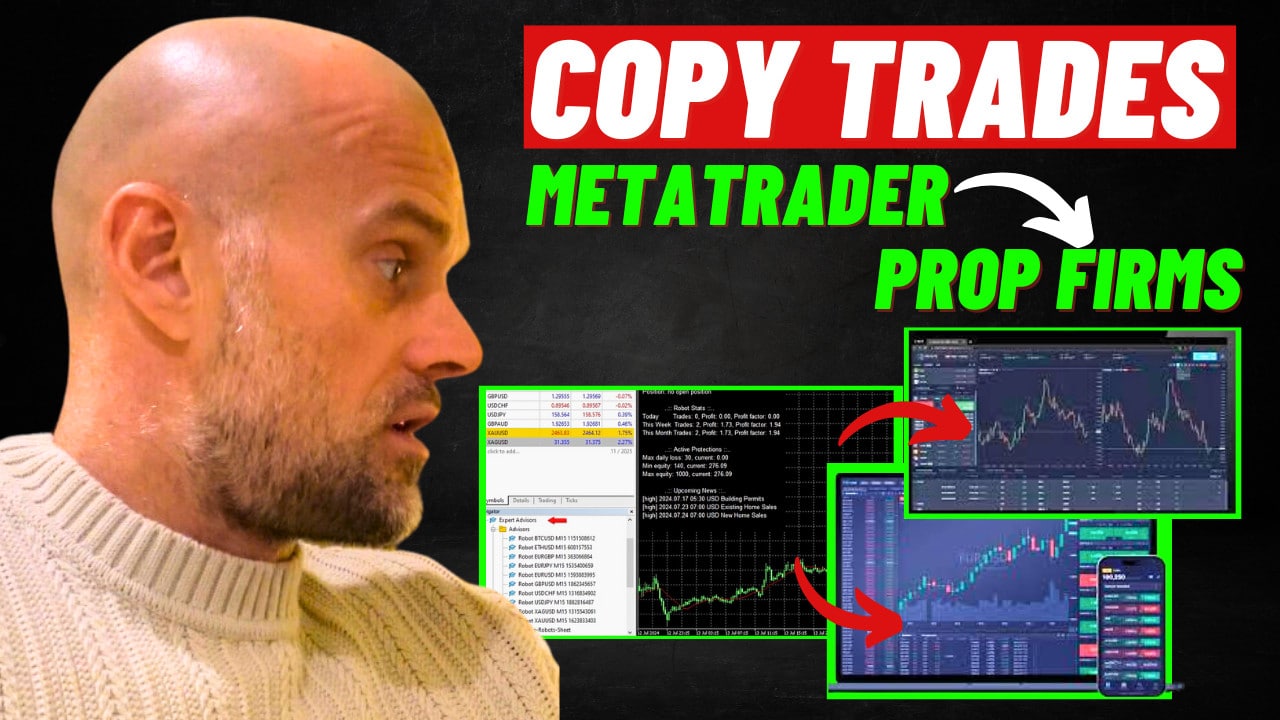
    Like many of you reading this post, I have been using the trading platforms MetaTrader 4 and MetaTrader 5 for many years now. I trade both manually and with expert advisors or robots. If you too, have become familiar and comfortable using MT4 or MT5 but have recently found yourself needing to execute trades on DXTrade, this blog post will be of particular interest to you. Many prop firms and even brokers are losing their MetaQuotes licenses and moving to platforms like DXTrade. Traders need solutions that allow them to stick with the MetaTrader strategies and robots they’ve been using successfully over the years.

    DaneTrades is a tool that allows you to automate the process and copy trades across both platforms. This clever, and necessary tool not only saves time but reduces the risk of manual errors. I’ll explain how to set it up, why it’s essential, and the key features you should look for in a trade copier.

    Why Use a MetaTrader to DXTrade Copier?

    MetaTrader has been the platform most traders have preferred using for a long time. And for good reason. It offers automated trading integrated into the platform itself. In addition, custom indicators, and many charting tools as well as the ability to customize every one of your charts to your liking. Prop firms or brokers are moving to new platforms like DXTrade. Many traders, myself included, have become used to working on MetaTrader to a point where we would consider ourselves experts.

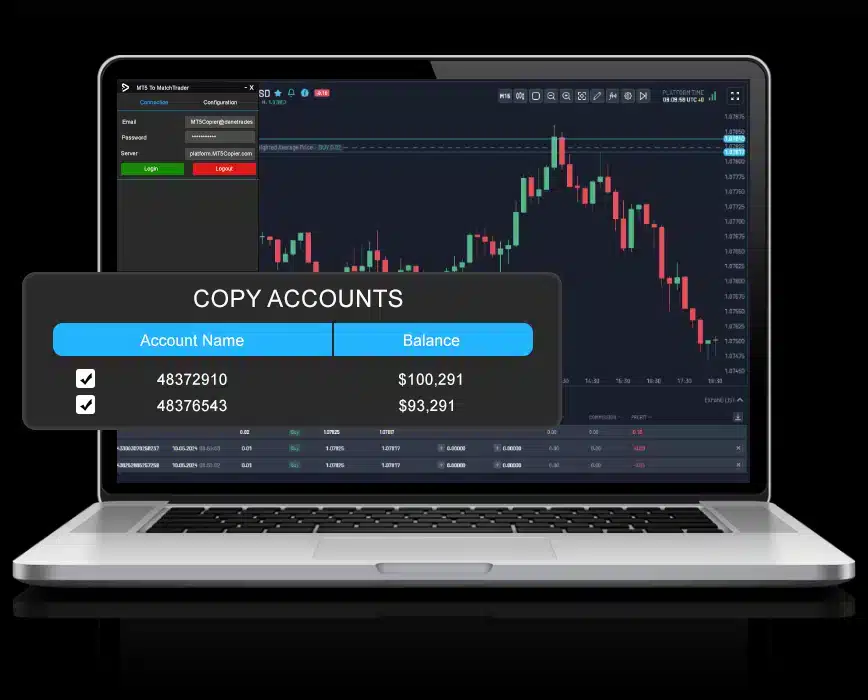
    We would of course prefer to stick to what we know and feel comfortable with, and that’s where a trade copier comes in handy. A MetaTrader to DXTrade copier allows you to keep trading on MetaTrader as usual. And the copier automatically copies your trades to DXTrade in real time. This is really useful for the reasons mentioned. Plus if you are managing multiple accounts or working with a prop firm that requires DXTrade, you can continue as you have been and focus on trading rather than mastering a new trading app.

    metatrader-to-dxtrade-copier-1

    The benefits of this are pretty easy to understand. You continue using a platform you’re already an expert on. You don’t have to worry about the stability or usability of an unknown platform. Your choice of prop firms and brokers expands and most importantly, unnecessary emotions (frustration!) don’t creep into your trading.

    Setting Up a MetaTrader to DXTrade Copier

    The process of setting up a MetaTrader to DXTrade copier is relatively simple. Here’s how to get started:

    1. Install the Copier on MetaTrader
      The first step is downloading a trusted copier, such as the one offered by DaneTrades, which supports both MT4 and MT5. Installation is as easy as adding it to your MetaTrader platform as an Expert Advisor (EA).
    2. Configure the Copier Settings
      After installation, configure the settings based on your needs. Some important configurations include adjusting lot size multipliers to reflect the different balances between your MetaTrader and DXTrade accounts, setting stop losses, and ensuring that any custom parameters such as risk limits are also applied to the copier.
    3. Input DXTrade Account Details
      Next, input your DXTrade account credentials to ensure the copier can successfully transfer trades between platforms. This step is crucial for linking MetaTrader with DXTrade.
    4. Test on a Demo Account
      As is the case with any new trading strategy, robot or platforms, ALWAYS test with a demo account before you start copying trades in a live environment. You need to know how well the copier mirrors trades and whether the parameters like stop-loss and take-profit are correctly duplicated. Running a few simple trades on a demo account will help you confirm that everything is set up correctly. Once you’ve seen it working on your demo account, you can transition to live trading with small trades to make sure the demo and live servers work in the same way.

    Pricing Options

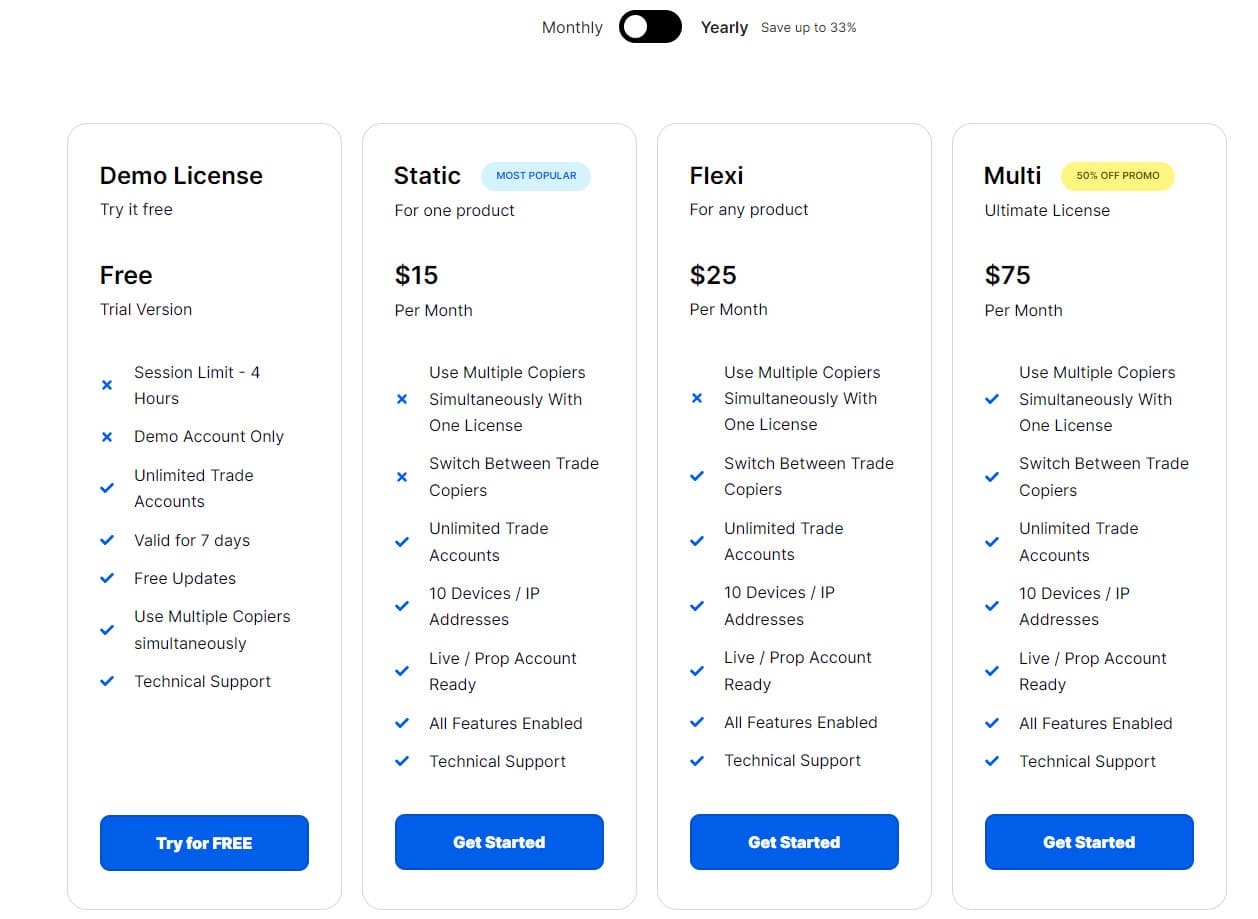
    DaneTrades offers several pricing options for their MetaTrader to DXTrade trade copiers. The free, demo option is a trial license. It allows you to test the software for 7 days. However, you are limited to only 4 hours per session. And, only on a demo trading account. The paid versions can start with individual copiers for $15 per month, while the Flexi License is $25 per month. The Flexi allows you to switch between copiers every 24 hours. For traders managing multiple accounts, the Multi License is $150 per month. It offers access to all copiers simultaneously, with unlimited account support, making it ideal for professional traders or those handling multiple portfolios​

    metatrader-to-dxtrade-copier-3

    Why Testing on a Demo Account is Non-Negotiable

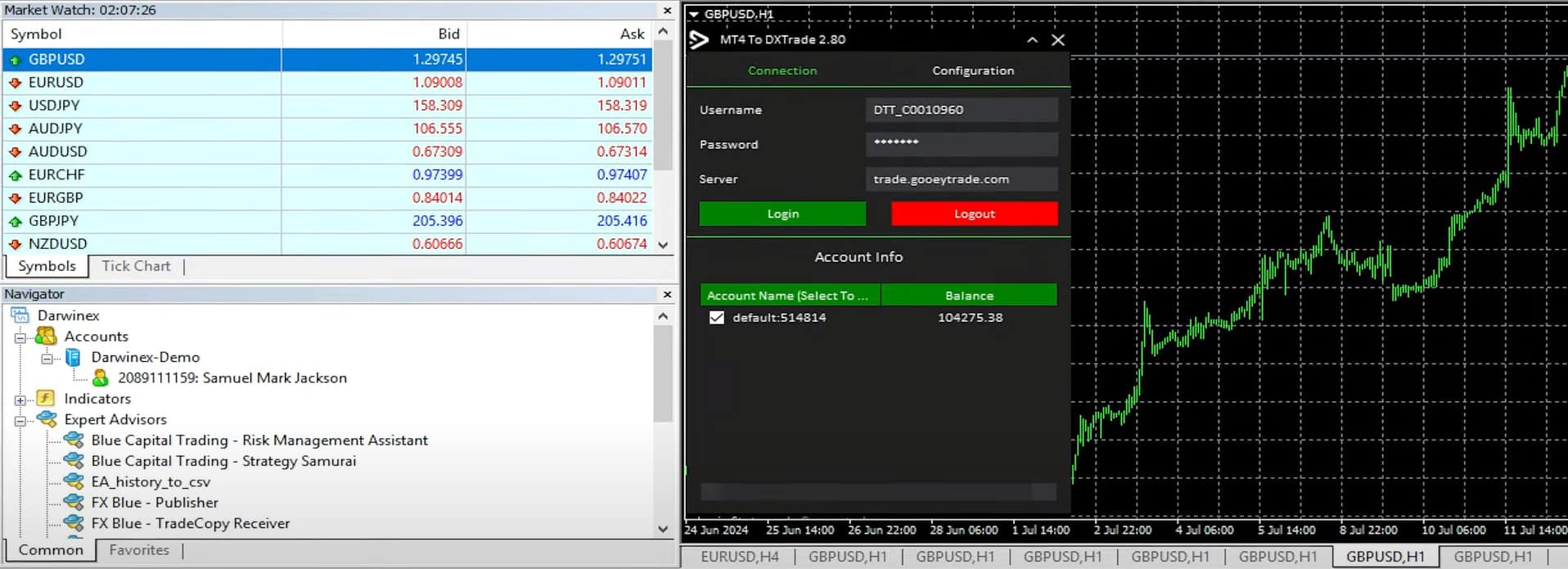
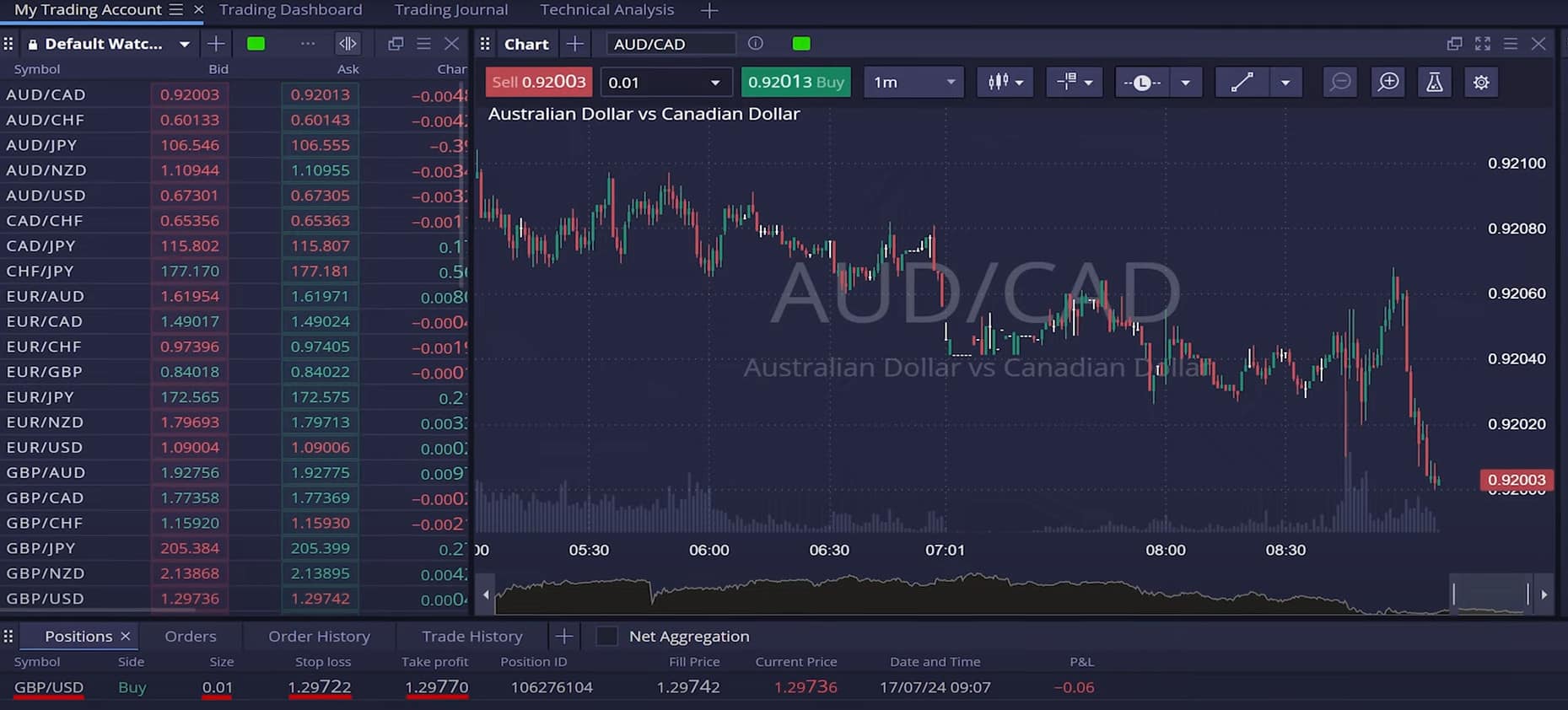
    Testing the copier on a demo account allows you to get a feel for how it handles real market conditions without risking real capital. Initially, I set up my MetaTrader to DXTrade copier. I ran a GBP/USD trade with a 0.01 lot size. It flawlessly copied the trade to DXTrade, matching the stop loss and take profit exactly. Whether you’re trading MT4 to DXTrade or MT5 to DXTrade, testing on a demo ensures the copier is working as expected. After a few tests, you’ll be ready to move to live trading. This will give you comfort that your trades will be synced perfectly across both platforms.

    Key Features to Look for in a MetaTrader to DXTrade Copier

    Before selecting the trade copier you want to use, as there are several to choose from, you should be aware of a few key features needed. You want to know your trades will be copied correctly. Every time.

    • Real-Time Execution
      One of the key features is real-time execution. Your copier should mirror trades from MetaTrader to DXTrade instantly, with no delays. Any lag in execution could lead to missed opportunities, especially in fast-moving markets.
    • Lot Size Multipliers
      Adjusting lot sizes is crucial, especially if the account sizes between your MetaTrader and DXTrade platforms differ. A lot size multiplier will automatically scale your trades to fit the balance of each account, ensuring proportional risk exposure.
    • Multiple Account Support
      If you manage multiple accounts, whether for clients or as part of a prop firm, your copier should be able to sync trades across all accounts simultaneously. Look for multi-account support, as it simplifies the process and helps keep trades consistent across portfolios.
    • Risk Management Tools
      A good copier will also come equipped with built-in risk management features. Some tools include maximum daily loss limits, maximum profit limits, and even symbol-specific limits, all designed to help you manage risk effectively.
    • Symbol Mapping
      If the same asset has different symbols on MetaTrader and DXTrade, the copier should allow you to map those symbols to ensure proper trade execution. This is particularly important when trading on multiple brokers that use different symbol names for the same assets.

    Real-World Example

    Ok, let me give you an example of how I use my MetaTrader to DXTrade copier. One of the trades I opened was a modest GBP/USD position on MetaTrader with a 0.01 lot size and a 48-pip stop loss. Within just a few seconds, the trade was duplicated perfectly on DXTrade. The copied trade included the exact stop-loss and take-profit. To test further, I closed the trade on MetaTrader, and it was automatically closed on DXTrade as well. The process was seamless and saved me the hassle of manually entering trades on both platforms. So, it passed the test.

    Benefits of MetaTrader to DXTrade Copiers for Prop Firms

    For traders moving over to, or at least adding the very popular prop firm trading, a MetaTrader to DXTrade copier can be a very useful tool. Many prop firms now require traders to use DXTrade, but this doesn’t mean you can no longer use your MetaTrader setup. A copier lets you continue executing trades on MetaTrader while following the prop firm’s requirement of using DXTrade. For those of you, like myself, who manage multiple accounts, the copier automates the entire process, reducing the chances of (the ever common) human error and ensuring trades are consistent across all platforms.

    Managing Risk

    While using a trade copier can simplify your trading, it’s crucial to continue managing risk appropriately. For example, many copiers, like the one from DaneTrades, offer the ability to set maximum daily losses or maximum profit targets, which are invaluable tools for risk management. What this adds is an extra layer of protection. If for any reason, the copier gets the protection settings wrong, you have the peace of mind knowing your capital is safe.

    It’s also important to regularly monitor your copier to ensure it’s functioning properly. Don’t become complacent just because it automates the process—make sure you’re still checking that trades are being executed as expected.

    DaneTrades: A Reliable Solution

    If you’re searching for a robust and trusted trade copier, DaneTrades offers an excellent option. Their copiers support both MT4 and MT5, meaning you can choose the version that best suits your platform. Key features of DaneTrades include:

    • Unlimited Account Syncing
      This feature allows you to sync trades across multiple accounts, making it an ideal solution for prop traders or portfolio managers who need to mirror trades on various accounts.
    • Real-Time Execution
      The copier transfers trades instantly between MetaTrader and DXTrade, ensuring you don’t miss any market movements.
    • Custom Symbol Mapping
      With this feature, you can map symbols accurately between MetaTrader and DXTrade, ensuring trades execute correctly even if the asset names differ.

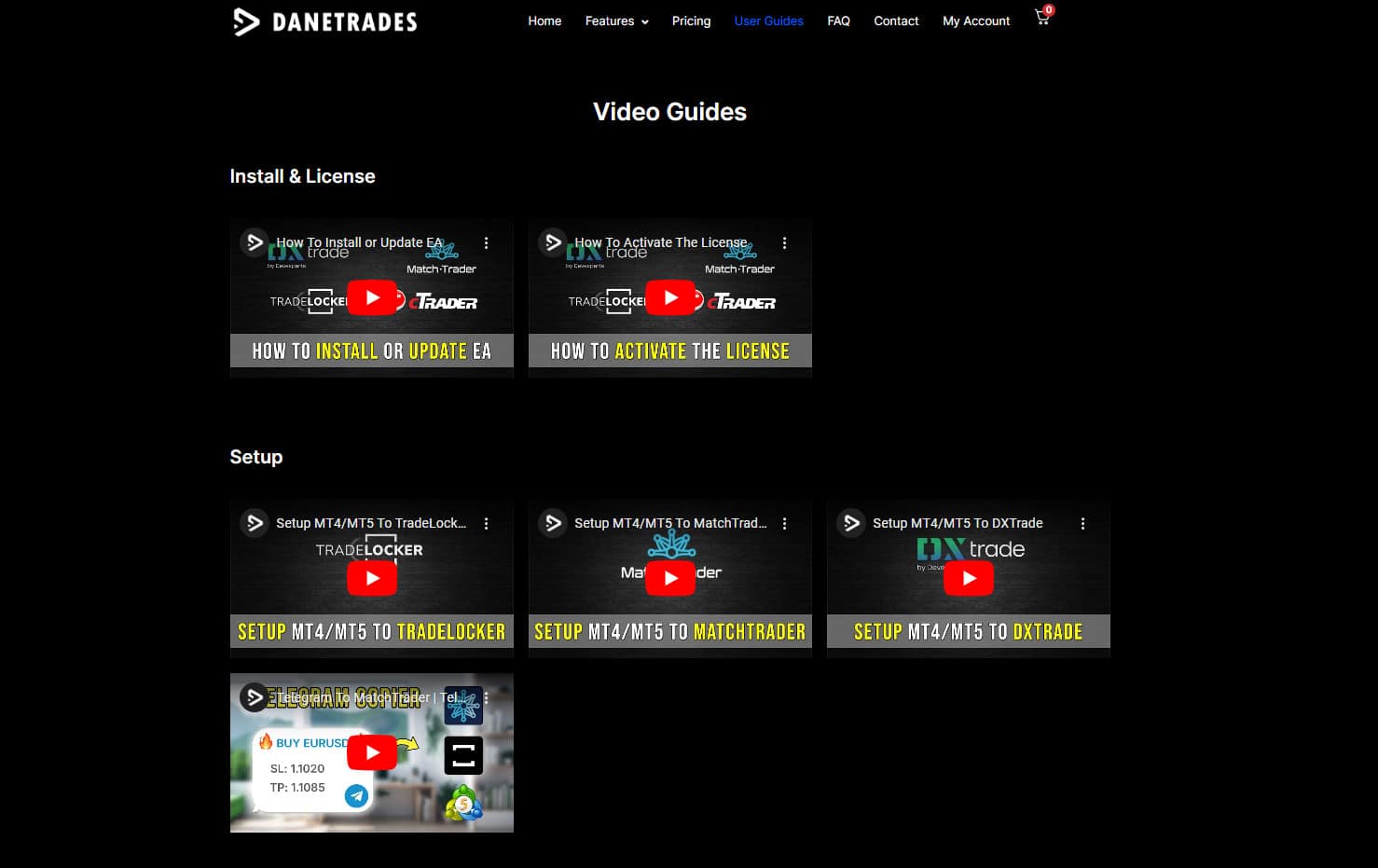
    DaneTrades also provides comprehensive user guides and video tutorials, making it easy to set up even for beginners.

    metatrader-to-dxtrade-copier-5

    Final Thoughts

    A MetaTrader to DXTrade copier is a very valuable tool for any trader looking for an easy way to continue using MetaTrader to trade, while getting the benefit of being able to use multiple platforms. Whether you’re a manual trader or prefer trading with robots and even managing multiple accounts, a trade copier saves you time, reduces errors, and ensures your strategies remain consistent across platforms. By configuring your copier correctly and testing it on a demo account, you can move to live trading with confidence with the benefit of trades being placed across both platforms. With solutions like DaneTrades, you’ll be able to automate this process and become a more versatile trader with more options at your disposal.

  • Royal GER30 DAX Trading Strategy Review

    Royal GER30 DAX Trading Strategy Review

    Royal GER30: A DAX Trading Strategy EA

    Is it possible for a robot to trade the DAX index with consistent profits? That’s what I wanted to find out when I came across and started using the Royal GER30 EA. I’ve been testing it in a demo and live account, and at this stage, I have good feeling about it’s potential. In this review, I’ll share my personal experience with the Royal GER30 EA. I’ll cover everything I believe you need to know, from installation and setup to live trading results. Whether you’re interested in day trading DAX, you’ve been looking for a DAX scalping strategy, or simply curious about automating your trades, this review will be worth investing a little time into.

    What is the Royal GER30 EA?

    The Royal GER30 EA is a trading robot that has been designed to trade the DAX Index specifically. The DAX Index is linked directly to the to-performing companies in Germany. Some of the more experienced traders probably know that in 2021, the DAX went from tracking the top 30 companies (GER30) to the top 40 companies (GER40). 10 more companies were added to the index. This change doesn’t affect the EA trading the DAX in any way. You may find some brokers still list the asset as GER30, while other have it on their systems as GER40. The EA can work with either, as it is the exact same asset or index.

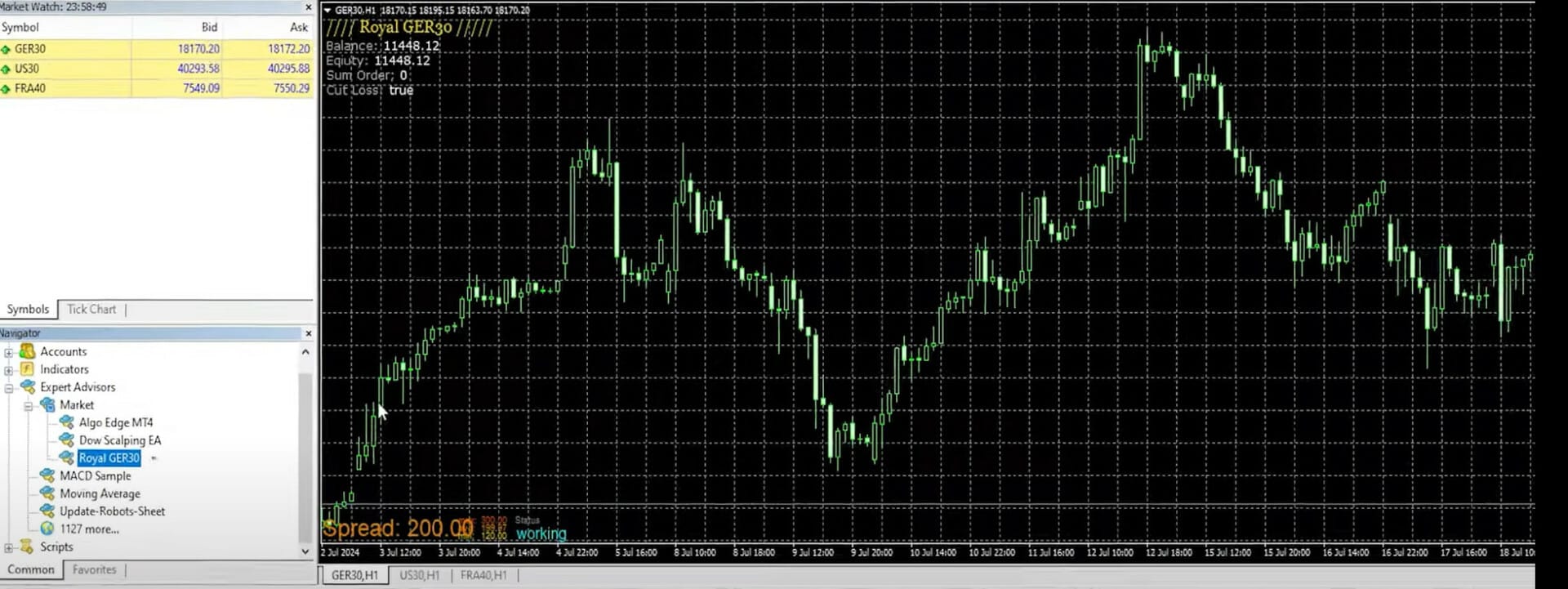
    The EA has been designed for and runs on the H1 time frame. Generally, it holds trades anywhere from a few hours to a day or two . It’s definitely not a high-frequency trading bot, and the EA doesn’t continuously open trades unnecessarily. Instead, it focuses on carefully selecting high-probability trades based on very specific rules and confirmations from the indicators in the strategy. If you prefer steady and controlled trading, this EA might be the perfect fit for you.

    dax-trading-strategy-1

    DAX Trading Strategy: Who Is It For?

    The Royal GER30 EA is ideal for traders who prefer a calculated approach to trading CFDs on Indices. If you enjoy day trading DAX and other Indices, but don’t want to constantly monitor the charts, this EA could be an excellent choice. It seems perfect for medium-term trades and won’t overwhelm your account with high-frequency orders and potentially suffocating your margin. This makes it suitable for traders who want a balance between risk management, profitability and the freedom of having additional margin in their trading accounts. There is always a risk of unexpected dips from other EAs they may be trading in the same account.

    Easy Setup and Installation

    Step-by-Step Installation Guide

    Setting up the Royal GER30 EA is quick and straightforward. I have only been able to find a MetaTrader 4 version, and it was created in 2021. This is important to note if you use MetaTrader 5 exclusively and would like to test or trade the robot. Like all robots from the MQL5 Marketplace, once you log into the site, you can download the EA, which will confirm that you have MT4 installed, and the EA will then be automatically added to your platform, once you’ve signed in with your MQL5 credentials. To make things a little easier you you, you can find the Royal GER30 here.

    I had it running within 10 minutes on my MT4 platform. Once you’ve installed it, you can customize the EA to match your trading style, particularly the risk settings, however I chose to run it using default settings, as I normally do, to get an idea of the performance using it as is.

    Customizing the EA to Match Your Risk Tolerance

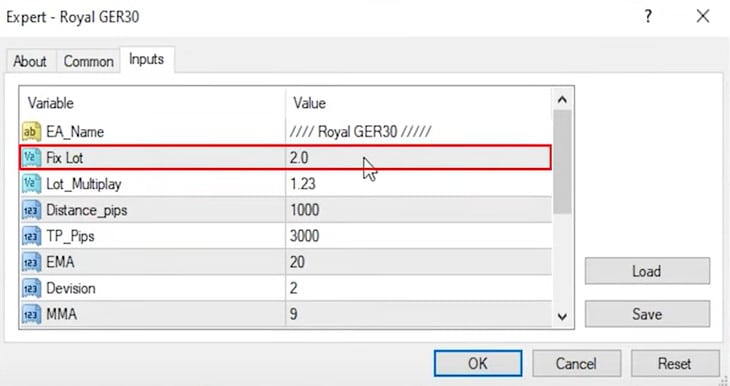
    One of the standout features of the Royal GER30 EA is its customization options. You can adjust lot sizes, set a trailing stop, and modify other parameters based on your risk appetite and account size. I prefer trading conservatively, so I adjusted my starting lot size to 0.2 lots on my live account. However, if you’re open to taking on more risk, you can modify these settings for higher potential returns.

    DAX Trading Strategy: Why You Should Start With a Demo Account

    It’s vital to test any new EA on a demo account before trading live. It gives you the opportunity to get an idea of how an EA would perform in real market conditions without risking any of your own money. I ran the Royal GER30 EA on a $10,000 demo account with a starting lot size of 2 lots, which is the default.

    Real-World Results

    Demo Testing: Zero Losses

    The Royal GER30 EA performed well in testing In my demo account, it didn’t post a single losing trade. Every trade ended in profit, which is especially impressive considering the volatility of the DAX index.

    This EA doesn’t place trades every day, which might seem slow to some traders. I’ve often been asked my mostly new traders who place an EA on a chart for 2 or 3 hours, why it hasn’t executed any trades yet. The Royal GER30 opens and later, closes trades only when very specific rules and conditions are met.

    As mentioned, after running it for a few months, the EA performed very well, with no losses. Of course, this doesn’t mean it will continue to, but for testing purposes, it gave me the confidence to install it on a live account.

    Live Trading with the DAX Trading Strategy

    After a successful demo test, I transitioned to a live trading account with a broker that offers spreads starting from 1.5 pips—which is ideal when trading indices like the DAX. Tight spreads make a big difference, and can be the difference between a profitable and unprofitable outcome.

    On my live account, I started with $1,000 and adjusted the lot size to 0.2 lots to match my smaller balance. I wanted to see if the Royal GER30 EA could trade as well in my live account as it had in my demo account, with potentially different trading conditions.

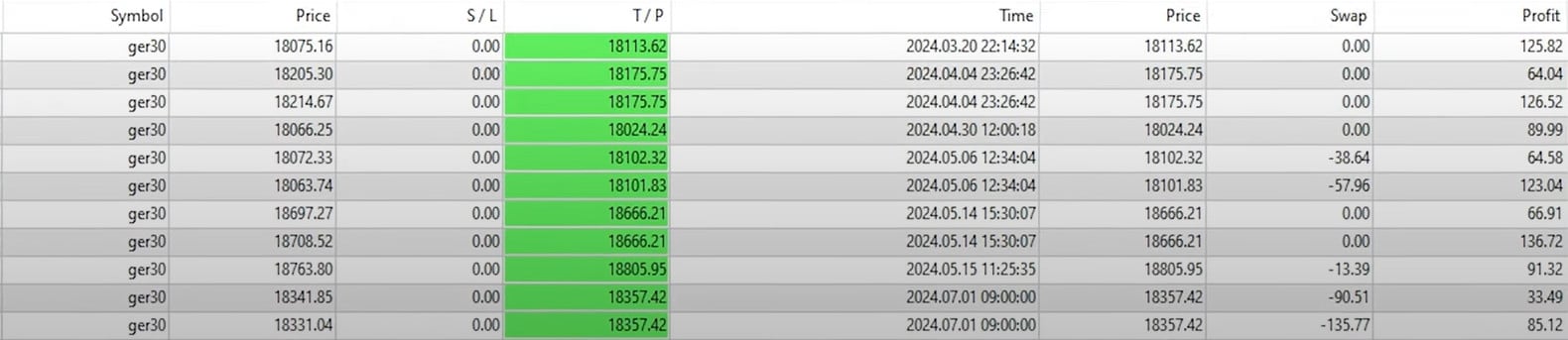
    Live Results: 10 Consecutive Wins

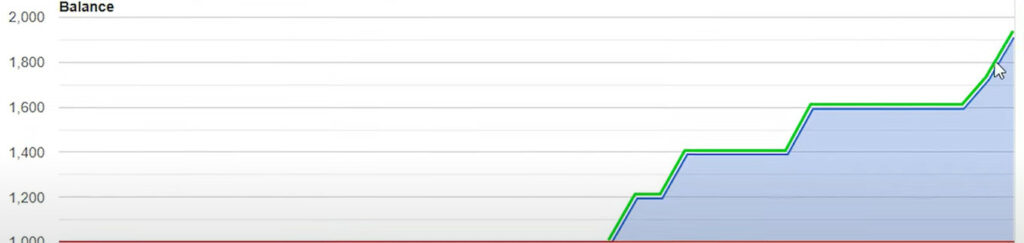
    Within just two weeks of live trading, the EA delivered 10 consecutive winning trades. Here’s a quick breakdown of some of the trades:

    • First trade: $125.82 profit
    • Second trade: $64.04 profit
    • Third trade: $126.52 profit

    The subsequent trades were all profitable and by the end of the two-week period, my account had almost doubled. I was blown away that a free EA could deliver this kind of performance. It’s rare for an EA to deliver such consistent results, especially when trading indices, particularly the DAX.

    dax-trading-strategy-3

    Key Features of the Royal GER30 EA

    1. Adjustable Lot Sizes

    The Royal GER30 EA allows you to customize the lot size based on your risk tolerance and account balance. This flexibility makes it ideal for both small and large accounts. For instance, if you’re more conservative, like I am, you can keep the lot size small. If you want to maximize profits, you can increase it accordingly.

    2. Trailing Take Profit

    One of the key risk management tools in this EA is the trailing take profit. This feature locks in profits as the trade moves in your favor. As the market price rises, the EA adjusts your stop loss, ensuring you lock in gains without having to monitor the market constantly. If the market turns, you’ve already secured your profits.

    3. Low Drawdown

    In my tests, the Royal GER30 EA recorded a maximum drawdown of less than 4%, which is impressive, however as I have said many times, this can change and it’s always best to exercise caution and trade with a more low-risk approach. Greed is the biggest danger in trading.

    4. No Losing Trades

    Throughout both my demo and live tests, the Royal GER30 EA didn’t register a single losing trade. That kind of performance is very rare in automated trading, particularly with free EAs. Having said that, many developers offer a free to prove their strategy works, and could give you an EA for 1 currency pair for free, with the option to buy the full pack for more assets.

    Risk Management and Drawdown Control

    DAX Trading Strategy: Strong Risk Controls

    Risk management is crucial when trading, and the Royal GER30 EA does this exceptionally well. There are a number of adjustable settings that you can tailor to suit your account size, risk tolerance and frankly, the amount of time you want to spend monitoring your trades.

    Is the Royal GER30 EA Suitable for Scalping?

    While the Royal GER30 EA isn’t a traditional scalping robot, it can work for traders looking to take advantage of short-term price movements. It doesn’t place frequent trades like a typical scalper, but its ability to capture smaller market movements makes it potentially suitable for day trading DAX or even a DAX scalping strategy, depending on how you configure the risk settings.

    Performance in Different Market Conditions

    DAX Trading Strategy: Handling Volatility

    The Royal GER30 EA performed exceptionally well in varying market conditions over the time I tested it. It ran during times of increased volatility as well as more stability and the EA continued to close trades on profit. The built-in risk management features seemed to work well, which is evident from the final results of my testing, and so far, live trading.

    Advanced Strategies with the Royal GER30 EA

    DAX Trading Strategy: Scaling Across Multiple Accounts

    One of the benefits of the Royal GER30 EA is that, because it’s free, you can use it on several accounts. You can configure different risk settings for each account—experimenting with both conservative and aggressive risk profiles. You’re able to adjust settings, change entry lot sizes, Take Profit settings, and others to find the setup that works best for you and suits your particular trading style and goals. You can also run various setups to get a more balanced and diverse portfolio. But remember to do this all on several demo accounts first. And do it for a while to really get a good understanding about how the settings affect performance in different market conditions and volatility. This approach works especially well if you are managing several funded accounts and want unique entries for each or want to test the EA on different brokers.

    Using Leverage Responsibly

    While the Royal GER30 EA performs well with what I would consider a higher leverage, it’s essential to use leverage responsibly. I used 1:100 leverage from my broker. This is my preferred leverage level because it allows me to place trades without using too much of my margin. Higher leverage can amplify both profits and losses, so while the EA performed well and I might feel tempted to increase leverage and profits, I also risk facing bigger losses if trades go against me.

    Final Thoughts: Is the Royal GER30 DAX Trading Strategy Worth It?

    The Royal GER30 EA is certainly worth looking at as an additional trading tool in your portfolio. It’s consistent performance and low drawdown to date, as well as a fair amount of customizable settings including risk management features, makes it a strong contender in the niche of algorithmic indices CFD trading. Whether you’re new to trading or have years of experience, this free EA is easy to download, install and set up and offers many attractive features.

    In my account, the EA delivered 10 consecutive wins and nearly doubled my account in two weeks. For the reasons I mentioned above, I believe it’s an excellent tool for traders who are looking for steady, reliable growth. Personally, I’ll keep it on my live account and I’m looking forward to seeing how it performs there, while testing it with different settings on several more demo accounts. I’m always looking for new EAs to trade Indices, and I hope I can find more with this kind of performance.

    dax-trading-strategy-5

    If you’re interested in automating your DAX trading, I recommend giving the Royal GER30 EA a try. Start with a demo account, adjust the settings to suit your risk profile, and once you’re comfortable, transition to live trading. But remember, trading conditions can differ between demo and live trading accounts, so don’t jump in with both feet. Rather, find settings that you’re comfortable with in your demo account and replicate these in your live account, but with smaller entries until you see if the performance matches your demo account.

    As always, I wish you safe and profitable trading and I’ll see you in the next post.

  • Is Trading Forex Profitable? Tips for Becoming a Successful Trader

    Is Trading Forex Profitable? Tips for Becoming a Successful Trader

    Forex trading has long intrigued both novice and experienced investors with its promise of significant profits. As we are already into the last quarter of 2024, the question remains: is trading forex profitable, and how can one navigate this complex market to become a successful forex trader? This article offers a comprehensive look into the mechanics of the forex market, the role of trading strategies, as well as the essential steps required to thrive in this dynamic environment.

    How Does Forex Trading Work?

    Forex major currency pairs

    Understanding the Forex Market

    The forex market, also known as the foreign exchange market, is the largest financial market in the world, where currency pairs are traded 24 hours a day. Unlike other markets, there is no centralized exchange; rather, trading is conducted over-the-counter via a global network of banks, brokers, and financial institutions. This decentralized nature allows for a diverse range of trading opportunities, making forex trading both highly accessible and potentially profitable for traders who understand the intricacies of the market.

    To navigate this huge market, a trader must understand how currency values are influenced by different factors such as economic indicators, geopolitical events, and market sentiment. Understanding these factors is crucial not only in making informed trading decisions but also in leveraging the forex market’s potential. As traders become more proficient in interpreting these signals, they can exploit market movements to their advantage, potentially achieving a profitable outcome.

    Key Currency Pairs You Need to Know

    In the world of forex trading, not all currency pairs are created equal. The most popular pairs, such as the EUR/USD, USD/JPY, GBP/USD, and USD/CHF, among others, are known as the major currency pairs. These pairs are highly liquid and often exhibit lower volatility, which makes them attractive options for both beginner and experienced traders. For this purpose, understanding the behavior and correlation of these key pairs is essential for developing effective trading strategies.

    Trading these major pairs often involves analyzing different factors such as economic data releases, interest rate decisions, and geopolitical developments that can impact currency values. By focusing on these pairs, traders can take advantage of the high liquidity coupled with tighter spreads, which may contribute to a more profitable trading experience. Moreover, familiarity with these pairs provides a solid foundation for expanding into other currency pairs as traders gain confidence and expertise.

    The Role of Leverage in Forex Trading

    Leverage is a powerful tool in forex trading that allows traders to control larger positions with a smaller amount of capital. While leverage can amplify profits, it also increases the potential for losses, making it a double-edged sword. Understanding how to use leverage responsibly is critical for any trader in order to achieve profitable forex trading outcomes.

    Above all, traders must calculate their risk tolerance and ensure they do not overextend their trading accounts by using excessive leverage. By employing risk management techniques, such as setting stop-loss orders and maintaining a well-balanced trading plan, traders can harness the benefits of leverage without exposing themselves to undue risk. Mastery of leverage can transform a trading system from a speculative venture into a structured approach to capturing profit in forex.

    What Makes Forex Trading Profitable?

    Analyzing Profit Potential in Forex

    To determine whether forex trading can be profitable, traders must analyze the market’s profit potential by assessing various factors, including market conditions, volatility, and trading strategies. The ability to identify and capitalize on market trends is crucial to maximizing profits. Successful traders often employ technical analysis and fundamental analysis to gauge market direction and make informed trading decisions.

    By understanding market dynamics and being able to predict currency movements, traders can position themselves to exploit opportunities and achieve significant profit. The use of trading tools and platforms that provide real-time data and analytics further enhances a trader’s ability to identify profitable trades. Consistently evaluating and refining one’s approach is key to maintaining a competitive edge and ensuring forex trading remains profitable.

    How Trading Strategies Influence Profitability

    Trading strategies are pivotal in determining the profitability of forex trading. Each strategy involves a distinct approach to the market, tailored to specific trading styles and risk appetites. The choice of strategy can significantly impact the potential for forex trading profit, as each method requires different levels of analysis, patience, and market insight. Successful traders often diversify their strategies to adapt to varying market conditions, thereby increasing their chances of making a profit.

    Avoiding Emotional Trading to Increase Profits

    Emotional trading is one of the biggest obstacles to achieving consistent profitability in forex trading. When traders let emotions such as fear or greed dictate their trading decisions, they often deviate from their trading plans, leading to impulsive actions that can result in significant losses. To avoid emotional trading, traders must cultivate discipline and adhere to a well-defined trading plan.

    Developing a robust set of rules and sticking to them, even in the face of market fluctuations, can help traders maintain their focus and avoid costly mistakes. Utilizing tools such as trading journals to analyze past trades and learn from previous experiences can also contribute to more rational decision-making. By prioritizing logic over emotion, traders can enhance their ability to execute profitable forex trading strategies consistently.

    If you are looking for a way to trade Forex without emotional stress while achieving consistent results, join our Exclusive 21-Day FREE Algo Trading Course + ROBOTS to explore advanced algorithmic programs.

    Which Forex Trading Strategies Should You Use?

    Exploring Day Trading vs Swing Trading

    Day trading and swing trading are two prevalent forex trading strategies that cater to different trading styles and objectives. Day trading involves opening and closing multiple trades within a single day, aiming to capitalize on short-term price movements. It requires a keen eye for market trends, rapid decision-making, and the ability to manage stress effectively.

    Swing trading, however, takes a more extended approach, with traders holding positions for several days or weeks to exploit intermediate-term trends. This strategy allows for more thoughtful analysis and less frequent trading decisions, making it suitable for those who prefer a less intensive trading style. Selecting between these strategies depends on a trader’s time commitment, risk tolerance, and market expertise.

    Building a Solid Trading Plan

    A well-structured trading plan serves as a blueprint for success in forex trading. It outlines objectives, risk management protocols, and specific entry and exit strategies tailored to individual trading styles. A comprehensive trading plan considers factors such as market conditions, currency pairs, and leverage, providing a clear path to achieving profitable forex trading.

    Developing and adhering to a trading plan requires discipline and a commitment to continuous improvement. Traders must regularly review and refine their plans to adapt to evolving market dynamics and personal growth. By having a solid plan in place, traders can approach the forex market with confidence, mitigate risks, and maximize their profit potential.

    Check out the video below to find out more about Different Types of Strategies with Expert Advisors.

    Choosing the Right Forex Broker

    Selecting the right forex broker is a critical decision that can significantly impact a trader’s success. A reputable broker offers competitive spreads, a robust trading platform, and reliable customer support. Traders should assess brokers based on their regulatory compliance, trading conditions, and the range of services provided.

    Additionally, evaluating a broker’s reputation through reviews and testimonials can provide valuable insight into their reliability and trustworthiness. Choosing a broker that aligns with a trader’s specific needs and trading style is essential for facilitating seamless trading operations and achieving profitable outcomes. By partnering with the right broker, traders can focus on developing their strategies and executing trades effectively.

    How Can You Become a Successful Forex Trader?

    Starting Your Forex Trading Journey

    Embarking on a forex trading journey requires careful preparation and a solid foundation of knowledge. Aspiring traders should begin by familiarizing themselves with the fundamentals of the forex market, including key concepts such as currency pairs, leverage, and trading strategies. Educating oneself through online courses, webinars, and reading materials can provide a comprehensive understanding of the market dynamics.

    Practicing with demo accounts is also crucial, as it allows beginners to gain hands-on experience without risking real capital. By simulating real trading conditions, traders can develop their skills and build confidence in their trading decisions. Starting with a clear plan and a focus on continuous learning sets the stage for a successful forex trading career.

    For those interested in in-depth, structured learning, consider exploring EA Trading Academy’s courses, which offer valuable insights and practical resources for building a solid trading foundation.

    Learning from Successful Traders

    One of the most effective ways to become a successful forex trader is to learn from those who have already achieved success in the field. Observing the strategies, habits, and decision-making processes of seasoned traders can provide invaluable insights into what it takes to thrive in the forex market. Engaging with trading communities, attending seminars, and seeking mentorship are excellent avenues for gaining knowledge and inspiration.
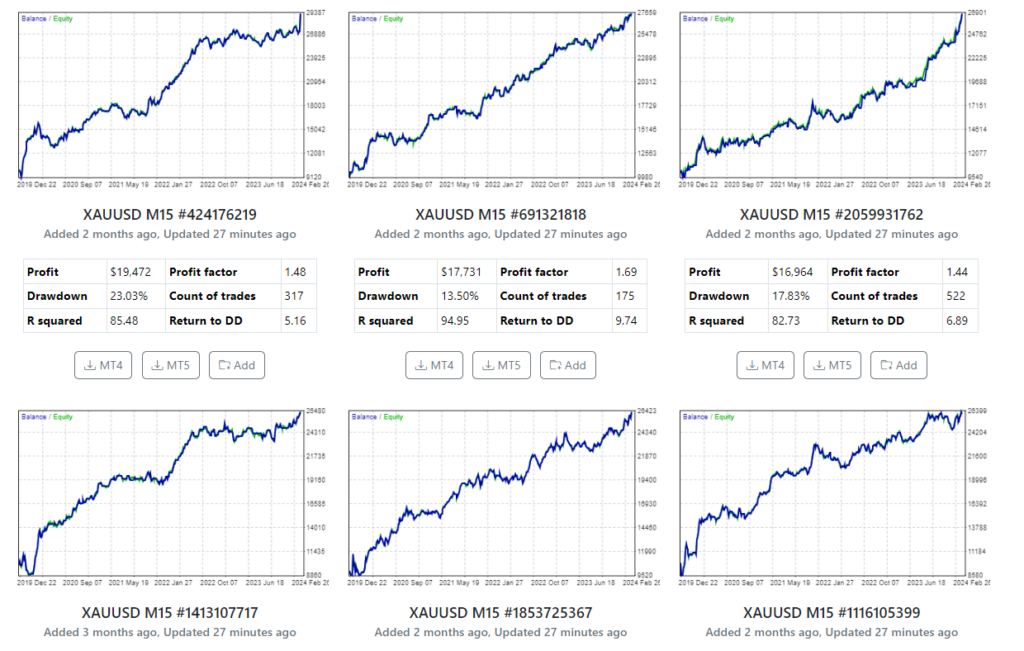
    Successful traders often stress the importance of discipline, risk management, and adaptability, emphasizing that these elements are crucial for long-term profitability. By emulating their practices and incorporating their lessons into one’s trading approach, aspiring traders can enhance their skills and increase their chances of making a profit in forex trading.

    Managing Your Trading Capital Effectively

    Effective capital management is a cornerstone of successful forex trading. Traders must allocate their funds wisely and implement risk management strategies to protect their capital from significant losses. This involves setting realistic goals, determining risk tolerance, and adhering to position sizing rules that prevent over-leveraging.

    Using tools such as stop-loss and take-profit orders can help traders manage their risk exposure and lock in profits. Additionally, maintaining a trading journal to analyze past performance and adjust strategies accordingly is crucial for continuous improvement. By managing trading capital effectively, traders can sustain their trading activities and increase their potential for long-term profitability.

    If you already using algo trading , you should check this video: How to Keep Your Trading Robots Profitable

    What Are the Risks of Forex Trading?

    risk management strategies in trading

    Understanding Why Many Traders Lose Money

    Despite the potential for high profits, forex trading carries significant risks that can lead many traders to lose money. Common reasons include a lack of understanding of the market, inadequate risk management, and emotional decision-making. Many traders enter the market without sufficient knowledge or preparation, leading to costly mistakes.

    To mitigate these risks, traders must educate themselves thoroughly and develop a disciplined approach to trading. By focusing on building a solid foundation of knowledge and implementing sound risk management strategies, traders can reduce the likelihood of losses and improve their chances of achieving profitable forex trading.

    Mitigating Risks with a Managed Forex Account

    For traders seeking to minimize risks, a managed forex account offers a viable solution. These accounts are handled by professional money managers who make trading decisions on behalf of the investor. By leveraging the expertise of seasoned traders, investors can benefit from their knowledge and experience while minimizing their own involvement in day-to-day trading activities.

    Managed accounts come with their own set of considerations, such as management fees and the level of control investors wish to retain. However, they provide an opportunity to participate in the forex market without the stress and complexity of managing trades independently. For those looking to mitigate risks while still pursuing profit potential, a managed forex account can be an attractive option.

    Recognizing the Impact of Exchange Rate Fluctuations

    Exchange rate fluctuations are inherent in forex trading and can have a significant impact on a trader’s profitability. These fluctuations are driven by a myriad of factors, including economic data releases, geopolitical events, and market sentiment. Traders must stay informed and be able to anticipate potential changes in exchange rates to manage their trading positions effectively.

    Understanding the drivers of currency movements and using technical and fundamental analysis can help traders make informed predictions about future price action. By recognizing the potential impact of exchange rate fluctuations, traders can adjust their strategies accordingly and position themselves to capitalize on profitable opportunities while minimizing risks.

    Conclusion

    While forex trading offers significant profit potential, success depends on an informed, strategic approach. By mastering key market fundamentals, employing disciplined risk management, and refining strategies based on market dynamics, traders can build a path toward profitability. Ultimately, consistent success in forex trading requires patience, adaptability, and a commitment to learning—making it accessible and achievable for those willing to invest the time and effort.

  • Best Indicators for Gold Trading: Top Technical Analysis Tips to Trade Gold

    Best Indicators for Gold Trading: Top Technical Analysis Tips to Trade Gold

    Gold trading has become a prominent aspect of the financial markets, attracting traders from various backgrounds. Understanding the intricacies of trading gold can elevate a trader’s ability to enter a trade successfully. With the right indicators and trading strategies, traders can capitalize on the price movement of gold, whether they are day trading or employing longer-term strategies. In this article, we explore the best indicators for gold trading and effective technical analysis tips that can enhance your trading experience.

    Understanding Gold Trading

    Gold trading encompasses various methods and strategies that traders utilize to capitalize on the fluctuations in the price of gold. The significance of gold in financial markets cannot be overstated, as it often acts as a safe haven during times of volatility. Traders keen on entering the gold market need to familiarize themselves with the best gold trading practices, including the use of technical analysis. By understanding how to read market signals and price action, traders can make informed decisions on when to buy or sell gold.

    The Importance of Gold in Financial Markets

    Gold serves as a critical asset in financial markets, often viewed as a hedge against inflation and economic uncertainty. Its intrinsic value makes it a preferred choice for traders looking to diversify their portfolios. The price of gold tends to remain stable or even increase when other commodities, like oil, face downturns. This characteristic allows traders to identify trade opportunities that may not be apparent in other markets. Consequently, understanding the dynamics of the gold market and the factors influencing gold prices is vital for any trader aiming to maximize profits.

    Overview of Gold Trading Strategies

    Successful gold trading relies heavily on effective trading strategies tailored to the trader’s style and goals. Strategies may include trend trading, where traders follow the momentum of price movements, or scalping, which involves making quick trades based on small price changes. Utilizing technical indicators like moving averages and the relative strength indicator (RSI) can provide traders with insights into market conditions, helping them determine if the market is overbought or oversold. By applying these trading tactics, traders can enhance their ability to spot potential trading signals and enter trades with confidence.

    If you want to trade with profitable automated strategies and have lifetime access to them, Get the Top 10 Gold Robots from Top 10 Robots App

    Types of Gold Assets: Futures vs. Spot Trading

    When considering gold trading, traders often weigh the options of trading gold futures versus spot trading. Gold futures involve contracts that obligate the trader to buy or sell gold at a predetermined price on a future date, allowing for leverage and the potential for larger profits. In contrast, spot trading involves the immediate exchange of gold at the current market price, which appeals to traders looking for instant transactions. Each method has its advantages, and understanding the differences between these types of gold assets is crucial for developing effective gold trading strategies tailored to individual trading styles.

    Key Indicators for Gold Trading

    Moving Averages: A Fundamental Indicator for Gold

    Moving averages are among the best indicators for gold trading, providing traders with a clear view of price trends over specific periods. By smoothing out price fluctuations, moving averages help traders identify potential trade opportunities and determine whether to buy or sell gold. For instance, a simple moving average (SMA) can highlight the average price of gold over the last few days, while exponential moving averages (EMA) give more weight to recent prices, making them responsive to price movement. Utilizing moving averages in conjunction with other technical indicators can enhance a trader’s ability to identify momentum shifts and potential reversal points in the gold market.
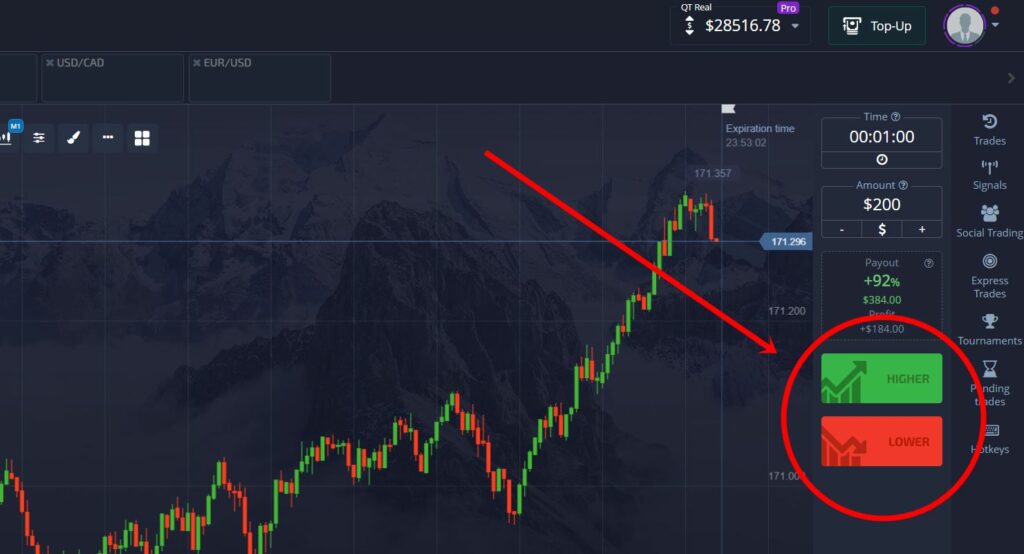
    Relative Strength Indicator (RSI) in Gold Trading

    The Relative Strength Indicator (RSI) is a crucial momentum indicator that helps traders assess whether the price of gold is overbought or oversold, thereby guiding them in making informed trading decisions. Typically, an RSI above 70 indicates that gold may be overbought, while an RSI below 30 suggests oversold conditions. This analysis in gold trading can signal potential reversal points, providing traders with strategic opportunities to enter or exit trades. By integrating RSI into their technical analysis framework, traders can enhance their understanding of market dynamics and improve their chances of executing profitable trades throughout various trading sessions.

    Best Gold Indicators for Technical Analysis

    In addition to moving averages and the RSI, several other indicators can significantly contribute to effective technical analysis in gold trading. Tools such as Bollinger Bands and MACD (Moving Average Convergence Divergence) can provide valuable insights into market volatility and trend strength.

    If you want to see also how the Bollinger Bands indicator works in practice, you can download and test yourself the Best Robot for Gold Trading for FREE. Also you can check out this video (with Gold Trading Strategy explained).

    Bollinger Bands define price ranges and highlight potential breakouts, while MACD assists traders in identifying changes in momentum and trend direction.

    Gold trading strategy using MACD indicator

    If you want to test a FREE ready-to-use robot, using MACD indicator, we suggest you try the Small Account Gold EA. Or check out this video if you want to know How to Trade Gold in a Small Account (with MACD Strategy Explained).

    Combining these indicators with price action analysis allows traders to create a comprehensive trading strategy that maximizes their ability to capitalize on price movements in the gold market. Ultimately, selecting the best gold trading indicators will depend on a trader’s unique trading style and objectives.

    Best Practices for Trading Gold

    How to Start Trading Gold Effectively

    Starting to trade gold effectively requires a solid understanding of the market dynamics and the implementation of best trading practices. New traders should begin by choosing a reliable trading platform that offers access to gold trading products like futures and spot trading. Additionally, developing a comprehensive trading plan that incorporates risk management strategies, including setting stop-loss and take-profit levels, is crucial. Analyzing market trends through technical indicators and staying informed about economic events that affect gold prices can also enhance decision-making. By establishing a disciplined approach and continually refining their strategies, traders can improve their performance in the gold market.
    Scalping Strategies for Gold Traders

    Scalping is a popular trading tactic in the gold market, involving quick trades aimed at profiting from small price movements over short time frames. Traders employing scalping strategies often rely on technical indicators such as the moving average and RSI to identify rapid entry and exit points. By closely monitoring market conditions during active trading hours, scalpers can capitalize on minute fluctuations in the gold price. It’s essential for scalpers to maintain a disciplined approach, utilizing effective risk management practices to safeguard their capital while maximizing potential returns. This fast-paced trading style can be rewarding but requires a keen understanding of market volatility and price action.

    Using MT4 for Gold Trading: A Trader’s Guide

    MetaTrader 4 (MT4) is a widely used trading platform that offers robust features for gold trading (you can get here our gold trading dedicated course where we shod how to use MetaTrader for manual and algo trading), making it an essential tool for traders (check out this guide about trading XAUUSD on MT4). Its user-friendly interface allows traders to access a variety of technical indicators, including moving averages and the RSI, directly on their charts. MT4 also supports automated trading strategies, enabling traders to execute trades based on predefined criteria. Additionally, the platform provides real-time market data and comprehensive charting tools, helping traders analyze the gold market effectively. By leveraging the capabilities of MT4, traders can enhance their trading experience and improve their chances of success in the competitive world of gold trading.

    Do you want to trade with 5 Gold Expert Advisors at the same time ? Learn how and get your 10 Expert Advisors for Gold Trading included!

    Gold Signals and Their Impact on Trading Decisions

    Gold signals play a pivotal role in shaping trading decisions for both novice and experienced traders. These signals, derived from various technical indicators, provide insights into potential price movements in the gold market. For instance, traders often analyze the Relative Strength Indicator (RSI) to determine whether the price of gold is in an overbought or oversold condition. When combined with moving averages, these signals can enhance a trader’s ability to identify optimal entry and exit points. By accurately interpreting gold signals, traders can make informed decisions that align with their trading strategies, ultimately increasing their chances of success in gold trading.

    Evaluating Economic Indicators Affecting Gold Prices

    Economic indicators play a significant role in influencing gold prices, making fundamental analysis essential for traders. Factors such as inflation rates, interest rates, and geopolitical events can dramatically impact the demand for gold as a safe haven asset. For example, a rise in inflation may lead traders to flock to gold, driving up its price. Additionally, currency fluctuations, particularly in the U.S. dollar, can affect the price of gold, as it is often traded in USD. By evaluating these economic indicators, traders can better understand the underlying factors that affect the gold market, allowing them to anticipate price movements and adjust their trading tactics accordingly.

    Trading Hours and Their Influence on Gold Trading

    The trading hours of the gold market can significantly influence trading strategies and price volatility. Gold is traded globally, with major trading sessions taking place in London and New York. This overlap creates heightened volatility, particularly during the London trading hours, where high trading volumes often lead to rapid price movements. Traders need to be aware of these trading hours to optimize their strategies, whether they are day trading or implementing longer-term tactics. Timing trades during these active periods can increase the likelihood of encountering favorable trade opportunities, as market participants react to economic news and other developments affecting the gold price.

    Gold Trading Hours: Best Time to Trade XAUUSD

    Identifying the best time to trade XAUUSD (gold against the U.S. dollar) is crucial for maximizing trading opportunities. The most favorable trading hours often coincide with the opening and closing of major global markets, particularly during the London and New York sessions. During these times, liquidity and volatility tend to increase, allowing traders to execute trades more efficiently. Additionally, significant economic announcements and geopolitical events often occur during these hours, leading to substantial price movements. By strategically planning trades around these peak hours, traders can enhance their performance and capitalize on the dynamic nature of gold trading.

    How to choose the best gold trading strategy?

    Choosing the best gold trading strategy involves a combination of understanding market dynamics, setting clear trading goals, and utilizing effective indicators. First, traders should evaluate their trading style—whether they prefer day trading, scalping, or longer-term investments. Each style requires different strategies and indicators. For example, a day trader might focus on short-term price movements and employ technical indicators like moving averages and the Relative Strength Indicator (RSI) to identify trade opportunities. Additionally, traders must keep abreast of economic indicators and news that can influence the gold market, ensuring their strategies are aligned with current market conditions. Ultimately, a well-defined trading plan that incorporates these elements will enhance a trader’s ability to make informed decisions and maximize profits in gold trading.

    Conclusion: Mastering Gold Trading Techniques

    Recap of Best Indicators for Gold Trading

    In summary, mastering gold trading techniques requires a strong grasp of the best indicators available. Moving averages and the RSI are essential tools that help traders assess price momentum and identify overbought or oversold conditions. Additionally, Bollinger Bands and MACD serve as valuable indicators for gauging market volatility and trend strength. By effectively combining these technical indicators within a well-structured trading strategy, traders can enhance their analytical capabilities and improve their decision-making processes. Understanding how to utilize these indicators not only aids in identifying potential trade opportunities but also equips traders with the insights necessary to navigate the complexities of the gold market confidently.

    Final Thoughts on Trading Strategies for Gold

    Trading strategies for gold must be adaptable and grounded in both technical and fundamental analysis. As the gold market is influenced by various factors, including economic conditions and geopolitical events, traders should remain vigilant and flexible in their approach. Utilizing tools like MT4 can enhance trading efficiency by providing access to real-time data and multiple indicators. Successful gold trading is not solely about following a fixed strategy but also about learning to read market signals and adjusting tactics accordingly. With the right mindset and diligent practice, traders can develop a nuanced understanding of the gold market that serves them throughout their trading journey.

    Next Steps for Aspiring Gold Traders

    For aspiring gold traders, the next steps involve a commitment to continuous learning and strategy refinement. Starting with a demo account can provide valuable hands-on experience without financial risk, allowing traders to test various gold trading strategies and indicators. Engaging with educational resources, such as webinars and trading forums, can also enhance understanding of market intricacies. Moreover, setting specific trading goals and regularly reviewing performance will help in identifying areas for improvement. By fostering a disciplined approach and remaining informed about market developments, aspiring traders can position themselves for success within the dynamic world of gold trading.

  • What is Binary Options Trading? Platforms, Courses, and Safety Considerations

    What is Binary Options Trading? Platforms, Courses, and Safety Considerations

    Binary options trading has gained popularity in recent years as a simple yet high-risk method of trading. This guide explores what binary options trading entails, the platforms and apps available for trading, educational resources to get started, and critical safety considerations to protect yourself from risks and scams.

    What is Binary Options Trading?

    Graphic Showing Simply the Concept of Binary Options Trading

    Binary options trading is a type of financial trading where you predict whether the price of an asset will rise or fall within a certain time frame. The concept behind binary options is straightforward: you either receive a fixed return or lose the entire investment, hence the term “binary.”

    Definition and Basic Concept

    In binary options, traders bet on the price movement of assets like stocks, commodities, indices, or currencies. If the trader predicts the correct outcome within the set time frame, they receive a pre-determined payout. If not, they lose their initial stake. Binary options are considered a simpler alternative to traditional financial markets, as traders don’t buy the asset itself but rather speculate on its price movement.

    Types of Binary Options

    There are various types of binary options available:

    • Call/Put Options: Traders predict whether an asset’s price will rise (Call) or fall (Put).
    • One-Touch Options: Here, traders predict whether the asset’s price will reach a predetermined level at least once before expiration.
    • Range Options: Traders bet on whether the asset will stay within a set price range or break out of it.

    Binary Options vs. Other Trading Methods

    Compared to traditional trading methods like stock or forex trading, binary options are simpler but riskier. That’s why you should consider going through Binary Options Trading course before you invest your capital. Traditional trading offers the chance to limit losses or adjust strategies, while binary options trading leaves no room for adjustment once the trade is placed.

    How Binary Options Work

    Binary Options Trading Example Chart

    Binary options trading is relatively straightforward:

    1. Choose an asset: Traders select an underlying asset (e.g., currency pairs, commodities, stocks).
    2. Set the trade type: Traders decide on the type of trade, typically either a “Call” (predicting the price will go up) or a “Put” (predicting the price will go down).
    3. Set the expiry time: The trader sets a time limit for the trade, which can range from a few minutes to a few hours or days.
    4. Predict the price movement: Traders speculate whether the asset’s price will rise or fall within the chosen timeframe.
    5. Outcome: If the prediction is correct at the time of expiry, the trader earns a profit. If not, the invested amount is lost.

    Common Misconceptions About Binary Options Trading

    While binary options trading is often perceived as straightforward, many misconceptions exist about its legality, profitability, and risk. Clearing up these misunderstandings is essential for anyone considering binary options trading.

    1. Binary Options is a Form of Gambling

    Many people believe binary options trading is equivalent to gambling, primarily because of its all-or-nothing payout structure. While there are similarities—both gambling and binary options involve risk and uncertainty—the comparison is oversimplified.

    Unlike gambling, successful binary options trading requires skill, analysis, and a solid understanding of the markets. Traders use technical analysis, chart patterns, and economic indicators to inform their predictions. In gambling, outcomes are generally determined by luck or chance, with no way to improve your odds through knowledge or strategy. In contrast, binary options traders who educate themselves and apply disciplined strategies can improve their chances of success over time.

    That said, without proper education and risk management, trading binary options can easily devolve into a form of speculation, which might resemble gambling to the untrained eye. To avoid this, it is important to approach binary options with a well-defined strategy and a thorough understanding of market forces.

    2. Binary Options Trading is Illegal

    One of the most prevalent misconceptions is that binary options trading is illegal. While binary options trading has faced scrutiny and regulation in certain regions, it is not universally banned. The legality depends largely on where you are located and the platform you are using.

    In regions like the United States, binary options are regulated by the Commodity Futures Trading Commission (CFTC) and can only be traded on specific exchanges like Nadex. In the European Union, the European Securities and Markets Authority (ESMA) imposed restrictions on binary options to protect retail investors from high risks, but some platforms, particularly those regulated by CySEC, still operate legally. Traders should always verify whether a platform is regulated by a recognized authority before engaging in binary options trading. If the platform is regulated, trading can be conducted legally within that jurisdiction.

    3. Trading with a Higher Percentage Increases Returns on Binary Options Trades

    Another common misconception is that risking a higher percentage of your capital on each trade increases your chances of higher returns. While this may seem logical at first glance, it’s a dangerous approach in binary options trading, which is inherently risky. Increasing the percentage you invest in a single trade might amplify your gains if successful, but it equally increases the risk of large losses.

    The all-or-nothing nature of binary options makes it crucial to employ strict risk management practices. Seasoned traders usually recommend not risking more than 1-2% of your capital on any single trade. This conservative approach helps protect your trading account from being wiped out by a series of unsuccessful trades. Risking a higher percentage might lead to larger returns in the short term, but it increases the potential for catastrophic losses, especially during volatile market conditions.

    Is Binary Options Trading Safe or Not?

    One of the most common questions people ask is, “is binary options trading safe?” The answer is that while it is a legitimate form of trading, it also carries significant risks, including the potential for fraud. Understanding the risks and regulatory environment is key to approaching this trading method wisely.

    The Risks Involved

    This relatively new type of trading is considered high-risk due to its “all-or-nothing” payout structure. The trader either wins a fixed amount or loses the full investment. This makes it a speculative investment where the potential for losses can quickly outweigh the gains, particularly for inexperienced traders. Moreover, the fast-paced nature of binary options means that decisions must be made quickly, often leading to mistakes.

    Before diving into binary options, it’s beneficial to understand broader trading principles and strategies. Our free algorithmic trading course is a great starting point, equipping you with the tools to develop, test, and automate your strategies – skills that are highly transferable to binary options trading.

    Regulation and Legality

    The safety of binary options trading largely depends on the platform you choose and your geographic location. In the U.S., for example, binary options trading is heavily regulated by the Commodity Futures Trading Commission (CFTC). Platforms like Nadex are fully regulated, making them safer for U.S. citizens. However, in other regions, such as parts of Europe, binary options have faced tighter restrictions due to concerns over fraud.

    Red Flags for Scams

    Scammers often take advantage of the high-risk nature of binary options trading. Common red flags include unregulated platforms, promises of guaranteed returns, and high-pressure sales tactics. Always verify that a platform is regulated by bodies like CySEC or the CFTC before investing your money.

    Mobile App showing trading chart

    To engage in binary options trading safely, it is essential to choose a reputable trading platform. Below are some of the most popular and reliable platforms for binary options trading:

    IQ Option

    IQ Option is one of the most well-known binary options platforms, offering a user-friendly interface and educational resources for beginners. It is regulated by the Cyprus Securities and Exchange Commission (CySEC), adding a level of safety for European traders. Features include low minimum deposits, demo accounts, and a wide variety of trading instruments.

    Binary.com (Deriv)

    Binary.com, now known as Deriv, is another trusted platform. It offers flexible trade durations, starting from 1 minute to 365 days, making it suitable for both short- and long-term strategies. The platform is regulated in several jurisdictions, ensuring a higher level of safety.

    Olymp Trade

    Olymp Trade is a platform tailored for both beginner and experienced traders. It provides educational resources, making it easier to learn how to trade binary options. The platform is also recognized by the International Financial Commission (FinaCom), which adds a layer of protection for traders.

    Nadex

    For U.S.-based traders, Nadex is a fully regulated platform by the CFTC, making it one of the safest options available. Unlike other platforms, Nadex offers an exchange-based system where traders can place their binary options trades directly on the market.
    ExpertOption

    ExpertOption offers various tools to help traders make informed decisions, including technical analysis tools and market insights. This platform is popular for its educational features, which help new traders understand binary options trading better.

    Mobile trading apps allow traders to place trades on the go, offering flexibility and real-time trading. Here are some of the best binary options trading apps available:

    Pocket Option

    Pocket Option offers a user-friendly app with fast withdrawals, multiple payment methods, and a low minimum trade amount. It also features social trading, allowing beginners to follow the strategies of more experienced traders.

    Binomo

    Binomo’s app is designed for mobile trading, with a simple interface and tools that cater to both beginners and professionals. The app provides quick trade options and is available in multiple languages.

    IQ Option App

    The IQ Option app is known for its smooth interface and extensive charting tools. With over 100 financial instruments to choose from, it is one of the most versatile binary options trading apps available.

    ExpertOption App

    The ExpertOption app offers quick trade options, educational resources, and social trading features. It is particularly well-suited for traders looking to learn on the go.

    Binary.com Mobile

    Binary.com’s mobile app offers all the functionalities of its desktop version. Traders can place trades, monitor performance, and access educational resources, all within the app.

    Educational Resources and Courses on Binary Options Trading

    Given the high-risk nature of this type of trading, education is crucial for success. Below are some popular courses and resources to get you started:

    Udemy Courses

    Udemy offers a wide range of courses, from beginner-level tutorials to more advanced strategies. Courses often include video lectures, downloadable resources, and quizzes to test your knowledge.

    Trading Academy Platforms

    Several platforms, such as BinaryOptions.net and Investopedia, offer in-depth guides on binary options trading. These platforms cover everything from basic concepts to complex trading strategies, making them valuable resources for any trader.

    Skillshare

    Skillshare offers short, to-the-point courses, making it ideal for traders looking to learn quickly.

    Books and Blogs

    For those who prefer reading, books like Binary Options: Strategies for Directional and Volatility Trading by Alex Nekritin offer in-depth insights. Additionally, blogs like BinaryToday provide updated strategies and market analysis for traders.

    Community and Forums

    Joining communities like the Binary Options Trading Forum on Reddit can provide support and insights from more experienced traders. Engaging in discussions and asking questions can accelerate your learning curve.

    Safety Considerations in Binary Options Trading

    This relatively new method of trading comes with inherent risks, but there are ways to minimize them and protect yourself from scams.

    Protecting Yourself from Scams

    The best way to avoid scams is to trade on regulated platforms. Always check whether a platform is regulated by recognized bodies like CySEC, the CFTC, or FinaCom. Be cautious of platforms that promise guaranteed returns, as these are usually scams.

    Managing Risk in Binary Trading

    Adopting sound risk management strategies is essential. For instance, never invest more than 1-2% of your trading capital in a single trade. Tools like stop-loss limits can help protect your investments.

    Security Features on Trading Platforms

    Reputable platforms provide advanced security features, such as two-factor authentication, to protect your account. Additionally, always ensure the platform uses encryption to safeguard your financial information.

    Customer Reviews and Ratings

    Before committing to a platform, check customer reviews and ratings on third-party websites. This helps identify platforms that may have poor service, slow withdrawals, or fraudulent activity.

    Conclusion

    Binary offers an opportunity for traders to profit from the price movement of various assets, but it is not without risk. By understanding what is binary options trading, choosing the right platforms and apps, pursuing education, and following safety guidelines, traders can mitigate risks and enhance their chances of success. Always approach it with caution, and never invest more than you can afford to lose.

  • How to Create a Moving Average Crossover Strategy Using EA Studio

    How to Create a Moving Average Crossover Strategy Using EA Studio

    Moving average crossover strategies are widely used in trading because they provide clear signals for entering and exiting trades based on trend changes. By automating this strategy, traders can remove emotional decision-making and focus on executing trades based on defined rules.

    One of the best ways to automate trading strategies is by using a strategy builder like Expert Advisor Studio. EA Studio allows traders to create and optimize strategies quickly without needing to know complex coding. In this tutorial, we will guide you through the process of creating a moving average crossover strategy using EA Studio software

    We’ll also show you how to optimize your strategy using EA Studio’s robust features and prepare it for live trading. By the end of this guide, you’ll be able to download and deploy your very own USD/JPY moving average crossover expert advisor and enhance your trading.

    You can also get the ready-to-use expert advisor from this link.

    For a visual guide, check out this helpful video tutorial below:

    What is a Moving Average Crossover Strategy?

    A moving average crossover strategy is a popular technical analysis approach used to identify potential market trends and generate trading signals. The core concept involves using two technical indicators: a fast-moving average and a slow-moving average. The strategy relies on the crossover signals between these two moving averages to indicate the direction of a trend. This helps traders identify buy or sell opportunities. 

    • Fast Moving Average (shorter period): Reacts quickly to price changes and signals short-term market movements.
    • Slow Moving Average (longer period or long-term moving average): Smooths out price fluctuations over a longer time frame, providing a clearer view of the overall trend.

    When the fast moving average line crosses above the slow moving average line, it signals a buy or long entry, indicating that prices may start trending upwards. Conversely, when the fast moving average crosses below the slow moving average, it signals a sell or short entry, suggesting a potential downward trend.

    Traders use the moving average crossover strategy because it simplifies the decision-making process. By focusing on the crossover of moving averages, a trader can spot new trends and avoid chasing the market during sideways movements.

    Setting Up EA Studio for Strategy Creation

    Creating a moving average crossover strategy in EA Studio is a straightforward process. EA Studio allows traders to generate strategies without writing any code, and the software’s built-in optimization tools make it easy to fine-tune trading parameters for better performance.

    Steps to Set Up EA Studio:

    1. Launch EA Studio: Begin by opening EA Studio and setting up your workspace.
    2. Choose Timeframe: For this example, we’ll use the M15 timeframe (15-minute chart) to build a strategy for short-term trades. You can adjust the timeframe based on your trading preferences.
    3. Select Data Source: Use a reliable data source for the USD/JPY pair. High-quality data ensures the accuracy of your strategy’s backtesting.
    4. Date Ranges for In-Sample and Out-of-Sample Testing (in this case we are going to do the date ranges manually):
      • In-sample period: Set this for generating the strategy, such as a 2-year period.
      • Out-of-sample period: Use a 6-month period for out-of-sample testing to ensure that the strategy remains robust and profitable in unseen data.

    In this step, we also set basic filters for the acceptance criteria, like a minimum number of 150 trades and a profit factor of 1.1 or higher. This is to ensure that the strategy generates a reasonable number of trades and remains profitable. And for the strategy properties, we’ve used fixed take profit and stop loss between 20 and 120 Pips. And for the generation, we have set a maximum of three entry indicators and a maximum of two exit indicators.

    After setting these initial parameters, EA Studio will begin generating strategies. Once completed, you can move on to refining the strategy specifically for a moving average crossover.

    Selecting Indicators for the Moving Average Crossover Strategy

    Once you’ve set up EA Studio, the next step is to define the entry and exit rules for your moving average crossover strategy. In this case, we focus primarily on the crossover between a fast and slow moving average, with additional technical indicators such as RSI, Stochastic, and Bollinger Bands available to enhance accuracy.

    • Entry Rule: The primary entry rule will be a moving average crossover, where the fast moving average crosses above the slow moving average, signaling a buy. Other indicators, like RSI and Stochastic, can be incorporated to filter trades during extreme conditions.
    • Exit Rule: Similarly, the exit rule is based on a moving average crossover where the fast moving average crosses below the slow moving average, indicating a sell or position close.

    EA Studio allows you to test combinations of these indicators, giving you the flexibility to fine-tune your strategy.

    Refining the Strategy with Performance Filters

    How to Create Moving Average Crossover Expert Advisor - Performance Filter

    At this stage, you’ve collected an initial set of strategies, and now it’s time to refine them. So the first step we’re going to do is we’re just going to use the performance filter to kind of choose the best strategies.

    • Profit Factor: Set the minimum profit factor to 1.1 (and later increase to 1.2 if necessary), filtering out any strategies with low profitability.
    • Balance Stability: Adjust balance stability to ensure strategies have been consistently profitable. We have set a minimum balance stability of 60 here.
    • Return over Drawdown (RoD): This metric helps identify strategies that offer high returns with minimal risk. Set a threshold for RoD to focus on strategies that are worth pursuing. In our case, we are using 1.

    By adjusting these filters, you can reduce the collection to the best-performing strategies that meet your criteria for a moving average crossover strategy. And you can now download the collection.

    Validating Strategies with Monte Carlo Testing

    How to Create Moving Average Crossover Expert Advisor - Monte Carlo Test

    After filtering, it’s crucial to validate the strategies to ensure robustness. EA Studio’s Monte Carlo feature allows you to do this efficiently. Go to the validator and import the collection that we downloaded.

    • Monte Carlo Settings: Randomize the history data and indicator parameters to test the strategies under different market conditions. This step ensures that the moving average crossover strategies will perform well even in unpredictable market environments.
    • Validation Criteria: Run 20 tests, and aim for at least 80% of them to be profitable. If a strategy passes this validation, it shows high robustness and a better likelihood of succeeding in live markets.

    Manually Reviewing and Selecting the Best Moving Average Crossover Strategies

    How to Create Moving Average Crossover Expert Advisor Manual Check

    Once the strategies pass Monte Carlo testing, we are going to manually inspect them very quickly to ensure they fit the moving average crossover strategy criteria. So the next thing we are going to do is once these have all gone through, we are going to go through the collection manually and just quickly look at the strategy and add any of the ones that we want to investigate further to the portfolio. Some of the strategies may not even be a moving average crossover, which is of course what we are targeting here. And we are also going to do a couple of quick manual checks as we go.

    So we review each strategy and confirm that it uses a moving average crossover as the entry/exit rule. And we eliminate strategies that rely on other indicators like Bollinger Bands that don’t align with the desired approach. We have narrowed down the strategies to around 12-15 solid options, which can be further analyzed in the next step. Also, we check the strategies on different data source. Sometimes it can be a bit different, and it can be a bit of a flag that it’s maybe not going to suit any brokers.

    Final Testing and Optimizing Out-of-Sample Performance

    With a refined list of moving average crossover strategies, it’s time to test their out-of-sample performance. This is kind of the last check. We recalculate for Out-of-Sample Period and we set the out-of-sample period for 6 months. This ensures that the strategies can perform well in market conditions they haven’t been exposed to during initial testing. We are going to eliminate poor performers. If any strategy underperforms in this phase, we are going to remove it from our portfolio. The remaining strategies should show consistent performance.

    Of course the reactor can be used to do all this, however, we are just doing it in a kind of more broken down way just for demonstration, especially for people who are new to EA Studio.

    Deploying Strategies to a Demo Account

    Finally, the last step involves downloading the expert advisors (EAs) for the best moving average crossover strategies and deploying them on a demo account.

    • Incubation: Run the strategies in a demo environment for an extended period to assess real-time performance. Only after consistently positive results should they be moved to a live account.

    You can get the ready-to-use expert advisor from this link.

    Conclusion

    By following these steps, you can effectively use EA Studio to create a robust moving average crossover strategy. The software’s combination of automated generation, performance filters, and Monte Carlo testing ensures that the strategies you deploy have been thoroughly vetted and optimized.

    If you find this guide useful, you might be also interested to see how to create a Stochastic trading robot – watch Sam’s video here.

    Or if you are new to algorithmic trading and looking for possibilities to create trading robots, make sure to check out our FREE course for EA Studio below.

  • EA Studio: The Best AI Trading Software for Algo Forex Trading

    EA Studio: The Best AI Trading Software for Algo Forex Trading

    The rise of artificial intelligence (AI) has reshaped nearly every industry, and forex trading is no exception in 2024 as it also uses AI. AI-powered automated trading strategies are revolutionizing how traders approach the market, offering enhanced speed, efficiency, and data-driven insights that outperform traditional trading methods. Creating such strategies can be challenging, but with the help of powerful AI trading software like Expert Advisor Studio, it becomes much more accessible – even for those without extensive technical expertise.

    In this tutorial, we’ll explore how EA Studio can help you automate your trading and optimize your trading strategies, and why it stands out as one of the best AI-driven algo trading software in the industry. Whether you’re new to algo trading or a seasoned pro, you’ll discover how using this platform and its ai trading bots, you will improve your trading performance.

    Introduction to Best AI Trading Software

    Currency and commodity trading, as one of the largest financial market trends in the trading sector, are fast-paced and require traders to make informed trading decisions in real time. Human error, emotional decision-making, and the sheer volume of data can hinder profitable trading. This is where automated trading and AI model comes in. EA Studio offers an effective solution, allowing users to create and test strategies in a risk-free environment before deploying them in live markets to execute trades.

    There is so much this AI tool can do and so many ways you can build your portfolio. You can design range-bound strategies, trending strategies, custom pick time frames, and currency pairs, and the best practices for algo trading have also been incorporated. There’s Monte Carlo analysis and Out-of-Sample testing, just to name a couple, and premium historical data is provided. So if you want to backtest over 10 years or more, it’s already inbuilt without needing to fit around with historical data providers.

    What is Expert Advisor Studio – Best AI Trading Software?

    AI Trading Software Strategy Editor

    Expert Advisor Studio is an online platform designed for the creation, testing, and optimization of trading strategies, not just in the forex market, but in trading landscape overall. EA Studio is a powerful software for developing AI trading bots. It is built with a focus on simplicity and efficiency, allowing users to generate trading bots (automated trading systems) without requiring any programming knowledge. Expert advisors (EAs) or trading bots are custom-built programs that execute trades on behalf of the trader based on pre-set conditions, enabling fully automated trading. AI robots designed for algorithmic trading. 

    This software allows users to harness AI’s potential to design strategies that are capable of making data-driven decisions in real time, removing the emotional component often associated with trading. EA Studio offers various AI tools such as the Strategy Generator, Strategy Reactor and Editor, each designed to enhance the user’s ability to create and optimize their trading systems using AI trading bots. These AI features not only make the software powerful but also accessible to traders with varying levels of experience.

    The platform is equipped with historical data from regulated brokers and offers a visual interface where users can customize and adjust trading conditions, technical indicators, and rules. These AI bots can then be exported as MetaTrader 4 (MT4) or MetaTrader 5 (MT5) compatible Expert Advisors, allowing traders to deploy them directly onto their software for algorithmic trading.

    Enroll in the Expert Advisor Studio Free Course to understand why we believe it is a Top AI Trading Software in 2024.

    Why Expert Advisor Studio is the Best AI Trading Software

    Best AI Trading Software - EA Studio

    Ease of Use

    The first reason why EA Studio stands out is its accessibility. Unlike many other trading strategy builders that require extensive coding knowledge to create EAs, this software offers an AI no-code solution. The intuitive user interface makes it possible for users to build complex trading strategies by selecting from pre-defined technical indicators and conditions. This drag-and-drop functionality enables even those new to trading automation to create effective systems and participate on the financial markets.

    For experienced traders, the software offers flexibility, allowing for fine-tuning of various parameters and strategies. Users can easily test multiple scenarios to find the best configurations that fit their trading style. This ease of use, combined with powerful underlying algorithms, significantly reduces the learning curve, making it a top choice for traders of all skill levels.

    Top AI Speed and Efficiency

    In forex trading, time is critical, and Expert Advisor Studio excels in providing speed and efficiency in strategy generation and testing. With traditional manual trading, testing a strategy can take hours or even days. This software, however, can generate and test thousands of strategies within minutes using historical market data. The ability to run rapid backtesting allows traders to quickly identify whether a particular approach is viable or needs adjustment, without risking real capital.

    Moreover, the platform’s Strategy Reactor feature automates the process of strategy generation. By setting desired parameters and conditions, traders can leave the system to run autonomously, unlocking its AI potential for producing optimized strategies based on predefined inputs. This significantly reduces the workload for traders, enabling them to focus more on strategy refinement and market analysis rather than manual testing.

    AI-Powered Trading

    One of the primary reasons EA Studio is labeled the Best AI Trading Software is its ability to leverage artificial intelligence in the strategy creation process. The platform’s algorithms use a combination of machine learning and technical analysis to evaluate large sets of historical data, discovering patterns and trends that human traders may overlook. AI also plays a significant role in optimizing strategies by adjusting parameters to achieve the best possible performance metrics, such as profit factor, drawdown, and win rate.

    The Reactor feature enhances AI-powered trading by allowing users to input conditions and constraints, such as risk tolerance and profit targets, and then letting the system generate an entire portfolio of trading bots that align with those goals. The platform continuously refines these strategies based on new market data. This helps traders to stay ahead of market conditions.

    Free Backtesting & Optimization

    One of the key strengths of Expert Advisor Studio is its advanced backtesting and optimization tools. Backtesting is an essential part of any trading strategy development process, as it helps traders to see how their systems would have performed under real market conditions. The platform offers detailed analysis and performance reports, which include metrics such as profit factor, maximum drawdown, and trade expectancy.

    In addition to backtesting, Expert Advisor Studio provides an optimizer tool, which allows users to tweak the parameters of their strategies to maximize performance. The optimizer runs multiple variations of a strategy, evaluating which combination of indicators, time frames, and entry/exit rules yields the best results for the trading bot. This AI tool is crucial for refining strategies and ensuring they are robust enough to handle various market conditions.

    Unique Features of Best AI Trading Software

    EA Studio Strategy Generator

    Strategy Generator – the Masterpiece Behind Best AI Trading Software

    The Strategy Generator is one of the most powerful features of the platform. An AI technology, which helps traders to generate new trading strategies automatically based on predefined conditions, such as risk level, market type, and target return. This AI tool is especially useful for traders who want to explore different market approaches but may not have the time or expertise to design trading strategies manually.

    Portfolio Export – Trading Bots

    Another notable feature of this AI software is the Portfolio Export, which helps traders to combine multiple AI bots into a single portfolio. This is particularly useful for those who want to diversify their trading approaches across different currency pairs and timeframes. The ability to export an entire portfolio of AI trading strategies into MetaTrader format makes deployment seamless, further reducing the time from creation to execute trades.

    Multi-currency Support

    Forex traders often deal with multiple currency pairs, and Expert Advisor Studio makes it easy to build strategies for various pairs simultaneously. This multi-currency functionality allows traders to diversify their trading, potentially increasing profitability while spreading risk across different markets and capitalizing on various trading opportunities.

    Robust Reports

    After running backtests and optimizations, traders are provided with detailed reports, including performance metrics such as profit, drawdown, and win rate. These reports allow traders to dive deep into the strategy’s performance, helping them identify weaknesses and areas for improvement and make trading decisions.

    Check out below video to get a brief idea of the platform and spark your interest in this Top AI Trading Software!

    How to Use Best AI Trading Software: Expert Advisor Studio

    Here’s a step-by-step guide on how to create and test a strategy using Expert Advisor Studio:

    Step 1: Set Your Account

    Just as you create a demo trading account in a Forex broker, you need to set up an EA Studio account. Go to Tools from the main menu and click on Settings. Then select the preferred Account Currency, Initial Account Amount, and Leverage.

    Step 2: Import Data from MetaTrader

    The software already have included historical data from the financial market, so traders can skip this step. But if you would like to use some other historical data, users must import historical price data for the currency pair they want to create a AI trading bot for. This is crucial for accurate backtesting and optimization.

    Step 3: Create or Generate Strategies and Create EA

    Use the Strategy Generator (which uses the benefits of AI software) to create a new trading system that integrates advanced trading signals. This AI tool uses predefined conditions to build strategies that fit the user’s trading goals. Or if you would like to create your own trading strategy on the platform, just go to Strategy -> then Editor and start creating your own Strategy.

    Step 4: Choose a Strategy from the Collection

    Once the generator finishes with generating strategies, most efficient ones will go to Collection. Traders can then choose from a list, the strategies they want to trade with. It is also possible to apply multiple filters on the list in Collection.

    Step 5: Analyzing the Trading Rules and Statistics of the Strategy

    To view and analyze a chosen strategy, traders just need to click on the strategy, and it will then open in the Editor tab. You can then adjust any of the settings. For example you can change any of the Entry Rules, or the indicators parameters.

    Step 6: Export an Expert Advisor

    Once optimized, the strategy can be exported as an MT4 or MT5 file and deployed on a live account for trading. In order to export an Expert Advisor for your MetaTrader trading platform (MT4 or MT5), click on the Expert Advisor button on the right of the top menu bar.

    Step 7: Test an Expert Advisor with MetaTrader

    However, before start trading with the chosen strategy, traders should test it against historical data. In order to do that, you need to paste the Expert Advisor in MetaTrader platform and run a test using the Strategy Tester. This feature allows traders to see how the strategy would have performed in real-world market conditions.

    Why Expert Advisor Studio is Perfect for Traders

    Expert Advisor Studio is particularly well-suited for traders who value efficiency and accuracy. For beginners, its no-code environment and easy-to-use interface make it an excellent entry point into continuation:

    trading automation. For experienced traders, the platform’s advanced tools for backtesting, optimization, and AI-driven strategy creation offer a significant edge in developing profitable trading systems. The ability to test multiple scenarios in minutes, refine strategies based on real trading data, and deploy them effortlessly onto popular trading platforms like MetaTrader makes it a top choice for traders seeking consistency and efficiency in the fast-paced world of forex trading.

    Best AI Trading Software: Conclusion

    In conclusion, Expert Advisor Studio is a standout AI tool in the field of automated forex trading, offering a unique combination of ease of use, speed, and advanced AI-driven features. For traders who want to automate their strategies and optimize them using real-time data, this platform is second to none. Its flexibility, powerful backtesting, and user-friendly interface make it an excellent option for both novice and experienced traders. This is why Expert Advisor Studio has rightfully earned its reputation as the Best AI Trading Software for forex markets.

    By automating the trading process, traders can focus more on strategy refinement and risk management, ensuring their approaches remain profitable in the ever-evolving financial market. Whether you’re new to forex trading or an experienced professional, Expert Advisor Studio provides the tools you need to succeed.
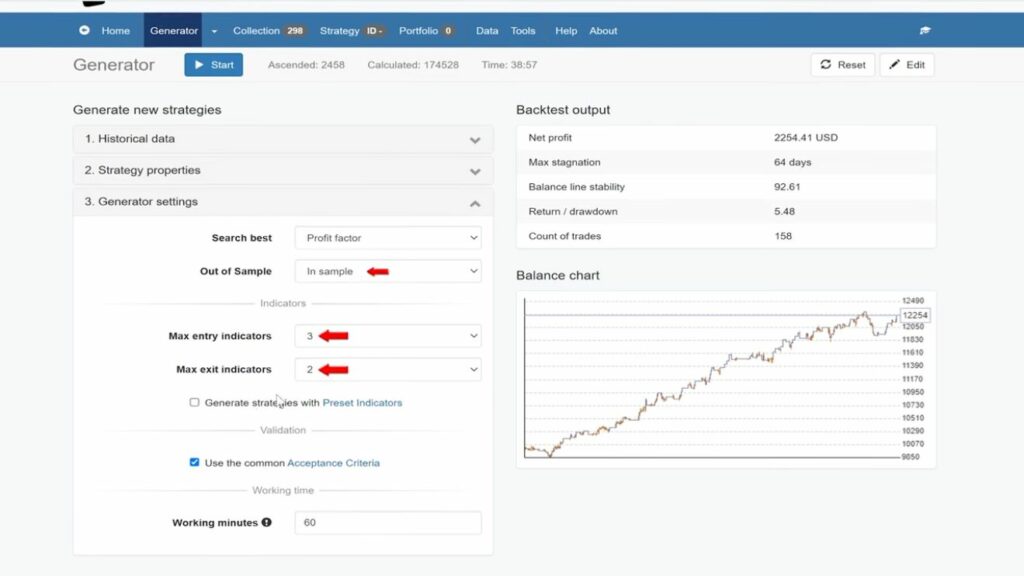
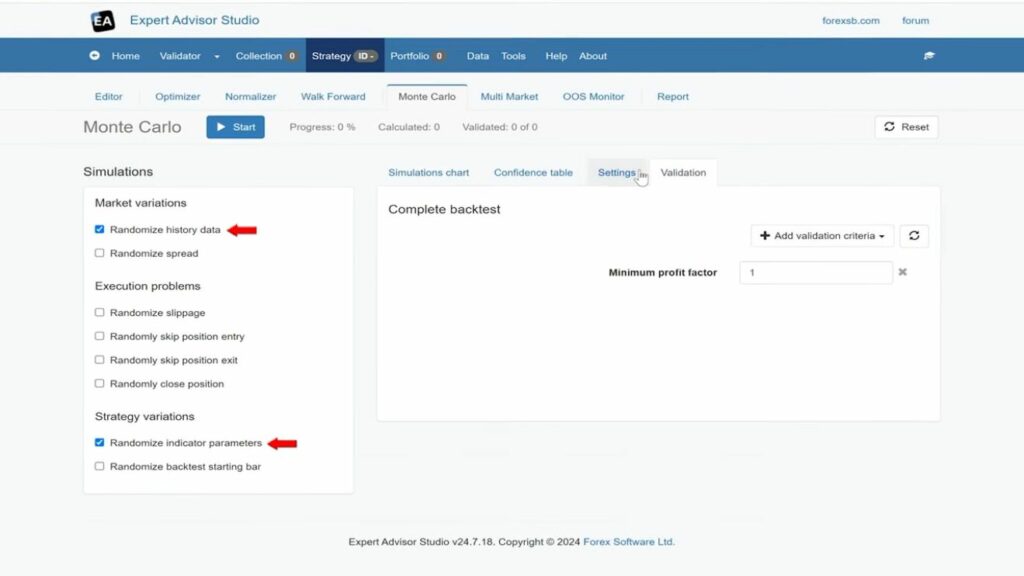
    If you want to master the algo trading, join our 21-Day Free Algo Trading Course based on EA Studio!

    https://eatradingacademy.com/algo-program