Blog

  • Blueberry Markets Review: A Regulated CFD Broker for Modern Traders

    Blueberry Markets Review: A Regulated CFD Broker for Modern Traders

    Sign up using this referral link to receive a 30% trade credit bonus on your first deposit. After your account is approved, simply click the banner in your client portal (with our logo and Petko’s image) to activate the bonus.

    Introduction

    Choosing the right Forex and contract for difference (CFD) broker is a critical first step in your trading experience, and that’s where this Blueberry Markets review comes in. To be successful, you require a platform that is not just trustworthy but also user-friendly and transparent.

    Because of its client-first approach, reasonable spreads, and robust platforms, this broker based in Australia has secured a great reputation in the industry. What you need to know about Blueberry Markets will be included in this comprehensive review that we have prepared for you. We have you covered in every aspect, from the regulations and safety measures to the many types of accounts, the features of the platform, and the customer support. To determine whether Blueberry Markets is the right broker for you, let’s get to it.
    blueberry-markets-review-1

    What is Blueberry Markets?

    Blueberry Markets is a Forex and CFD broker founded to make trading more accessible and transparent. Based in Sydney, Australia, they serve a global audience and offer a wide range of markets through powerful platforms.

    Unlike bigger brokers that can feel distant or hard to reach, Blueberry Markets puts a big emphasis on personal support and ease of use. They’ve created an environment that suits new and experienced trader and powerful tools without complexity.

    The company operates under two main entities: Blueberry Markets Pty Ltd, registered in Australia and Blueberry Markets (V) Ltd, regulated offshore. This allows them to serve a global market while keeping compliance in check.

    Blueberry Markets Review: Where Can You Trade From?

    Although Blueberry Markets services are available to traders from most countries, there are some restrictions on who can open an account. These are not arbitrary—they exist because of legal and regulatory requirements in certain jurisdictions. In simple terms, Blueberry must comply with financial laws in the countries it operates in and the countries its clients come from.

    As a result, traders from certain regions cannot register or trade on the platform. Some of the restricted countries are the United States, Japan, Russia and Iran. These countries have complex regulatory frameworks or restrictions on foreign financial services providers, making it difficult—or illegal—for brokers like Blueberry Markets to offer services there.

    But if you’re in a supported region—most of Asia, Europe, Africa, Australia or Latin America—the sign-up process is fast and fully digital. You can register, verify your identity and start trading without ever having to visit an office or send physical documents. Blueberry’s on-boarding process is designed to be simple, efficient and beginner-friendly so new users can have a smooth entry into online trading.

    Is Blueberry Markets Regulated and Safe?

    Yes, Blueberry Markets is a regulated broker. Safety and compliance is at the heart of everything they do.

    Blueberry Markets (V) Ltd. is licensed by the Vanuatu Financial Services Commission (VFSC) which allows them to operate globally. Blueberry Markets Pty Ltd works closely with Blueberry Prime Partners Pty Ltd—an Australian company that holds an Australian Financial Services License (AFSL).

    This dual entity structure gives them global reach while being under regulatory oversight. While VFSC isn’t as strict as European or Australian regulators, we maintain high standards of fund security and operational transparency.

    Client funds are held in segregated accounts with top-tier banks. Add encryption and 2-step verification, and you have a broker that takes your data and money seriously.

    And the 4.7/5 review score, based on over 2,700 real reviews on TrustPilot and trader feedback is a clear sign that this broker is safe and takes safety and client service very seriously.

    Blueberry Markets Review: Trading Platforms

    One of Blueberry Markets’ best features is its platform offering. Traders have the option to choose between MetaTrader 4 (MT4), MetaTrader 5 (MT5), TradingView, and WebTrader—all industry standards.

    MetaTrader 4 (MT4) is still very popular among Forex traders. It’s fast and easy to use. You get everything you need: customizable charts, technical indicators, one-click trading and support for automated strategies via Expert Advisors (EAs).

    MetaTrader 5 (MT5) builds on MT4 and adds more. It has more order types, better charting and even an economic calendar. If you want more control and more data, MT5 might be for you. It also has the advantage of using live spread information during backtesting of strategies and expert advisors.

    If you prefer to trade using advanced charting tools, you have the option of TradingView, fully integrated with Blueberry, and you can trade directly from its charts. WebTrader is also available so you can trade fast from any device without installing software.

    Account Types

    Whether you’re a beginner or a seasoned trader Blueberry has an account to suit your trading style.

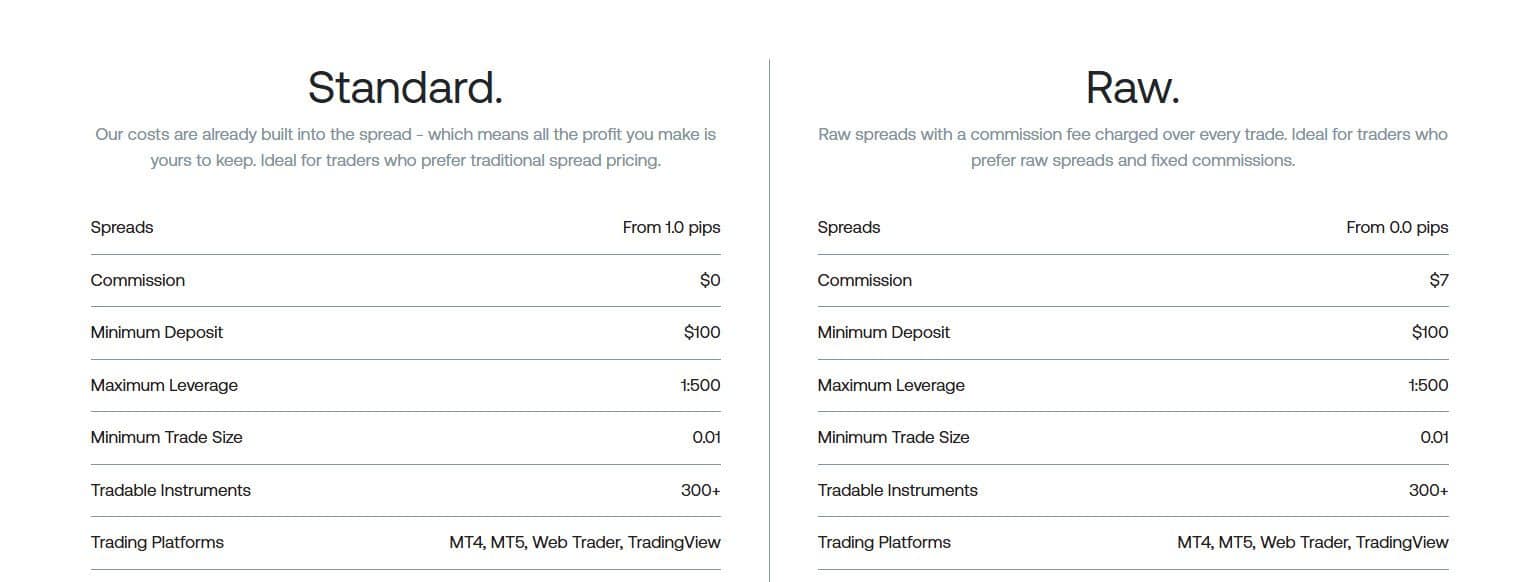
    That’s where the Standard Account comes in. It’s commission free and has competitive spreads. Low minimum deposit and easy to set up, it’s the perfect place to start if you’re new to trading and want to trade live with minimal risk.

    The Blueberry Premium Account is where active and professional traders trade. You’ll get raw spreads – sometimes as low as 0.0 pips – with a small commission per trade. You’ll also get faster execution and priority support.

    If you want to practice and really get a feel for trading without any risk to you or your capital you can sign up for a demo account to test your strategies, get comfortable with the platform and build your confidence without risking a thing.

    What Can You Trade? 

    Blueberry Markets has many trading instruments so you can try different strategies, reduce risk and spread your positions. You can trade many different types of assets such as Forex, commodities and cryptocurrencies which are getting very popular very fast.

    One of the broker’s features is this. You can trade the instruments you already know and try new ones without opening multiple accounts or using different sites.
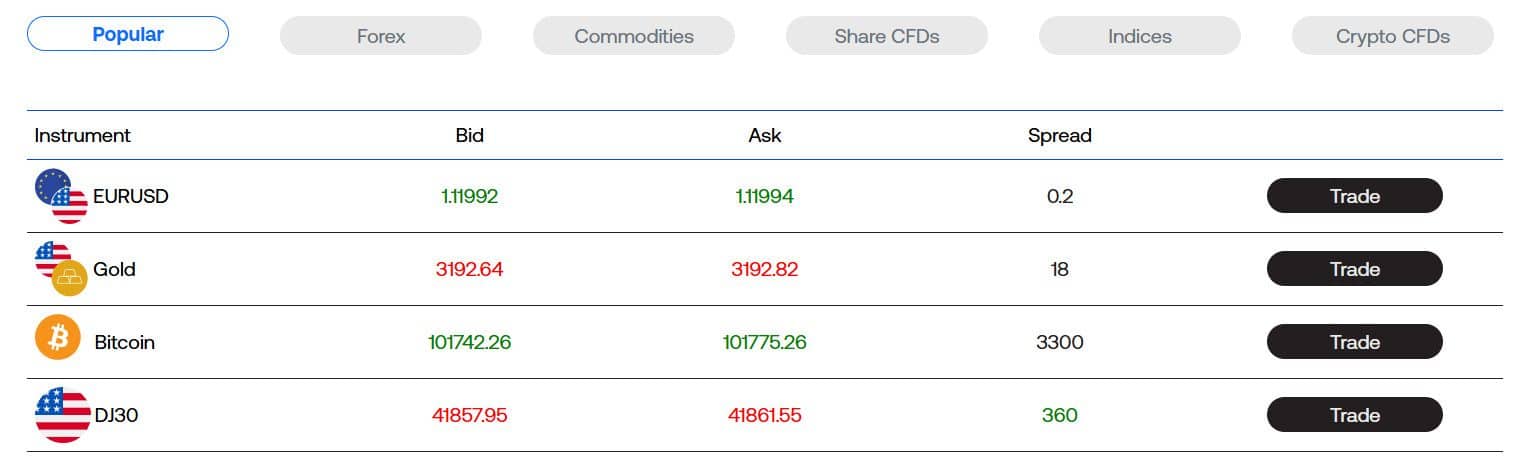
    blueberry-markets-review-3

    Blueberry Markets Review: Forex Pairs

    Forex, the most traded financial market in the world is at the heart of what Blueberry Markets has to offer. You can choose from many currency pairs including all the major, minor and uncommonly traded pairs.

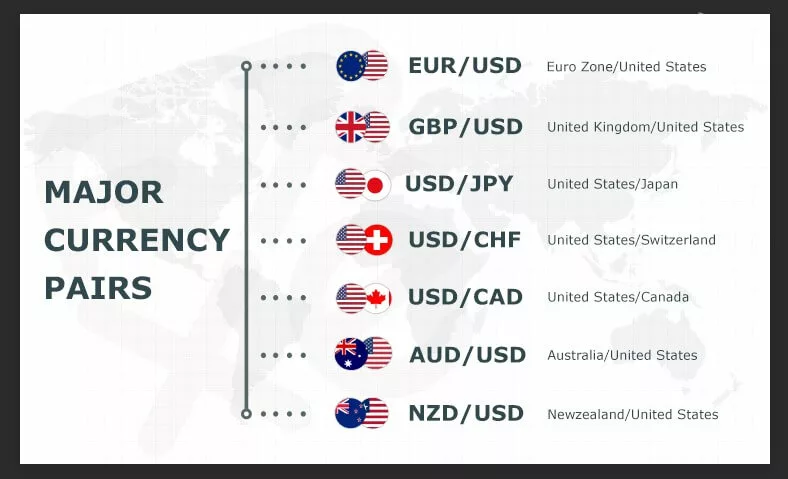
    Large pairs like EUR/USD, GBP/USD and USD/JPY have a lot of trades, tight spreads and fast execution. Perfect for scalpers and day traders. Minor and less traded pairs like EUR/TRY or USD/ZAR offer unique trading opportunities and bigger price movements but may have wider spreads and more volatile prices.

    You can access the Forex market 24/5. That means you can trade during Asian, European and North American times.

    Rates and Share CFDs

    Blueberry gives you access to many important stock indices to trade broad market trends or specific industries. Some well known examples are the Dow Jones (DJ30), S&P 500, FTSE 100 and others. When you trade on an index you can bet on the success of a group of companies instead of one stock at a time.

    Blueberry not only gives CFDs on indices but also on shares of big companies around the world. In other words you can buy or sell performing stocks without actually owning the underlying asset. Share CFDs give you many options to trade company earnings, market news or bigger trends in the economy.

    Basic goods and precious metals

    Blueberry Markets also does well with commodities as an asset class. Not only can you sell hard goods like gold and silver but also soft goods like oil and agricultural goods. Traders who want to protect their money or spread their risk during uncertain times buy gold (XAU/USD) and silver (XAG/USD). Meanwhile, traders who love instability and big changes in the economy can make a lot of money trading crude oil.

    You can adjust the size of your contracts when you trade commodities on Blueberry so you can fit your risk tolerance and account size.

    Crypto CFDs

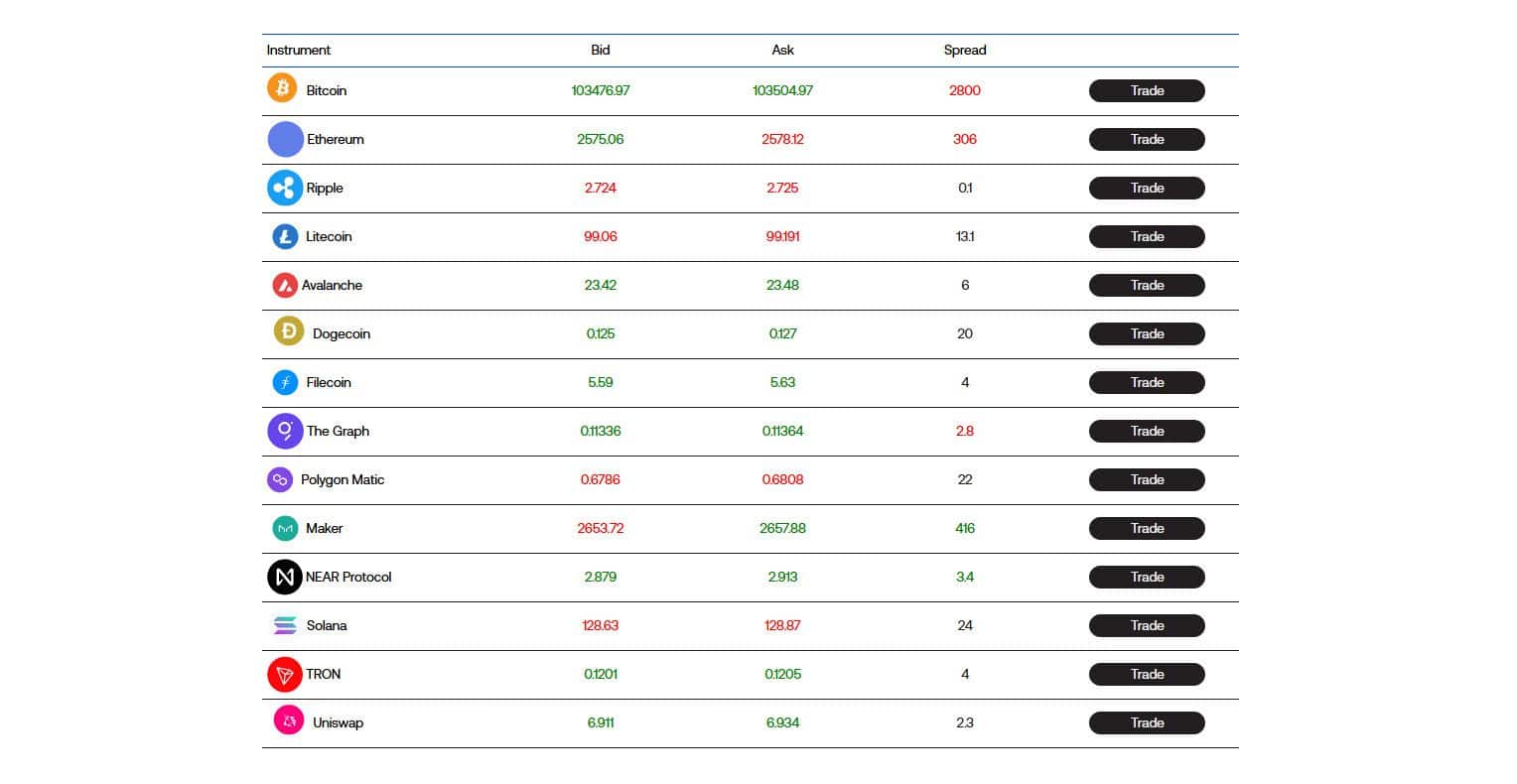
    Blueberry Markets also offers crypto CFDs for those who want to get into the world of digital assets. Some of the most popular ones are Bitcoin (BTC/USD), Ethereum (ETH/USD), and others based on where you live.

    Crypto CFDs let you bet on how the prices of these very volatile assets will move without actually buying the coins. You don’t have to worry about wallets, keys, or blockchain exchanges. Just watch the price move, up or down.

    Remember, where you live may affect your ability to trade cryptocurrencies. Due to rules, some places may not allow you to access coin CFDs or even ban them altogether. Before you start, always check the rules in your area.
    Blueberry Markets Review: Trading Conditions

    When you’re trading online, costs can really add up—and eat into your profit margins. Whether you place a few trades a week or dozens each day, spreads, commissions and execution speed all impact how much you make. Understanding a broker’s trading conditions is key to success—and in that area, Blueberry Markets delivers.

    Spreads and Fees

    Spreads are impressively tight—especially on major currency pairs like EUR/USD. On a Standard Account, you can get those spreads as low as 0.1 pips. That’s highly competitive—and beneficial for both short-term traders and longer-term investors. Gold spreads hover around 23 cents, while crypto spreads for Bitcoin are in line with or better than industry averages. That kind of pricing is exactly what cost-conscious traders are looking for.

    Execution Speed

    Execution speed is another area where Blueberry Markets really shines. By connecting directly to deep liquidity pools, the platform ensures trades are filled quickly and at the right price. Even when markets are volatile—during news releases or geopolitical events—slippage is kept to a minimum. That fast, reliable execution is what scalpers, day traders and anyone trading on tight price movements need.

    Commission Structure

    One thing Blueberry Markets doesn’t do is surprise you with hidden fees or charges. On a Standard Account, you get zero commission. That means the only cost to you is the spread itself. With a Premium Account, you pay a small commission per trade—but get even tighter spreads—sometimes as low as 0.0 pips. That model lets traders choose the pricing structure that suits their strategy and volume best.
    blueberry-markets-review-5

    Blueberry Markets Review: Deposits and Withdrawals

    Blueberry Markets makes it easy to fund your account and withdraw profits.

    Deposit Methods

    Deposit options include credit and debit cards, bank transfers and e-wallets like Skrill and Neteller so you can trade from anywhere in the world no matter your location or currency. Most deposits are instant so you can trade on opportunities as they arise.

    Withdrawals

    Withdrawals are usually within 24 hours which is faster than industry average. There are no fees from Blueberry’s side for deposits or withdrawals but your payment provider might charge a small processing fee depending on the method used.

    Security and Peace of Mind

    Your funds are held in segregated accounts and protected by advanced security protocols including encryption, two-factor authentication and secure payment gateways. It’s quick, simple and safe so you can have peace of mind while managing your capital.

    Blueberry Markets Review: Customer Support

    Customer service is where Blueberry Markets really goes above and beyond. In fact, many traders consider it one of the best features of the broker—and for good reason.

    Support is available 24/7. You’ll find someone to help you via live chat, email, or phone at any time of the day or night, which is very useful to those who trade all sessions or part-time traders trading after hours. This is incredibly valuable.

    Whatever the question or concern, Blueberry’s support team will guide you with clear and helpful answers. They don’t just point you to an FAQ page—they’ll walk you through the solution.

    The team is friendly, professional and highly responsive. Many traders mention in their reviews that chat replies are received in under a minute. Email inquiries are usually answered within hours, not days. This kind of service is rare among online brokers and gives Blueberry Markets a big edge when it comes to customer experience.

    In a digital world where good support feels like a luxury, Blueberry makes it a priority—and that says a lot about the company.

    Blueberry Markets Review: Educational Resources and Trading Tools

    Blueberry Markets offers educational content for all traders, no matter where you start.

    Their Knowledge Hub has trading guides, video tutorials, platform walkthroughs and market insights. It’s for all experience levels, from complete beginners to experienced traders looking to improve. It’s designed to build confidence, reinforce core trading principles and introduce more advanced techniques over time.

    They also publish daily market analysis, highlighting trading opportunities, technical patterns and key economic events that may affect price action. If you need more tools, Blueberry integrates with DupliTrade for copy trading and offers VPS hosting for traders running automated strategies or expert advisors who need low latency connections.

    Copy Trading and Expert Advisors

    If you prefer a more automated or hands-off approach, Blueberry Markets has got you covered with copy trading and Expert Advisors (EAs). Through integration with platforms like DupliTrade, you can copy the strategies of experienced traders in real time. Beginners can get into the market without having to build their own strategies from scratch. Advanced users can use Blueberry’s MetaTrader platforms, which fully support EAs for algorithmic trading. These tools allow you to automate your strategies, backtest performance and run complex systems with precision—especially when paired with Blueberry’s VPS hosting, which gives you stable, low-latency connections 24/7.

    VPS (Virtual Private Server)

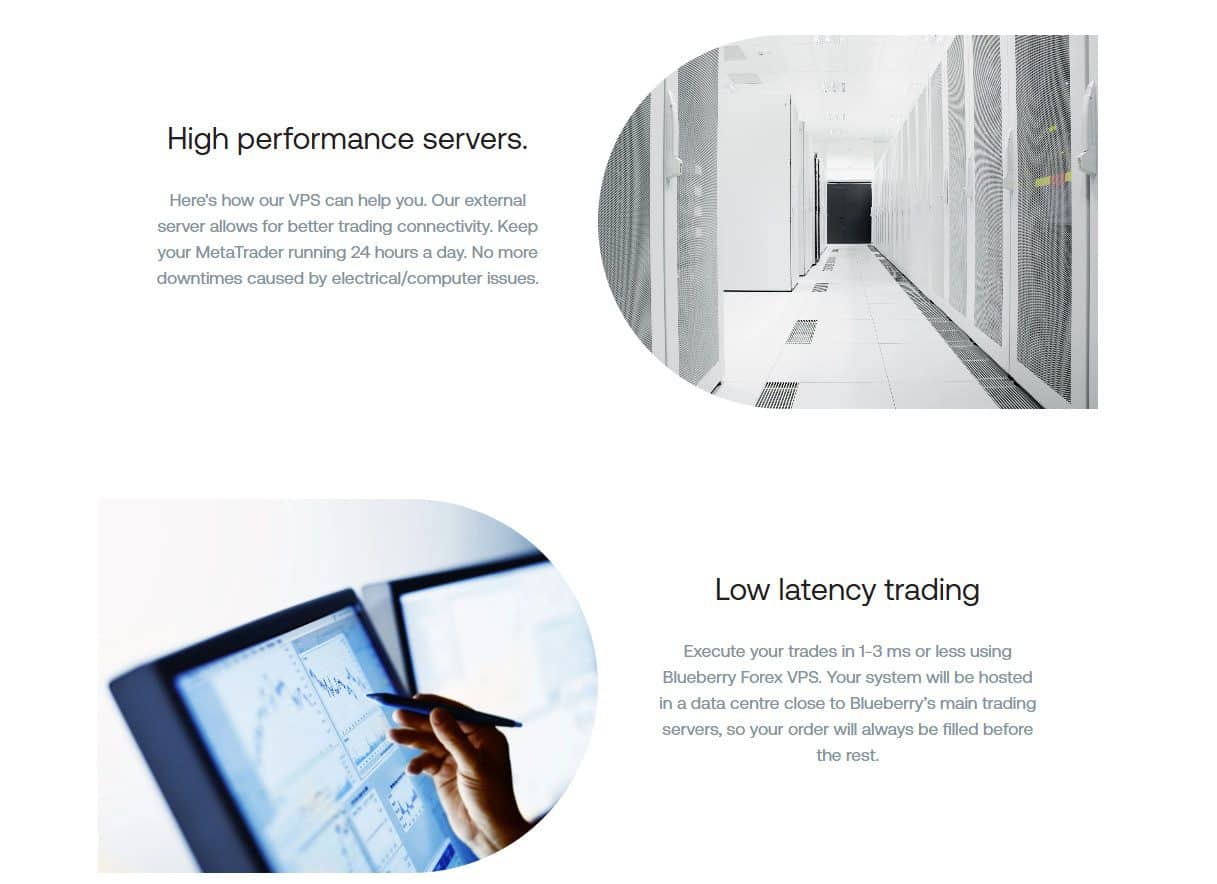
    If you are an algo-trader, Blueberry Markets offers a Forex VPS (Virtual Private Server) solution. A VPS allows you to run your trading platform 24/7 without needing to keep your home or office PC on and connected to your broker. This is perfect for traders who are unable to stay connected to the internet for any number of reasons, including travel, unreliable power and spotty internet service.By using a VPS you reduce the risk of disconnections, delays or interruptions that could affect performance. Blueberry’s VPS is optimised for MetaTrader platforms and provides low latency connections to trading servers so you stay connected to the markets. You can even get it for free under certain conditions.
    blueberry-markets-review-7

    Final Verdict: Is Blueberry Markets Right for You?

    Blueberry Markets brings reliability, regulation and user friendliness to the table. It’s a broker that puts the trader first, offers professional tools but is still approachable for beginners. From tight spreads and fast execution to multiple platforms and responsive customer service Blueberry has managed to get the balance right that many brokers struggle to.

    A Broker for Beginners and Pros

    One of its strengths is how well it caters to both ends of the spectrum. If you’re just starting out the on-boarding process is smooth, educational resources are plentiful and the support team is always available. If you’re an experienced trader looking to scale your operations the Premium Accounts, raw spreads, VPS hosting and automated trading capabilities will give you the depth and flexibility you need.

    Consider the Cons

    Of course no broker is perfect. Blueberry Markets may not be suitable for traders in restricted jurisdictions like the US or Japan and it doesn’t have the largest selection of lesser-traded or niche instruments. But for the majority of retail traders — especially those focused on Forex, indices, commodities and major crypto CFDs — it ticks all the boxes.

    A Customer-Centric Approach That’s Different

    What really sets Blueberry apart is its customer-centric approach. In an industry where traders feel like just another number Blueberry delivers personalized support, transparency and a genuine commitment to its users. It’s a broker that feels like a partner in your trading journey not just a service provider.

    Should You Try Blueberry Markets?

    If you’re looking for a reliable, regulated broker that offers a clean trading experience without the hassle Blueberry Markets is worth a try. Whether you trade casually or working towards professional goals this platform has the tools and support to grow with confidence.

  • Best Trading Account for Beginners in 2025: Which Type Of Account Has Highest Return Of Investment

    Best Trading Account for Beginners in 2025: Which Type Of Account Has Highest Return Of Investment

    So you’ve decided to start your journey as a trader. But at the beginning of this path, you’re faced with an important decision—choosing the right trading account. There are various options available when it comes to trading accounts. And you must carefully evaluate which account type offers the best balance of profitability, risk, and accessibility. Whether you prefer trading with your own capital, using a funded account, or leveraging hedge fund allocations, each option comes with unique advantages and challenges. So which is the best trading account for beginners? Let’s have a look.

    In this article, we analyze three popular account types—Live Trading Accounts, Instant Funded Accounts, and Hedge Fund Accounts —specifically in the context of automated trading with expert advisors (EAs). To ensure a fair comparison, we base our evaluation on an EA that generates a 2% monthly return average, examining how different accounts perform over one year and projecting their profitability in the long run.

    Our research goes beyond marketing promises, providing a clear, data-driven look at what beginners can realistically expect. By the end, you’ll have a clear understanding of which account type aligns with your goals and offers the best opportunity for growth. Whether you’re starting with $400 or a larger budget, this article will help you choose the best trading account for beginners in 2025.

    Best Trading Account for Beginners: Live Trading Account

    A live trading account is the most straightforward way to enter the markets. With this approach, you open an account with a regulated broker, of course, and deposit funds. So, let’s say you invest $400 in a live account, find an EA that makes an average of 2% per month and start trading. You don’t have a target and  drawdown, so obviously the profit split is 100%, which means you can withdraw all the profits.

    After deducting a 5% commission on trades, which is standard with many brokers, you end up with $91 in profit over one year. This is the result of a consistent 2% return per month. And since you own the account, there are no restrictions on trading strategies, you have full control over withdrawals. This makes a live account a safe and flexible option for beginners who want to trade at their own pace.

    However, the biggest drawback is the limited growth potential. Even with a profitable EA, a small account balance significantly restricts your earnings. While making nearly $100 on a $400 investment in a year is a positive return, it’s not enough to scale your trading into a substantial income stream. Unlike funded accounts or hedge fund allocations, a live account doesn’t provide access to larger capital, meaning you are solely dependent on your own investment for growth.

    Another challenge is that many beginner traders struggle with emotional decision-making when trading their own funds. While an EA removes some of the psychological pressure, account drawdowns or slow profit accumulation might lead traders to interfere with the strategy, often to their disadvantage.

    Best Trading Account for Beginners: Instant Funded Account

    For traders looking to start with a small personal investment but trade a larger account, an instant funded account can be an attractive option. Unlike a live trading account, where profits are limited by your capital, funded accounts provide access to more trading capital in exchange for a profit split and certain risk management rules.

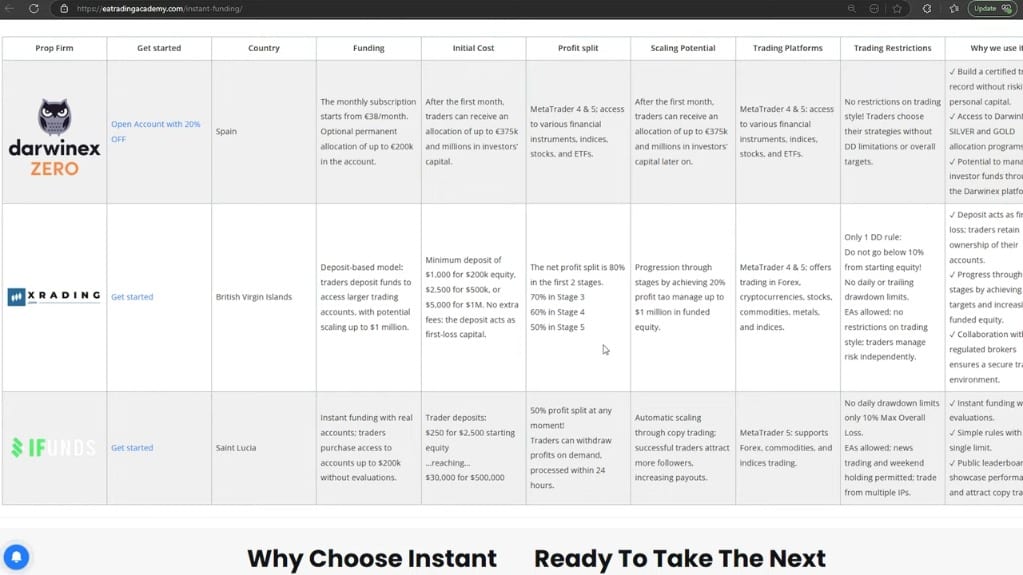
    In our comparison, we analyzed iFunds, a platform that offers a $5,000 funded trading account for an initial $400 fee. Using an expert advisor (EA) that generates 2% monthly returns, the total annual profit on this account would be $1,200. However, because iFunds takes a 50% profit split, as a trader, you keeps $600 for the year. After subtracting the initial investment of $400 to purchase the account, the net profit is $200—more than double the profit of a live account with the same starting capital.

    But there’s an opportunity to earn even more. iFunds allows traders to increase their profit share by reducing their maximum drawdown limit. If a trader lowers the allowed drawdown to 6%, the profit split increases to 80%. In this scenario, the trader would retain $960 in profit, with a net revenue of $560 after deducting the initial fee—six times more than a live account.

    The catch? Maintaining a low drawdown is challenging, especially over a full year. Most expert advisors experience periods of volatility, and exceeding the set drawdown limit could result in losing the funded account altogether. Additionally, traders using funded accounts must follow strict platform-specific rules, which may limit certain trading strategies.

    Overall, instant funded accounts offer a strong profit potential, but they come with restrictions. Beginners must carefully consider risk management and drawdown limits before choosing this route.

    Best Trading Account for Beginners: Hedge Fund Account

    For traders seeking substantial capital allocation with minimal upfront investment, a hedge fund-backed trading account like Darwinex presents a compelling opportunity. Unlike live and funded accounts, Darwinex operates as a crowdsourced hedge fund, where traders receive capital allocations based on their trading performance.

    In our comparison, we examined a Darwinex account with a $400 participation fee, which grants access to a €90,000 allocation over time. If you use an expert advisor (EA) with a 2% monthly return, you will gain $15,971 one-year profit. However, traders keep only 15% of this profit, which amounts to $2,396. After deducting the $400 participation fee, the net profit stands at $1,996—far exceeding the returns of both live and instant funded accounts with the same initial investment.

    The capital allocation process starts with a €30,000 allocation in the second month, increases to €60,000 in the third month, and reaches the full €90,000 by the fourth month. This model allows traders to scale their earnings significantly without risking additional personal funds.

    Advantages of Hedge Fund Account

    • Large capital allocation with a low initial cost.
    • No strict trading rules like those which funded accounts impose.
    • Scalability – profitable traders can receive even larger allocations over time.

    Challenges to Consider

    • Commissions and fees apply, reducing overall profits.
    • Only 15% of profits are retained – the majority goes to investors.
    • Consistent performance is required – traders must maintain steady returns to keep allocations.

    Despite these challenges, Hedge Funds like Darwinex offer the highest earning potential among all account types reviewed. If oyu are confident in your expert advisor’s performance, this model provides a low-risk path to trading with substantial capital.

    Ready to trade smarter in 2025? Compare top account types for beginners—then explore our Top 10 Robots App and Prop Firm Robots App to start strong.

    Best Trading Account for Beginners: Mid-size Accounts

    While one-year profitability is important, serious traders should also consider long-term growth potential when choosing a trading account. To better understand which account type offers the highest returns over time, we extended our analysis to a three-year period, comparing different investment levels.

    Scenario 1: $1,500 Investment

    With a $1,500 starting balance, we compared a live trading account, an instant funded account (iFunds), and a hedge fund account (Darwinex).

    • A live trading account with an EA generating 2% per month yields $342 in annual profit. While stable, this growth is limited by the initial capital, making it the least scalable option.
    • With Instant Funded Account, for example with iFunds, traders can access a $25,000 funded account, which significantly boosts earnings. Under the standard 10% drawdown and 50% profit split, you would keep $400 after one year. However, if you have a strategy or expert advisor that can stay below a 6% drawdown, and you get an 80% profit split on a $25K account—it costs $1,600 to get $25K accounts—you would be making $3,200 at the end of the day. The hard thing here again is having an expert advisor that will stay below 6%. For the moment, the Vigorous EA is below 6%, however, only the future will show if it will stay like this till end of the year.
    • A Darwinex hedge fund account allows traders to access $100,000 in capital with a Super Trader status, leading to an estimated one-year net profit of $5,322—far surpassing both live and funded accounts.

    Scenario 2: $3,000 Investment

    For those with a $3,000 initial budget, the differences become even more apparent:

    • A live trading account generates only $684 in profit over a year, making it the least profitable choice for long-term growth.
    • An iFunds account with a $50,000 allocation (with a 6% drawdown and 80% profit split) can yield $6,600 in annual profits. However, keeping the drawdown below 6% is easier said than done, which makes this option a bit risky.
    • Darwinex, on the other hand, offers the most substantial returns. Traders can choose between permanent and non-permanent capital allocation, which significantly impacts their earnings:
      • Without permanent allocation, the ROI (Return of Investment) over three years is 5.46x the initial investment.
      • With permanent allocation, ROI increases to 6.88x, meaning for every $1 of participation fee, you would earn $6.88 in revenue.
      • While the first-year cost is higher when opting for permanent allocation, it becomes the superior choice for long-term profitability.

    Key Takeaways

    • Live accounts are stable but lack scalability.
    • Instant funding accounts like iFunds for example can generate higher returns but require strict risk management to maximize profit splits.
    • Hedge fubds like Darwinex outperforms all options by providing access to large capital allocations with consistent performance.

    For traders looking to maximize profits over time, Darwinex proves to be the most rewarding long-term choice.

    Conclusion: The Best Trading Account for Beginners in 2025

    Choosing the best trading account for beginners depends on your trading goals, risk tolerance, and ability to manage capital effectively. Our analysis compared live trading accounts, instant funded accounts, and hedge fund accounts, revealing key differences in profitability and growth potential.

    • Live trading accounts provide full control over funds but offer the lowest returns due to limited capital. A $400 investment yields only $91 in profit per year with an expert advisor , making it a slow path for growth.
    • Instant funded accounts give traders access to larger capital pools but come with profit splits and strict risk limits. With iFunds, a trader can earn up to $3,200 per year if they maintain a low 6% drawdown, though this can be challenging.
    • Darwinex emerges as the most profitable option, offering a $90,000 allocation with a $400 participation fee. Over three years, traders can achieve a net profit of $115,270, making it the best long-term choice for serious traders using expert advisors.

    To help you make the best decision, we’ve created a free trading profitability table—download it to compare your options. If you’re interested in automated trading, check out our Top 10 Bitcoin Robots for the best expert advisors in 2025.

  • Powerhouse EA Tested: Live Results, Features & Trader Experience

    Powerhouse EA Tested: Live Results, Features & Trader Experience

    In the world of algorithmic trading, finding a reliable and adaptable expert advisor (EA) can be a challenge. Powerhouse EA stands out as a sophisticated trading bot that integrates six unique strategies, giving traders the flexibility to use them individually or in combination. Whether you’re a scalper, swing trader, or looking for steady, long-term profits, this EA offers customizable settings to align with different trading styles. And we hope that our review will be exactly what you are looking for to familiarize yourself with this hot robot and how to use it.

    What makes Powerhouse EA particularly appealing is its compliance with prop firm and FIFO (First-In-First-Out) regulations. This makes it a suitable choice for traders in the U.S. and those participating in proprietary trading firms (prop firms). We tested the bot extensively in live accounts, and it performed really well – steady gains with minimal drawdowns.

    In this analysis, we will explore robot’s strategies, risk management features, live trading performance, and customization options. We’ll also discuss how it can be used alongside other trading bots to reduce correlation risk and maximize profits. If you’re considering an automated trading solution that combines versatility and compliance, Powerhouse EA may be worth a closer look.

    What is Powerhouse EA?

    We start our analysis with revealing what exactly is Powerhouse EA. And as you might have guessed already, it is a trading robot (expert advisor). But what kind of expert advisor? Powerhouse EA is a versatile trading bot designed to execute trades using six unique strategies. Or in other words, 6 expert advisors combined in 1. Unlike conventional expert advisors (EAs) that rely on a single trading method, Powerhouse EA allows users to select and combine strategies to match their personal trading style, risk appetite, and market preferences.

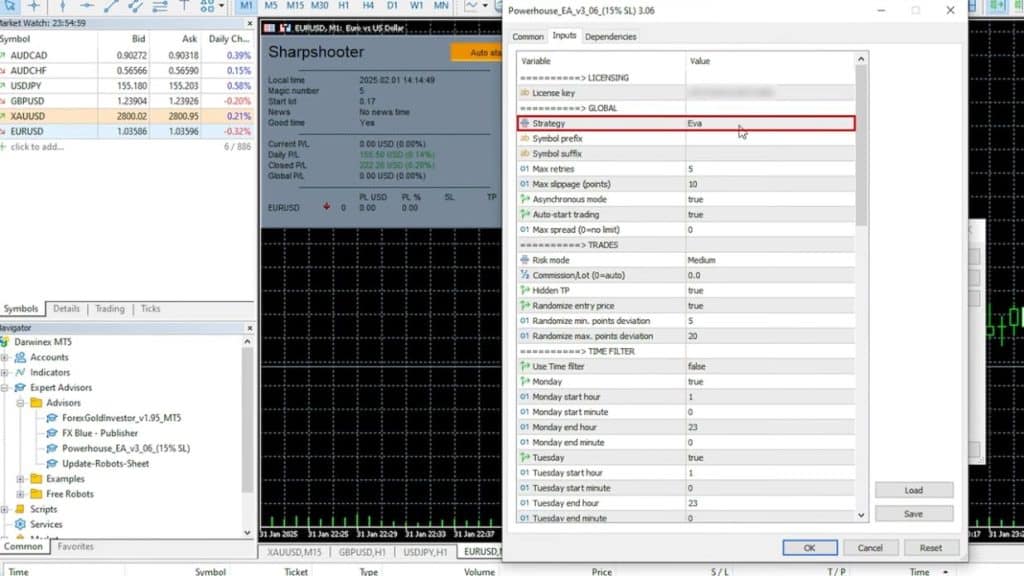
    The six strategies embedded in Powerhouse EA include Vigorous EA, Sharpshooter, Eva, Ranger, Comeback Kid and Crackerjack. Each strategy operates with a different approach—some focus on high-frequency trading, while others are more selective and strategic. For example, Vigorous EA is highly active, executing hundreds of trades within a short period, while Ranger takes a more conservative approach with fewer but calculated trades.

    One of the key benefits of Powerhouse EA is customization. Traders can configure various parameters, such as risk management settings, entry conditions, and strategy selection. They also have the option to use randomized entry prices, which helps diversify trading signals and reduce predictability, a crucial advantage for automated trading in competitive markets.

    And in this review we will show how this flexibility makes Powerhouse EA an ideal solution for traders looking to optimize their automated trading approach, whether they prefer scalping, swing trading, or a hybrid strategy.

    Live Testing and Performance Results

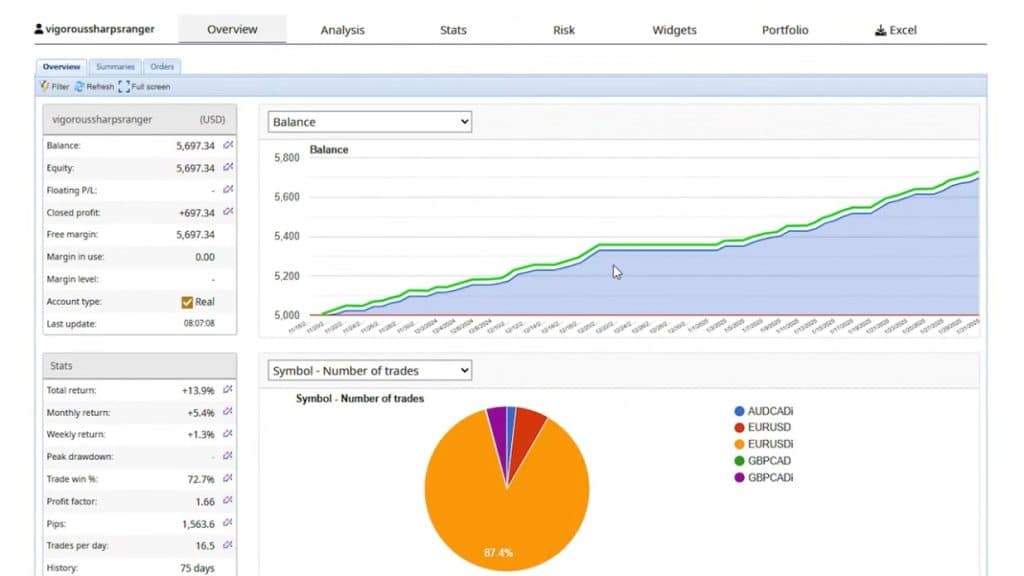
    To assess the effectiveness and reliability of Powerhouse EA, we tested the bot on multiple live accounts, including a $5,000 personal account and a Darwinex account. The results were impressive – steady growth with minimal drawdowns, reinforcing the EA’s consistency in live market conditions.

    $5,000 Live Account Testing

    In a 75-day test period, the account achieved a 14% gain, demonstrating a stable equity curve with low exposure to drawdowns. We used a combination of three strategies—Vigorous, Sharpshooter, and Ranger—to optimize results. Among these, the Vigorous strategy was the most active, executing 877 trades, while Sharpshooter performed fewer trades (284) but generated similar profit levels. The Ranger strategy, although less active, also contributed to the account’s profitability.

    EA Trading Academy - Powerhouse EA Review - 5k account Live results

    Performance on Funded Account

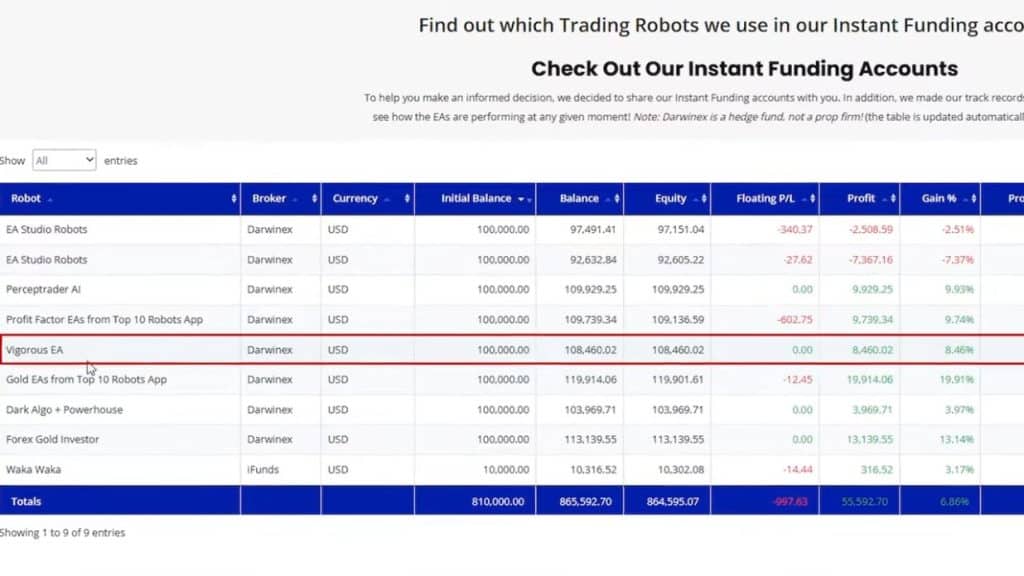
    We also tested Powerhouse EA on a funded account, where Vigorous EA alone generated an 8.46% profit ($8,460). Due to its steady monthly returns, we received three consecutive funding allocations, growing our account to $90,000, with an additional potential allocation of $100,000 upon reaching a 15% profit threshold.

    These live testing results confirm Powerhouse EA’s ability to generate consistent profits, making it a suitable choice for traders seeking low-risk, high-reward automated trading solutions.

    EA Trading Academy - Powerhouse EA Review Vigorous EA on Darwinex Account

    Best-Performing Strategies in Powerhouse EA

    Powerhouse EA integrates six different trading strategies, each designed to capture specific market movements. Among them, Vigorous, Sharpshooter, and Ranger stood out as the best-performing strategies in live testing. These three strategies demonstrated strong profitability, steady returns, and minimal drawdowns, making them the preferred choices for the trader.

    Vigorous Strategy – High-Frequency Trading for Consistent Returns

    The Vigorous strategy is the most active within Powerhouse EA. This strategy thrives on frequent market movements, generating small but consistent profits with each trade. The live trading results showed that Vigorous was the top performer, contributing the highest share of total profits.

    Sharpshooter Strategy – Precision-Based Trading with High Profitability

    Sharpshooter is a more selective trading strategy compared to Vigorous. Despite the lower trade frequency, it achieved almost the same profit levels as Vigorous. This indicates that Sharpshooter focuses on high-probability setups, allowing traders to benefit from fewer but more calculated trades.

    Ranger Strategy – A Conservative, Low-Risk Approach

    The Ranger strategy is designed for lower trade frequency and steadier gains. While not as active as Vigorous or Sharpshooter, it contributed positively to the account’s overall performance. It proved useful for diversification, helping to balance risk when combined with more aggressive strategies.

    By combining these strategies, traders can tailor Powerhouse EA to their specific needs, optimizing both profitability and risk management. You can find the Powerhouse EA here.

    Are you looking for optimized and tested Trading Robots ? Choose from our ready-to-use Prop Firm Robots or Top 10 Robots and start trading right away.

    Risk Management Features

    One of the standout features of Powerhouse EA is its robust risk management system, which ensures that trading remains controlled and sustainable, even in volatile market conditions. Unlike many trading bots that rely solely on individual stop-loss settings, Powerhouse EA incorporates an account-wide stop-loss mechanism, offering an extra layer of protection against excessive drawdowns.

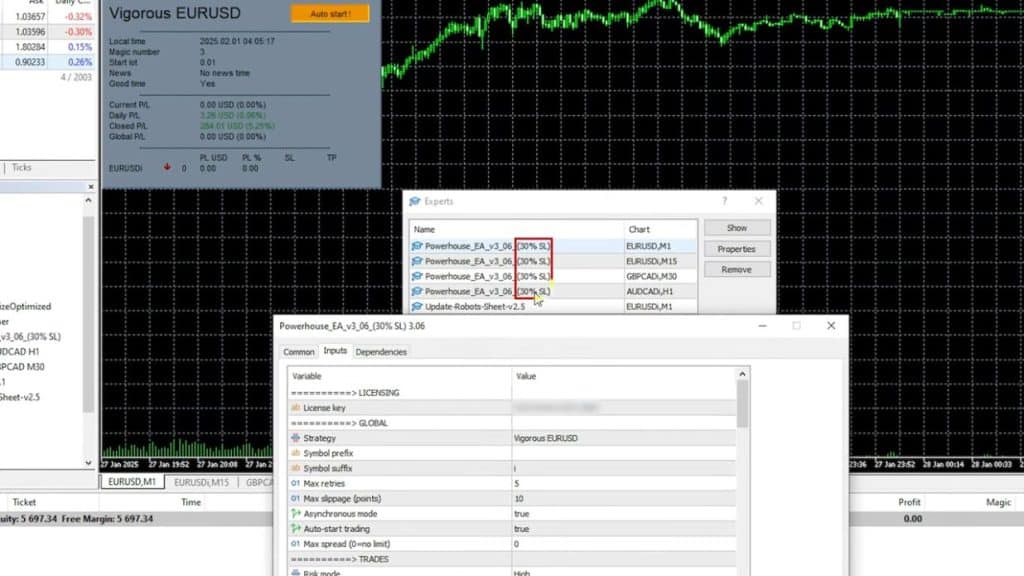
    30% Stop-Loss Rule for the Entire Account

    A key risk management feature within Powerhouse EA is the 30% total account stop-loss, which acts as a safeguard against severe losses. This means that if the total drawdown reaches 30% of the account balance, the EA will automatically close all open trades and halt further trading. This ensures that traders never risk losing their entire account due to extended market downturns or unexpected volatility.

    This feature is particularly useful for traders who deploy multiple strategies simultaneously. If one or more strategies enter a losing streak, the global stop-loss prevents excessive capital depletion, allowing the trader to pause, reassess, and optimize their approach before re-entering the market.

    Controlled Exposure Across Multiple Strategies

    During the live testing, we observed that different strategies contributed to varying levels of exposure. For instance, the Vigorous and Sharpshooter strategies had the highest trading activity, especially on EUR/USD, whereas the Ranger strategy had a lower frequency. By analyzing trade data, it was evident that risk was well distributed, minimizing overexposure to any single asset or market condition.

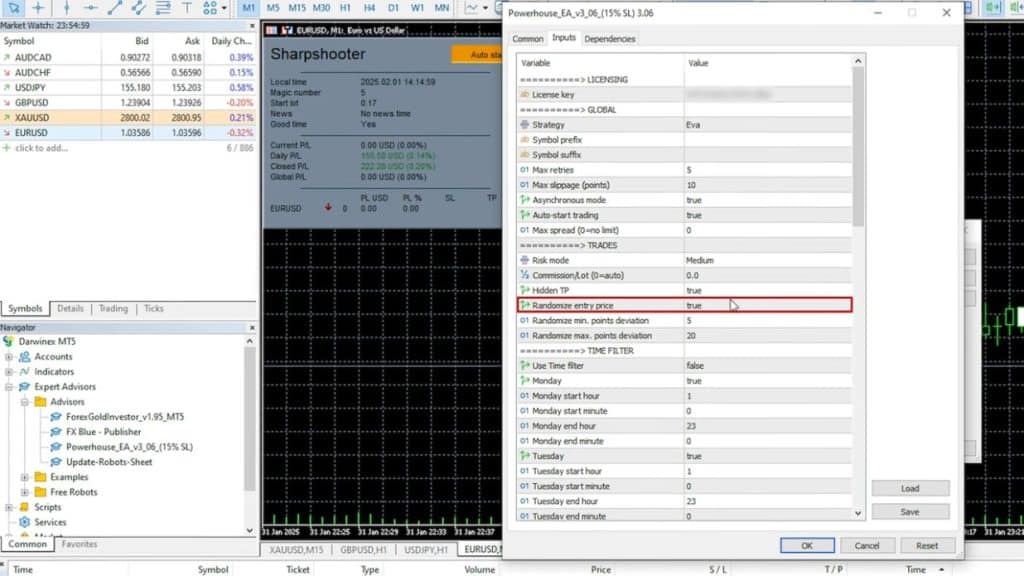
    Randomized Entry Prices to Reduce Predictability

    To further optimize trade performance and reduce systematic risks, Powerhouse EA offers an option to randomize entry prices within a predefined range of 5 to 20 points. This feature helps traders avoid overly predictable trading patterns, which could be exploited in highly liquid markets. However, widening the randomization range too much, may interfere with scalping strategies and impact profitability.

    By integrating multiple trading strategies, a global stop-loss, and entry randomization, Powerhouse EA creates a balanced approach between risk management and profit maximization. Traders can customize settings to match their risk tolerance, ensuring they can preserve capital while taking advantage of profitable trade opportunities.

    Why wider randomization breaks scalping strategies:

    These are scalping EAs. They profit from small price movements, often just a few pips per trade. If you randomize entry prices by 40 or 50 points, you’re fundamentally changing when trades execute.

    A trade that would have been profitable with a 10-point entry difference might lose when you shift it by 40 points. The market moves on. The original setup disappears. You’ve essentially created a different strategy that wasn’t tested or optimized.

    Combining Powerhouse EA with Other EAs

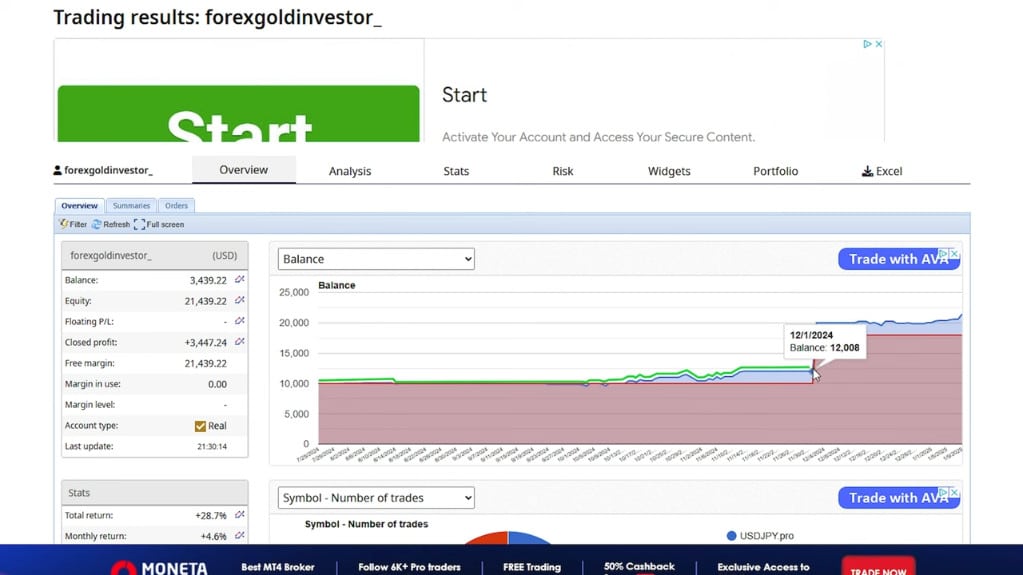
    One of the biggest advantages of Powerhouse EA is its ability to work alongside other expert advisors (EAs) to diversify trading strategies and reduce correlation risks. In live trading tests, we successfully integrated Powerhouse EA with Forex Gold Investor, a well-known gold trading EA, to create a more balanced and less correlated trading portfolio.

    Correlation risk occurs when multiple EAs or strategies trade in a similar pattern, leading to simultaneous losses in unfavorable market conditions. For example. in one of our accounts, we noted that Forex Gold Investor had already been used by many traders, which increased its correlation risk within the prop firm’s ecosystem.

    To counter this, we added Powerhouse EA (Sharpshooter and Eva strategies), ensuring that different EAs were executing trades with unique logic and market conditions. This helped in:

    • Spreading risk across different strategies and assets.
    • Avoiding overexposure to a single market movement.
    • Enhancing the stability of the account’s equity curve.

    Integrating Powerhouse EA is straightforward—simply select which strategies to enable within the settings.

    FIFO Compliance for U.S. Traders

    One of the significant challenges for traders using expert advisors (EAs) in the United States is compliance with FIFO (First-In-First-Out) regulations. These rules, enforced by the National Futures Association (NFA) and the Commodity Futures Trading Commission (CFTC), require traders to close their oldest open positions first when dealing with the same currency pair.

    Many trading bots are not FIFO-compliant, which can lead to execution issues with U.S. brokers. However, for traders in the United States, Powerhouse EA includes an option to enable FIFO (First-In-First-Out) compliance.

    Demo Availability and Testing Recommendations

    For traders interested in Powerhouse EA, the developer offers a 5-day free demo period to test its features and performance. While five days may seem like a short time for evaluating an expert advisor, Powerhouse EA’s high trade frequency allows traders to gather meaningful insights within this period.

    What You Can Expect from the 5-Day Demo

    Since Powerhouse EA includes highly active strategies like Vigorous, which can open 10 to 20 trades per day, a trader can expect to see 50 to 100 trades during the demo period. This provides enough data to analyze:

    • Trade execution speed and order placement efficiency.
    • Profitability of different strategies in real-time market conditions.
    • Drawdown levels and overall risk exposure.

    The Vigorous EA, in particular, is ideal for short-term testing since its high trade volume allows for quick evaluation. This makes the demo period useful even within a limited timeframe.

    Best Practices for Testing Powerhouse EA

    To maximize the demo and initial testing period, traders should:

    • Start with default settings and observe performance before making adjustments.
    • Test different strategies individually to see how they perform separately.
    • Analyze key metrics like win rate, drawdowns, and profit factors over the test period.

    Final Thoughts & Verdict

    Powerhouse EA stands out as a versatile and well-optimized trading bot that offers traders six unique strategies, strong risk management features, and prop firm/FIFO compliance. Through extensive live testing, it has demonstrated steady profitability with low drawdowns, making it a suitable choice for traders looking to automate their trading while maintaining risk control.

    Key Strengths of Powerhouse EA

    • Multi-Strategy Flexibility – Traders can select and combine different strategies, including Vigorous EA, Sharpshooter EA, and Ranger, to match their trading style.
    • Low Drawdowns & Consistent Returns – The live trading tests showed a 14% gain over 75 days, with minimal equity fluctuations.
    • Prop Firm & FIFO Compliance – The built-in FIFO mode ensures U.S. traders can use the EA without regulatory concerns.
    • Risk Management Features – A 30% global stop-loss protects accounts from excessive drawdowns.
    • Integration with Other EAs – Works well alongside other bots to reduce correlation risks.
    • Quick Testing & Scalability – The 5-day demo allows traders to test its performance, while funding accounts offer scalability opportunities.

    Who Should Use Powerhouse EA?

    • Scalpers and High-Frequency Traders – The Vigorous strategy is highly active, making it ideal for those who prefer frequent trade execution.
    • Swing Traders & Risk-Conscious Users – Strategies like Ranger and Sharpshooter provide steady, controlled profits with lower trade frequency.
    • Prop Firm & Darwinex Traders – Powerhouse EA has proven success in prop firm challenges, making it a strong contender for funded accounts.
    • U.S. Traders Needing FIFO Compliance – With FIFO settings, the EA is compatible with U.S. brokers, unlike many other bots.

    Final Recommendation

    Based on real test results and verified performance, Powerhouse EA is a well-rounded trading bot suitable for both individual traders and prop firm-funded accounts. Its customization options, risk control mechanisms, and compatibility with multiple trading styles make it a strong choice for traders seeking a reliable, automated trading solution. For those interested, the Powerhouse EA can be found here.

    For traders interested in deeper insights, Algo Trading Space offers a VIP Club that provides exclusive access to our complete trading results dashboard, priority support, and early intelligence on high-performing EAs before they become public knowledge. Members also get downloadable set files, access to our private Discord community, and our full course library. 

    Frequently Asked Questions

    How much can I actually withdraw from Darwinex allocations using PowerHouse EA?

    Based on real testing with Vigorous EA, a $90,000 Darwinex allocation generating $2,447.82 profit yields €367.17 in withdrawable earnings after Darwinex’s 15% performance fee. This represents steady monthly income without risking personal capital.

    Consistent performance qualifies for permanent allocation offers, reaching 15% profit with permanent allocation unlocks an additional $100,000 in trading capital. These allocations reward consistent, low-drawdown strategies rather than aggressive, high-risk approaches.

    PowerHouse EA’s conservative Vigorous strategy fits Darwinex’s evaluation criteria perfectly.

    Why is PowerHouse EA better for lowering correlation than running multiple copies of the same EA?

    PowerHouse EA combines six different strategies (Vigorous, Sharpshooter, Eva, Ranger, Comeback Kid, Crackerjack), each using unique trading logic, entry conditions, and currency pairs. When many traders run identical EAs like Forex Gold Investor, Darwinex tracks correlation scores; our account showed 8+ correlation, limiting allocation potential.

    Adding Sharpshooter and Eva strategies alongside Forex Gold Investor introduced uncorrelated trading patterns, reducing overall correlation while maintaining profitability. This multi-strategy approach within one EA solves the correlation problem more effectively than running multiple accounts with the same robot.

    Is five days really enough time to evaluate PowerHouse EA properly?

    For PowerHouse EA’s Vigorous strategy specifically, yes. Vigorous executes 10-20 trades daily, generating 75-100 trades during the 5-day demo period, sufficient data to assess win rates, drawdown behavior, and broker execution quality. While not equivalent to months of testing, 100 trades reveal whether the strategy matches your risk tolerance and performs as expected.

    Alternatively, test PowerHouse EA on a Darwinex account ($38/month, approximately $40 USD) to extend testing duration while positioning yourself for potential capital allocations if performance proves consistent.

  • Testing DeepSeek AI Trading Robot: Can Free AI Build a Profitable Strategy?

    Testing DeepSeek AI Trading Robot: Can Free AI Build a Profitable Strategy?

    Artificial Intelligence (AI) is transforming the trading industry, offering new possibilities for automation and strategy development. With machine learning models advancing rapidly, traders are increasingly looking at AI-generated trading bots to execute trades and optimize market opportunities. Among these emerging technologies is DeepSeek AI, a relatively new AI model gaining attention for its ability to generate DeepSeek Trading Bot (Expert Advisor/EA) for MetaTrader.

    DeepSeek AI is designed to code in multiple programming languages, including MQL4 and MQL5. Latter are used to develop automated trading systems for MetaTrader platforms. The AI can generate trading strategies based on user-defined prompts, potentially eliminating the need for manual coding. However, a crucial question remains: Can a free AI tool like DeepSeek create a profitable trading strategy?

    This article examines DeepSeek’s ability to generate a functional EA, evaluates its performance through backtesting, and explores whether it can find profitable free trading bots online. Through step-by-step testing, we uncover the strengths and limitations of AI-driven trading automation.

    Test CategoryResultDetails
    Simple Strategy Coding❌ FailedMoving Average EA wouldn’t compile
    Detailed Strategy Coding❌ FailedCCI + MA strategy wouldn’t compile
    Reference Strategy Coding✅ Partial SuccessCompiled after many iterations using existing EA as reference
    Backtest Profitability❌ FailedComplete loss despite successful compilation
    Risk Management❌ Critical FailureAttempted 30.95 lots instead of 1% risk
    Finding Profitable Free EAs❌ Failed0 out of 5 recommendations were viable
    Time Investment⚠️ High4+ hours of prompting, debugging, testing
    Overall Verdict❌ Not RecommendedCannot create profitable strategies or find reliable EAs

    Is DeepSeek capable of coding an EA: Setting Up the Experiment and Initial Failure

    We were also thrilled to find out: Is DeepSeek capable of coding an EA? So we decided to test it ourselves. Many traders remain skeptical about AI’s ability to generate functional trading bots. But to be fair, DeepSeek did manage to code an EA that compiled successfully in MetaTrader. Something which by the way was unsuccessful in the past using other AI models like ChatGPT. But how excatly the DeepSeek Trading Bot was created ? Well, let’s find out.

    To evaluate DeepSeek AI’s capability in coding a trading robot, we conducted an experiment. We requested it to generate an Expert Advisor (EA) using a simple moving average strategy. We just wanted to see if it will be capable of doing it so the first prompt given to DeepSeek was straightforward:

    “Code for me an EA for MetaTrader 5 that uses a simple Moving Average. It should be trading EURUSD on the M5 time  frame. If the price crosses the 21-day moving average upwards, it should buy. And it should sell if the price crosses the Moving Average downwards. Also add SL and TP in an appropriate range of 50-100 pips.”

    The expectation was that we will receive a DeepSeek Trading Bot code which we would then go on and compile in MetaTrader. Or in other words, DeepSeek would return a clean and error-free MQL5 script that could be executed without major modifications. And it actually started coding. But, the result was far from encouraging. This thing simply didn’t work. Upon receiving the AI-generated code, it was copied directly into MetaTrader’s MetaEditor for compilation. However, it didn’t compile on MetaTrader.

    Not fan of time consuming experiments ? There is easier and faster way of crafting an automated trading strategy.

    How DeepSeek Compares to ChatGPT for EA Coding

    Previously, I attempted generating MetaTrader EAs using ChatGPT with similarly disappointing results. Neither AI successfully compiled working code on first attempts.

    However, DeepSeek showed ONE advantage: with sufficiently detailed prompts referencing existing strategies, it eventually generated compilable MQL5 code. ChatGPT struggled even with detailed specifications.

    Key Comparison

    AspectChatGPT (Previous Test)DeepSeek (Current Test)
    Simple strategy compilation❌ Failed❌ Failed
    Detailed strategy compilation❌ Failed✅ Succeeded (after many iterations)
    Risk management accuracy❌ Not tested❌ Failed (30.95 lots instead of 1%)
    Strategy profitabilityN/A❌ Complete loss
    Finding profitable EAs online❌ Not tested❌ Failed (misleading results)
    Server reliability✅ Consistent access❌ Frequent “try again later” errors
    Code qualityPoor (syntax errors)Better (compiled successfully)
    Financial logic❌ Lacking❌ Equally lacking

    Verdict: DeepSeek can compile code better than ChatGPT when given detailed specifications, but neither AI understands trading strategy profitability or proper risk management. Both fail the fundamental test: creating strategies that actually make money.

    What This Comparison Reveals

    The marginal improvement DeepSeek demonstrates over ChatGPT highlights a crucial limitation of current AI models: they excel at syntax but fail at semantics in financial contexts.

    Both AIs can generate syntactically correct MQL5 code, DeepSeek does this more reliably than ChatGPT. However, neither possesses genuine understanding of:

    • Market dynamics and price behavior
    • Risk-adjusted returns and position sizing
    • Strategy robustness across different market conditions
    • The difference between curve-fitted backtests and genuine edge

    Think of it this way: asking AI to create a profitable trading strategy is like asking a spelling checker to write a bestselling novel. The spelling checker ensures every word is spelled correctly, but it has no concept of plot, character development, or narrative arc. Similarly, DeepSeek ensures your code compiles, but it has no concept of what actually makes money in markets.

    When Each AI Might Be Useful

    Despite their limitations, both tools have narrow applications:

    ChatGPT Better For:

    • Explaining trading concepts in plain language
    • Brainstorming strategy ideas (not implementing them)
    • Answering theoretical questions about indicators
    • Educational content about trading basics

    DeepSeek Better For:

    • Converting detailed strategy specifications into compilable code
    • Debugging syntax errors in existing MQL5 scripts
    • Explaining MQL5 function parameters and usage
    • Translating algorithms from pseudocode to MQL5

    Neither Should Be Used For:

    • Creating original profitable strategies from scratch
    • Risk management implementation without human verification
    • Finding reliable trading robots online
    • Making actual trading decisions

    Refining the Strategy and Testing DeepSeek’s Limits

    The next logical step in the quest for DeepSeek Trading Bot was to refine the prompt.

    Testing a More Detailed Strategy

    We decided to take more structured approach with strategy that has been used in the past. This time we crafted a new, detailed prompt:

    “Code for me an EA for MetaTrader 5 that uses: 1st entry condition – Fast MA crosses Slow MA upward (find the best inputs) 2nd entry condition – CCI is higher than the level line. When the two entry conditions confirm each other, we should have a long trade. 3rd indicator – Exit condition, CCI crosses the level line downward; when this happens, we should exit the trade. Also, add SL and TP in an appropriate range of 10,000-100,000 points. The EA should be trading ETHUSD on M15.”

    Despite providing clear instructions, DeepSeek still failed to generate a working EA. And this happened quite many times. Another thing which is worth mentioning is that throughout the process, DeepSeek’s server was constandly busy. Frequently “Please try again later” messages were displayed which was causing delays.

    Final Attempt with a Reference EA

    At that moment somewhere, we realized that an abstract request alone was insufficient to gauge DeepSeek’s full capabilities. So we decided to make one final attempt, however, using a new approach. We picked a ready-to-use expert advisor from the Prop Firm Robots app, that is designed especially for prop firm challenges. Then we uploaded it in EA Studio. This way we were able to determine the exact parameters of the strategy including its entry indicators, exit rules, stop-loss, and take-profit levels. And then we wrote a new, highly detailed prompt. At that point, we really wanted to know if DeepSeek is capable of coding this expert advisor.

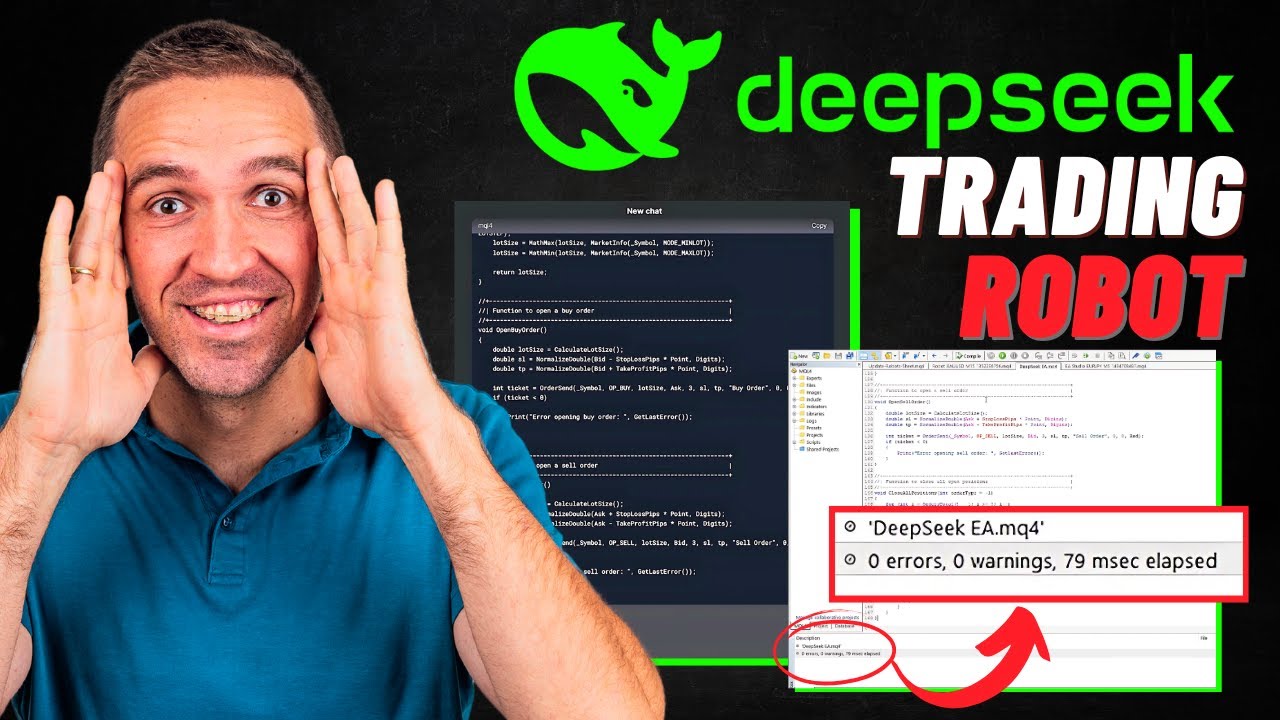
    This time, DeepSeek provided a code with all required elements which upon pasting into MetaEditor, was compiled successfully with no errors or warnings.

    So after several refinements, DeepSeek generated a more sophisticated EA that was successfully compiled in MetaTrader—a significant improvement over previous attempts. The process, however, was far from straightforward. It required extensive interactions, multiple prompt adjustments, and ongoing refinements to produce a working script. This highlights both the potential and the limitations of AI-driven coding—while DeepSeek can assist in automation, the success of its output still heavily depends on human oversight and iterative debugging.

    However, an even bigger challenge awaited—would this refined strategy be profitable?

    Backtesting Results – Does DeepSeek Trading Bot Work?

    From excitement to Disappointment

    With a functional EA finally compiled, it was time to determine whether it could generate profits in real trading conditions. This was done through backtesting in MetaTrader 4, using historical market data.

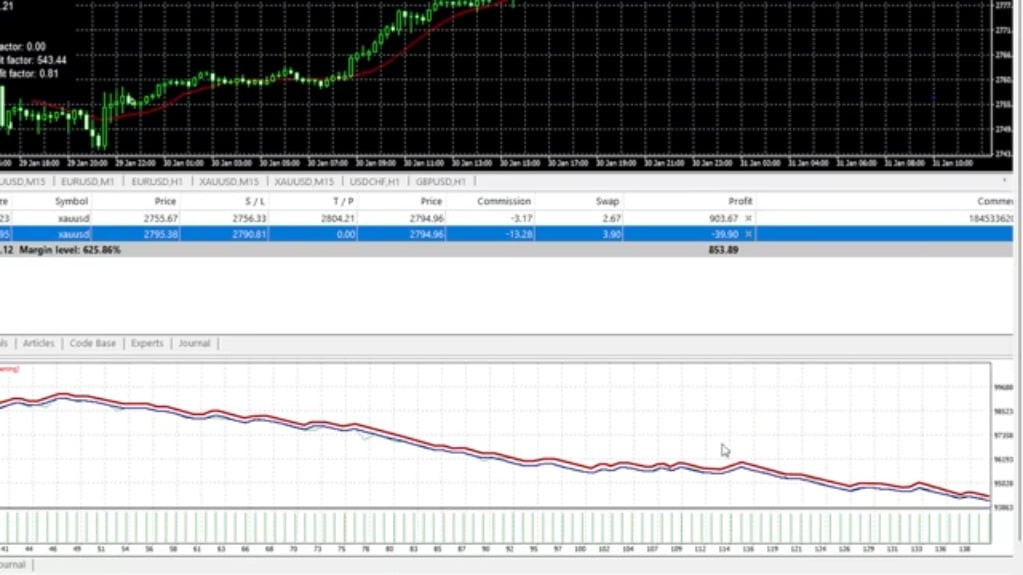
    The excitement of reaching this stage quickly faded once the MetaTrader backtest results were revealed. The EA, despite being based on a strategy that had previously shown promising backtests in EA Studio, failed miserably. The backtesting graph was a complete downward trend, showing that DeepSeek’s EA was fundamentally flawed and incapable of generating sustainable profits.

    Initially, there was optimism about adding custom indicators and introducing randomization options to optimize the strategy further. However, this quickly turned to disappointment as soon as the backtest was launched. The performance was an absolute loss, proving that just because an EA compiles successfully does not mean it will be profitable.

    Risk Management Concerns

    Additionally, a major issue with risk management emerged. The first version of the EA that successfully compiled contained a critical lot size miscalculation. Instead of following the instruction to risk 1% per trade on a 100K account, DeepSeek generated an EA that attempted to place a 30.95-lot trade on EUR/JPY. This error was a major red flag—had this EA been placed in live trading, it could have resulted in extreme volatility, leading to either an enormous gain or, more likely, a devastating loss. The only way to correct this issue was to manually lower the risk settings from the expert properties and enforce the 1% risk rule. Once corrected, the EA was backtested again, but the results remained unchanged—another losing backtest.

    This stage of the experiment reinforced an essential lesson: AI-generated trading strategies cannot be trusted blindly. While DeepSeek was capable of coding an EA, it failed to apply proper risk management and could not generate a profitable trading system. The backtesting results confirmed that the AI struggled to understand financial strategies beyond basic coding principles. Without human oversight and optimization, an AI-generated EA cannot be expected to perform reliably in live market conditions.

    Searching for Pre-Made EAs – Can AI Find a Profitable One

    After failing to create a profitable EA from scratch, the next logical step was to see if DeepSeek AI could at least help locate profitable free trading robots available online. The idea was simple: if AI struggled with coding a winning strategy, perhaps it could find one that already exists and has been tested by other traders.

    To put DeepSeek to the test, we crafted a specific prompt:

    “Find the best five free expert advisors or trading robots over the internet that I can use to trade on MetaTrader. As a result, I want to see EAs that I can download for free and test them. Make sure these have track records from FX Blue or MyFXBook websites. Also, the EAs need to have a proven track record on MyFXBook and reviews on Trustpilot for the website or the brand.”

    The AI took 31 seconds to process this request and provided the following five recommendations:

    a default MetaTrader EA

    The first result was MACD Sample EA from MetaTrader – a default MetaTrader EA preinstalled in the platform, which DeepSeek identified as a promising free expert advisor. We found it in the built-in MetaTrader 4 expert advisor folder, meaning it was neither unique nor a specialized strategy. The backtest results on EUR/USD (H1 timeframe) initially showed neutral to slightly negative performance, fluctuating without strong trends. When tested over five years, the EA demonstrated periods of minor profitability, but ultimately, the equity curve declined, making it unsuitable for real trading. Additional tests on AUD/CAD showed slightly better results, but not enough consistency to be considered a viable long-term solution. Despite DeepSeek’s suggestion, this EA was more of an example file rather than a profitable automated trading solution.

    a misleading suggestion

    The second suggested expert advisor was called Scalping Dream EA. This EA was suggested as a free download from community forums, and DeepSeek claimed it had a track record, strategy details, and pros and cons. However, we did further research and did not find any verifiable download link or reputable source. We also tried searching Google for this expert advisor, and came accross Scalper Dream, which turned out to be a paid EA, unrelated to any free, verifiable expert advisor. Additionally, another product called Dream Scalper Indicator appeared, but it was an indicator, not an EA. Ultimately, no actual free expert advisor under this title could be found, making this a misleading suggestion from DeepSeek. The lack of concrete evidence or MyFXBook verification further confirmed that this was not a viable recommendation.

    Another built-in MetaTrader EA

    Moving Average EA – Another built-in MetaTrader EA was the third suggestion. Like the MACD Sample EA, it is included by default with MetaTrader installations. DeepSeek’s recommendation suggested it as a viable free trading bot, but backtesting revealed it performed poorly on GBP/USD (M15 timeframe) with negative returns. This confirmed that the AI was simply listing preinstalled examples rather than unique profitable strategies.

    Ambigous Suggestions with Lack of Track Record

    The fourth suggestion was RSI EA, which we found on MQL5. However, it lacked a track record on MyFXBook or FX Blue, making it difficult to verify its profitability. Upon further investigation, it became evident that DeepSeek did not specify which RSI EA it was recommending. Searching through the platform revealed multiple versions, including a paid version called RSI Trustful Trading and an Updated RSI EA. However, without a direct link, it was impossible to confirm which EA was intended. This lack of clarity significantly reduced the usefulness of the recommendation. Additionally, none of the identified RSI EAs had MyFXBook verification or independent reviews, making them difficult to assess in terms of real-world trading performance. This further reinforced the limitations of DeepSeek AI in effectively filtering profitable EAs.

    Collection of Outdated EAs

    One of the more interesting suggestions by DeepSeek AI was the fifth one – a GitHub repository containing numerous free EAs, specifically the F4 and F5 EA, which is a customizable risk management EA. Unlike the previous recommendations, this time DeepSeek actually provided a direct link. Upon visiting the repository, it was evident that it contained a large number of expert advisors, but with little to no supporting documentation or track records. Most of these EAs were uploaded over three years ago, making their viability questionable in today’s market conditions.

    To test DeepSeek’s recommendation, we selected randomly one EA from the collection, called Equilibrium EA, for backtesting. After downloading and adding it to MetaTrader’s Expert Advisor directory, we tested it on EUR/USD (H1 timeframe). The initial backtest showed a drop in balance, followed by a temporary recovery of around $800 in profit, before the performance flattened out and continued sideways. When tested on M5, the results varied slightly, but there was no clear sign of sustained profitability.

    A major drawback of the repository was that there was no filtering mechanism to identify which EAs might be worth testing, forcing traders to manually sort and backtest each one. While some EAs showed potential in certain conditions, there was no verified performance data from platforms like MyFXBook or FX Blue, making this collection an unreliable source for serious trading applications.

    Later, we tested DeepSeek capabilities one more time. We won’t be going into details here about this, but if you are interested, please follow the link – Can DeepSeek find Profitable Paid EAs.

    Conclusion – Is DeepSeek Worth Using for Trading

    After extensive testing, the answer to the main question is clear: No, DeepSeek AI alone is not enough to build a profitable trading strategy. While it is capable of generating functional code for trading robots, it lacks the financial reasoning necessary to create a strategy that consistently performs well. Furthermore, its ability to find profitable free EAs online is severely limited, often leading to misleading or outdated recommendations.

    That said, AI tools like DeepSeek can still be useful as coding assistants rather than standalone solutions. Traders can leverage AI to generate basic scripts, but these must be rigorously tested, optimized, and manually adjusted to be viable for real trading. Blind trust in AI-generated strategies is a recipe for failure.

    For those serious about automated trading, paid EAs with verified track records on MyFXBook or FX Blue are a more reliable option. Additionally, traders should invest time in manual backtesting and strategy development to ensure their bots perform under real market conditions.

    If you’re interested in exploring better alternatives, consider trying EA Studio, which offers a 15-day free trial. It provides tools for building, testing, and optimizing expert advisors, ensuring you don’t rely solely on AI-generated solutions. Experiment wisely, but always backtest before trading live!

     Frequently Asked Questions

    Can DeepSeek AI replace EA Studio or other automated strategy builders for creating profitable trading systems?

    Absolutely not. While DeepSeek generates compilable MQL5 code, it lacks an understanding of what constitutes a genuine market edge. EA Studio systematically tests thousands of strategy combinations against historical data, applying statistical validation to identify robust patterns.

    DeepSeek merely translates your written instructions into code without evaluating whether those instructions represent profitable logic. Think of EA Studio as a professional chef creating recipes through experimentation and testing, while DeepSeek is a translator converting your recipe instructions into another language without tasting the result.

    Is DeepSeek better than paying a freelance MQL programmer to code my trading strategy?

    For simple syntax translation, DeepSeek offers faster initial drafts than waiting for freelancer responses. However, experienced MQL programmers provide crucial value DeepSeek cannot: they question illogical strategy elements, suggest improvements based on trading experience, implement proper error handling, and optimize code performance.

    A skilled programmer might say “Your stop loss placement will trigger constantly in normal volatility”, feedback that prevents costly mistakes. DeepSeek blindly codes whatever you request, even if guaranteed to fail. For serious trading systems requiring money, human expertise remains irreplaceable.

    Why did DeepSeek generate a 30.95 lot size when instructed to risk only 1% per trade?

    This catastrophic error reveals DeepSeek’s fundamental lack of financial reasoning. Proper position sizing requires understanding account balance, currency pair pip values, leverage, and risk percentage, concepts requiring financial mathematics, not just code syntax.

    DeepSeek likely misinterpreted the “1% risk” instruction or failed to implement the calculation formula correctly. This dangerous failure demonstrates why AI-generated trading code requires meticulous human verification before live deployment. A single overlooked error like this could instantly destroy an entire trading account through massive overleveraged positions.

    Could DeepSeek improve with better prompts, or is the limitation fundamental to current AI capabilities?

    Better prompts help marginally, my final successful compilation used extremely detailed specifications extracted from a proven EA. However, improvements hit a ceiling: AI models lack lived market experience and cannot distinguish genuinely robust strategies from cleverly curve-fitted backtests.

    They cannot intuitively grasp why certain strategy elements work during specific market regimes but fail in others. This represents a fundamental limitation of current AI technology. Until AI models train directly on decades of actual trading outcomes (not just code examples), they’ll remain sophisticated translation tools rather than strategy creators.

    Should beginners use DeepSeek to learn MQL5 coding and trading strategy development?

    Beginners risk learning incorrect practices from AI-generated code that compiles but violates trading best practices. DeepSeek might generate working code with poor error handling, inefficient loops, or dangerous assumptions about market conditions. Learning from such examples ingrains bad habits.

    Instead, beginners should study official MQL5 documentation, analyze professionally coded EAs, and follow structured courses teaching proper development practices. DeepSeek can supplement learning by explaining specific functions or converting pseudocode examples, but should never serve as the primary educational resource for trading strategy development.

  • How to Start Trading for Beginners in 2025

    Starting your trading journey can be overwhelming, but with the right mindset and tools, you can participate in the financial markets confidently. Many beginners jump into trading without understanding the risks, strategies, or platforms available—leading to frustration and very often to financial losses. This article will provide a structured guide on how to start trading for beginners the right way.

    You’ll learn about the leading trading platforms, the importance of choosing a regulated broker, and how to avoid common scams. We’ll also explore different trading strategies, algorithmic trading for beginners, and why more traders are turning to Expert Advisors (trading bots) to eliminate emotional decision-making. Additionally, risk management plays a crucial role in long-term success, so we’ll cover capital allocation techniques to help protect your investments.

    Whether you’re interested in stocks, forex, or cryptocurrencies, this guide will give you a practical roadmap to profitable trading. By the end, you’ll also have access to trading bots for beginners to test strategies on a demo account before risking real capital. Let’s jump into the fundamentals and set you up for success!

    How to Start Trading for Beginners: Choosing a Trading Platform

    Selecting the right trading platform is essential, especially for beginners looking to trade efficiently. Different platforms are more suitable to different trading styles, whether it’s manual trading, algorithmic trading, or futures trading. Below is an overview of some the most popular trading platforms and the key features to consider when making a choice, ultimately when we are talking about algorithmic trading for beginners.

    In order to select the right trading platform for its own needs, trader needs to understand the strengths of each platform. Some platforms focus on technical analysis, while others excel in automated trading and execution speed. Here are the 4 trading platforms, we would like to draw your attention to:

    1. TradingView – Best for Charting and Technical Analysis. TradingView is a widely-used platform that offers powerful charting tools, real-time market data, and a social community where traders share insights. It supports hundreds of indicators and drawing tools, making it ideal for traders who rely on technical analysis. However, its algorithmic trading capabilities are still developing, making it less suitable for traders who want to use fully automated bots.
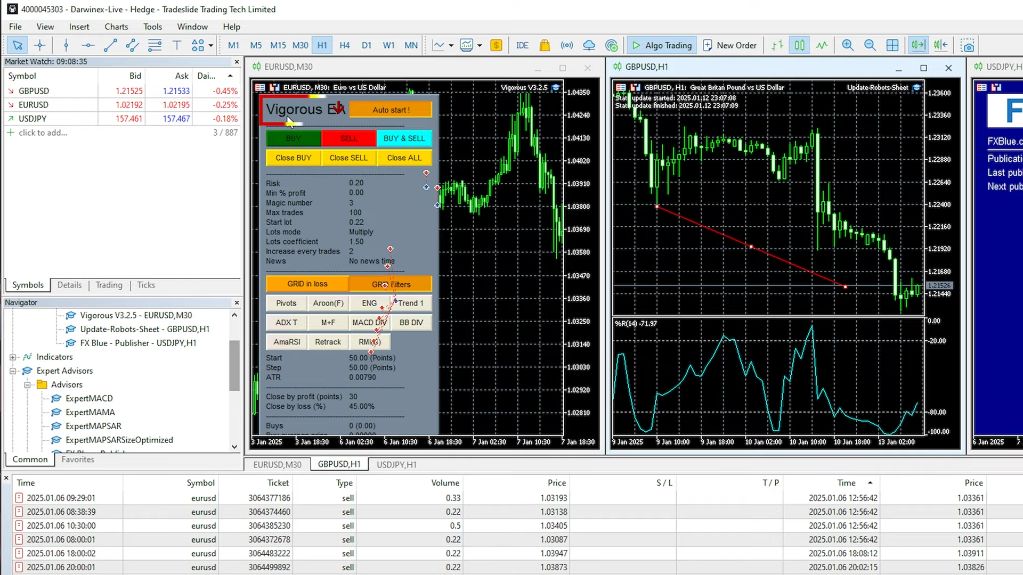
    2. MetaTrader 4 & MetaTrader 5 – Best for Algorithmic Trading. MetaTrader 4 (MT4) and MetaTrader 5 (MT5) are the most popular platforms for algorithmic trading, thanks to their support for Expert Advisors (EAs), also known as trading robots. These are the go-to platforms when we speak about algorithmic trading for beginners, due to they allow traders to automate strategies, backtest them, and execute trades without emotional bias. MT4 is widely used for forex trading, while MT5 offers more asset classes, including stocks and futures. For example, you can have a look at one of our accounts where we trade Vigorous EA. With trading bots for beginners, the goal is to trade fully automatically. You would attach the EA on the chart and all you would need to do is just to monitor the performance. Of course, sometimes due to various reasons, some Expert Advisors are not performing well, and if you start trading with such, you immediately need to change to another one.
    How to Start Trading for Beginners in 2025-Trading Platforms-MetaTrader-Vigorous EA
    1. cTrader – A Reliable Alternative to MetaTrader. cTrader is another trading platform that provides advanced order execution, depth of market (DOM) features, and an intuitive interface. It supports automated trading through cAlgo, making it a strong alternative for traders who prefer a modern platform with enhanced execution speed.
    2. NinjaTrader – Best for Futures and Advanced Traders. NinjaTrader is popular among futures and forex traders. It offers advanced charting, strategy automation, and custom indicators. However, it is not free unless you’re using a demo account, making it less accessible for beginners.

    Key Features to Look for in a Trading Platform

    When selecting a trading platform, traders should focus on features that align with their trading strategy and goals. The following aspects are critical to ensuring a seamless trading experience.

    • Charting and Technical Analysis Tools – A good platform should offer customizable charts, multiple timeframes, and a variety of technical indicators. This is very important for traders who rely on technical analysis to make their trading decisions.
    • Support for Automated Trading – For those interested in algorithmic trading, choosing a platform that supports Expert Advisors (EAs) or trading bots is a cornerstone. Platforms like MetaTrader and cTrader are great for automated trading for beginners.
    • Broker Compatibility – Not all brokers support every trading platform. Ensure that the platform you choose is compatible with a regulated and reliable broker to avoid issues with trade execution and fund security.
    • Execution Speed and Reliability – Fast order execution and minimal slippage are vital, especially for day traders and scalpers. cTrader and NinjaTrader are known for their high-speed execution capabilities.
    • Cost and Accessibility – While MetaTrader is free for traders (The brokers pay MetaTrader so they can offer it for free to their clients), rest of the platforms require a subscription or paid license. Consider the costs involved and whether they fit your trading budget.

    By evaluating these features, beginners can choose the best trading platform that aligns with their goals and trading style, ensuring a smooth and profitable trading experience.

    If you’re serious about improving your trading skills and exploring algorithmic trading for beginners, our 21-Day Free Algo Trading Course at EA Trading Academy is the perfect place to start. Learn how to create trading bots for beginners, automate your trades, backtest strategies, and remove emotional decision-making to reach consistency and profitability.

    How to Start Trading for Beginners: Choosing a Broker

    When it comes to brokers, it is very important to select legit ones. Your broker acts as the intermediary that executes your trades, so selecting the right one is essential to ensuring a secure and smooth trading experience. A poor choice can lead to high fees, withdrawal issues, or even falling victim to scams.

    The Risk of Unregulated Brokers

    When it comes to brokers, it is very important to select legit and regulated ones. Most brokers are not regulated, despite having MetaTrader platforms, professional-looking websites, and sales teams. Many of these brokers use aggressive sales tactics, calling traders and requesting personal and credit card details over the phone under the pretense of helping them fund their accounts. This is a scam. Never share your credit card details over the phone, even if the caller sounds like a professional trader—they are often just sales representatives trained to pressure you into depositing money.

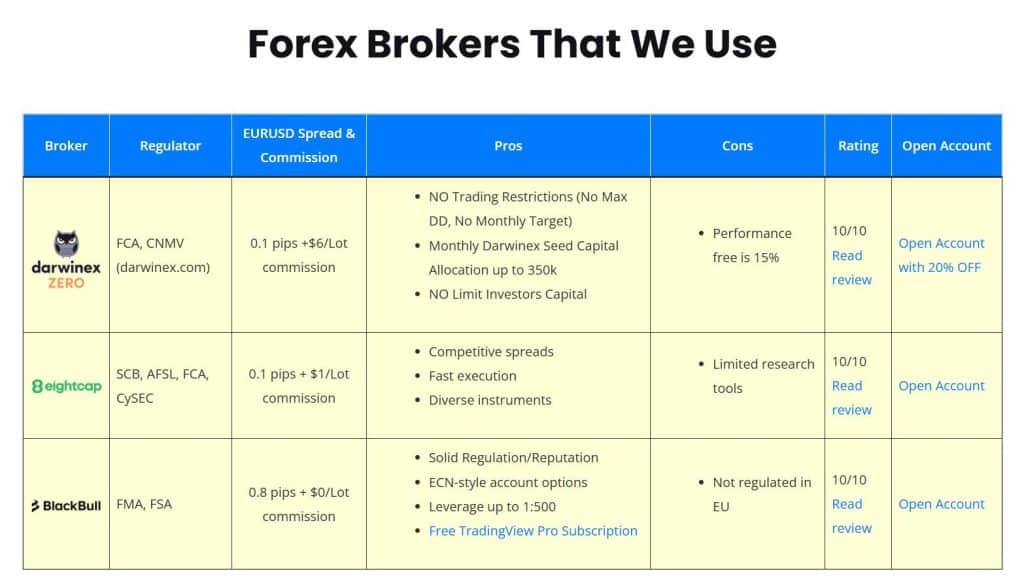
    Thousands of people get scammed every day in different industries, and trading is no exception. That is why we at EA Trading Academy have created a dedicated page listing trusted brokers, where traders can monitor which brokers we use. We ensure that only regulated brokers are listed, and while we do not provide direct recommendations, we include detailed pros and cons so traders can make an informed decision.

    To avoid falling victim to such schemes, traders should only work with regulated brokers that are licensed by reputable financial authorities like the U.S. Commodity Futures Trading Commission (CFTC), the UK’s Financial Conduct Authority (FCA), or the Australian Securities and Investments Commission (ASIC).

    EA Trading Academy Trusted Brokers

    How to Find a Trustworthy Broker

    When searching for a reliable broker, there are several key factors to consider:

    • Regulatory Compliance – Ensure the broker is licensed and regulated by a reputable financial body. Check their credentials on regulatory websites.
    • Transparent Fees and Spreads – A good broker should provide clear information on spreads, commissions, and overnight fees. Hidden costs are a red flag.
    • Deposit and Withdrawal Policies – Check the broker’s withdrawal process. Delays or excessive withdrawal fees often indicate potential issues.
    • Customer Support – Reliable brokers offer responsive and professional customer service via live chat, email, or phone.
    • Trading Platform Compatibility – The broker should support popular platforms like MetaTrader 4, MetaTrader 5, or cTrader.
    • User Reviews and Community Feedback – Research user feedback on trustworthy forums like Forex Peace Army, Trustpilot, and Reddit.

    Always do thorough research before funding an account, and we do recommend to start with a demo account to test the broker’s reliability before committing real money. By choosing a regulated and reputable broker, traders can protect themselves from fraud and ensure a smoother trading experience.

    Funding Your Account and Tracking Performance

    Once you’ve selected a broker, the next step is funding your account. Many brokers allow you to start trading with as little as $200, but for better flexibility, a minimum of $500 is often recommended. At EA Trading Academy, we also use smaller accounts to test different combinations of trading robots.

    For transparency, we maintain a live trading results page, where traders can see real-time account balances, profits, and performance metrics over the last 30 days. This helps traders make better decisions by observing how different strategies and robots perform in real trading conditions.

    By choosing a regulated broker and funding your account wisely, you can ensure a safer and more structured trading experience, reducing risks and increasing your chances of success in the market.

    How to Start Trading for Beginners: Understanding the Prop Firms Model

    Proprietary trading firms, or prop firms, are companies that provide traders with capital to trade. Instead of using their own money, traders can qualify for funding by passing a challenge or evaluation process. This allows traders to access larger capital allocations while sharing a portion of their profits with the firm.

    While prop firms present an attractive opportunity, many lack regulation, which increases the risk of scams. Some firms refuse to pay out traders’ profits, block accounts without explanation, or impose unrealistic trading conditions that make withdrawals difficult. Since there are no regulators overseeing these firms, there is no guarantee of payout.

    After extensive testing in 2024, we found that many firms were unreliable, either refusing to pay profits or suddenly blocking accounts. Even when a firm pays one trader, it does not necessarily mean they will pay everyone. Traders must remain cautious when selecting a prop firm and conduct thorough research before committing.

    At EA Trading Academy, we have tested multiple prop firms in our attempts to find a reliable one and we listed some which we continue using. One of the latest successfully passed challenges by our traders was in late 2024 with Funded Next. Offers capital after successfully passing an evaluation process. One of our traders completed a $15,000 challenge using USD/JPY and GBP/USD trades with Expert Advisors from our Prop Firm Robots App. During this challenge, we analyzed the past year’s performance and selected the top three Expert Advisors, ensuring they were consistently profitable in the previous month as well.

    You can have a look at the ongoing and completed prop firm challenges page on our website for a full breakdown.

    How to Start Trading for Beginners: Instant Funding

    Instant funding is becoming more and more popular lately. For many, it is much better alternative to the disgraced prop firm challenges practice. In this form of trading, traders purchase a funded account.

    Instant funding brokers provide traders with access to funded accounts without requiring them to pass a challenge. Instead of proving trading consistency through an evaluation process, traders can simply purchase a funded account and start trading immediately. This option is appealing to those who want access to larger capital without undergoing strict performance tests.

    At EA Trading Academy, we have tested multiple instant funding brokers and identified three that have proven to be reliable based on our experience. These brokers offer different funding models, profit-sharing structures, and withdrawal policies.

    1. Darwinex Zero

    • Subscription-based model with a $38 monthly fee.
    • Provides traders with a $100,000 account.
    • Allows allocations up to €375,000.
    • Traders receive a 15% profit payout.

    If you want to learn more how Darwinex Zero works, check this video.

    2. Xrading.com

    • Requires an initial investment starting at $1,000.
    • Features a stage-based funding system.
    • Profit split starts at 80% for the first two stages, reducing to 50% at stage five.
    • Traders must achieve a 20% profit to progress to the next stage.
    • Withdrawals can be made at each stage, making it easier to secure profits along the way.

    On one of our accounts we trade the Forex Gold Investor (FGI) Expert Advisor and we are now on the second stage. We started with a $10,000 account and when a 20% profit was achieved, the account was upgraded to the $20,000 level. Upon achieving the 20% profit, we could already withdraw $1,600, which covers the initial investment, and leaves traders a larger account to trade with. On the second stage the profit target is $24,000.

    3. iFunds

    • Offers a simple, profit-sharing model.
    • Traders can withdraw 50% of their profits at any time.
    • No stage-based progression; traders trade with a set capital allocation.
    • Allows the use of Expert Advisors (EAs), providing flexibility for algorithmic traders.

    For a comprehensive breakdown of each broker’s pros and cons, visit our dedicated instant funding brokers page.

    How to Start Trading for Beginners in 2025-Instant Funding Trading-EA Trading Academy Instant Funding Firms

    algorithmic trading for beginners: Effective Trading Strategies and the Role of Expert Advisors

    How to Develop a Reliable Trading Strategy

    A successful trading strategy involves using a combination of technical indicators, market trends, and risk management principles. For example, traders incorporate common tools such as:

    • 20 Simple Moving Average (SMA) – A widely used trend-following indicator.
    • Support and Resistance Levels – Identifying key price zones where the market reacts.
    • Trend Lines and Counter-Trend Lines – Used to determine market direction and possible reversal points.

    Rather than relying on generic trading advice, traders should focus on proven methods with backtested results. Many YouTubers claim profitability based on past trades, but without a track record, such claims remain unreliable.

    Why Track Record Matters in Trading

    A proven strategy should have a historical track record demonstrating its effectiveness. For example, let’s have a look at the live trading results for one of the Expert Advisors we use – the Happy Gold Trading EA on a $1,000 account. Here you can see exactly how the strategy performed, which is a real track record. There was an initial drawdown followed by recovery. And now we see a total return of nearly 30% over time. That shows us consistent performance under different market conditions.

    Why Expert Advisors Outperform Manual Trading

    Manual traders, including influencers and YouTubers, can only trade within limited hours. Unlike manual trading, Expert Advisors (EAs) trade round the clock, leveraging algorithms to detect profitable opportunities. With the support of a VPS (Virtual Private Server) and constant internet connectivity, automated trading ensures strategies are executed without emotional bias or human limitations.

    While some manual traders may show profitable track records, they are likely missing opportunities due to limited availability. The only true way to validate a strategy’s profitability is to backtest and execute it through an Expert Advisor.

    To explore our tested and proven Expert Advisors, visit our dedicated EA trading page here.

    Trading Bots for Beginners: How to Get an Expert Advisor

    Different Ways to Acquire Expert Advisors

    Expert Advisors (EAs) are automated trading systems that execute trades based on predefined rules. There are several ways to obtain an EA, each with its own advantages and risks.

    1. Buying from a Marketplace

    One of the most common ways to get an Expert Advisor is through online marketplaces. The largest and most well-known marketplace is the MQL5 Marketplace, which is the official store for MetaTrader 4 and MetaTrader 5 users. Since MetaTrader is the most popular platform for algorithmic trading, MQL5 has become the biggest hub for Expert Advisors.

    However, not all EAs available in the marketplace are reliable. Many are low-quality and poorly optimized, with some even designed to blow accounts instead of generating consistent profits. Prices range from free to several thousand dollars, making it difficult for traders to determine which ones are truly effective.

    2. Developing Your Own Expert Advisor

    Another option is to program an Expert Advisor yourself. This requires programming knowledge, particularly in MQL4 or MQL5, the coding languages for MetaTrader. However, most traders are not also developers, and attempting to master both trading and coding can be challenging.

    As a general rule, traders should focus on trading strategies, while developers concentrate on building and optimizing the automation process.

    3. Using Strategy Builders for Expert Advisors

    A more practical approach for many traders is to use strategy-building software to create Expert Advisors automatically, without requiring programming skills. At EA Trading Academy, we use three powerful tools:

    • Expert Advisor Studio (EA Studio) – A web-based tool that allows traders to create EAs by setting entry and exit rules and exporting fully functional robots with one click.
    • Forex Strategy Builder (FSB Pro) – A more advanced desktop-based tool that provides deeper customization options for EA development.
    • Express Generator – A tool that requires minimal programming knowledge but allows advanced traders to create custom EAs and then export them into EA Studio.

    Automating the EA Creation Process

    To streamline EA development further, we have integrated Express Generator with Expert Advisor Studio to automate the process of generating and testing new EAs. This has allowed us to build, test, and optimize trading robots continuously.

    Additionally, we maintain two specialized EA repositories:

    By leveraging these tools, traders can acquire tested and optimized Expert Advisors without the need for coding expertise.

    How to Start Trading for Beginners: Risk Management in Trading

    How to Manage Your Trading Capital Effectively

    A critical part of successful trading is risk management. Without a solid approach, even the best strategies or Expert Advisors can result in significant losses.

    One of the key rules we follow at EA Trading Academy is the 10% rule:

    • No more than 10% of total capital is risked on active trading.
    • 10% is allocated to cryptocurrencies.
    • 10% is invested in long-term assets like stocks, indices, and similar investments.

    This structure ensures that traders never risk their entire capital on a single strategy or market, reducing exposure to volatility.

    When to Stop Trading a Strategy

    Even with a strong risk management plan, it’s important to know when to stop using a trading strategy or robot. A key rule we follow is:

    • If an account drops 10% below its initial balance, stop trading that specific strategy and move on to a better one.

    For example, if a trader starts with $500 and their balance drops to $450, they should discontinue that strategy immediately rather than hoping for a recovery.

    By following strict risk management principles, traders can protect their capital, minimize losses, and maximize long-term profitability.

    How to Start Trading for Beginners: Conclusion

    Successfully navigating the world of trading requires the right tools, strategies, and risk management principles. Choosing the best trading platform and working with regulated brokers or reliable funding firms can make a significant difference in long-term profitability.

    Algorithmic trading, when done correctly using Expert Advisors (EAs), eliminates emotional trading and ensures consistent execution. However, selecting the right EA is crucial, as many in the marketplace are ineffective. At EA Trading Academy, we provide tested and optimized trading bots that align with proven strategies.

    Finally, risk management is the backbone of sustainable trading. By following the 10% rule and knowing when to stop using a strategy, traders can minimize losses and preserve capital. Whether you are just starting or refining your approach, disciplined risk management and proven trading strategies will help you achieve long-term success.

  • Walk Forward Analysis: Where Data Meets Profitability

    Walk Forward Analysis: Where Data Meets Profitability

    Walk forward analysis is a pivotal tool for Forex traders seeking to enhance the reliability and performance of their strategies. This advanced validation method goes beyond traditional backtesting by addressing critical challenges like over-optimization, which can lead to strategies that fail in live trading. By simulating trading across segmented historical data, walk forward analysis ensures that a strategy is not just profitable in hindsight but robust enough for future market conditions.

    As a safeguard against fitting strategies to past data, this process provides a clearer perspective on a strategy’s stability and adaptability. Whether you are refining Expert Advisors or building custom trading systems, incorporating walk forward analysis into your workflow can help mitigate risks and improve long-term profitability. Discover how this essential tool can elevate your Forex trading game.

    The Importance of Walk Forward Analysis in Forex Trading

    Unlike basic backtesting, which evaluates strategy performance on historical data, walk forward analysis introduces a more rigorous approach by dividing data into segments for optimization and validation. This ensures that the strategy performs well not only in past data but also in unseen, out-of-sample periods, mimicking real-world conditions.

    A major advantage of walk forward analysis is its ability to identify over-optimized strategies—those fine-tuned to historical data but prone to failure in live markets. By testing performance across multiple data segments, traders can filter out unreliable strategies and focus on those with consistent results. This process provides confidence in a strategy’s ability to adapt to changing market conditions.

    Traders seeking long-term success benefit from walk forward analysis as it promotes robust, future-proof trading systems. It also complements other validation tools like Monte Carlo simulations and multi-market testing to deliver a comprehensive assessment of strategy performance. Whether you’re a beginner or an experienced trader, integrating walk forward analysis into your trading toolkit is a strategic step toward achieving sustainable profitability in Forex markets.

    Key Features of Walk Forward Analysis

    Walk forward analysis relies on two key types of data segmentation: In-Sample and Out-of-Sample. In-Sample data is used to optimize the strategy, while Out-of-Sample data simulates real-world trading conditions to ensure the strategy performs beyond historical patterns.

    Visualization of Parameter Changes

    In EA Studio, parameter changes are visualized using color coding: green indicates improved performance, while red highlights declines. This helps traders quickly identify how adjustments affect the strategy’s equity line and overall outcomes. Such visual feedback is essential for making informed decisions about refining a strategy’s parameters to ensure optimal performance.

    Testing Over Multiple Periods

    One of the standout features of walk forward analysis is its ability to test strategies over multiple periods, providing a detailed view of their performance under varied market conditions. By analyzing each segment individually and collectively, traders can identify consistent patterns or weaknesses in their strategies. This segmented approach reduces the risk of overfitting—a common issue where strategies are tailored too closely to historical data, making them ineffective in live markets.

    Validation Criteria

    Validation criteria in walk forward analysis play a pivotal role. Strategies must demonstrate consistent profitability across all segments while avoiding sharp performance drops. These criteria help traders filter out unreliable setups, focusing instead on those with the potential for long-term success.

    By leveraging walk forward analysis, traders can enhance strategy robustness and confidence, ensuring they are well-prepared for dynamic Forex markets.

    Are you ready to take your trading strategies to the next level? Enroll in the 21-Day Free Algo Trading Course and gain hands-on experience with Walk Forward Analysis and other cutting-edge techniques. Learn how to optimize, validate, and refine your strategies for real-world success—all guided by industry experts. Start your journey today at EA Trading Academy and master the art of algorithmic trading.

    Step-by-Step Process of Walk Forward Analysis with EA Studio

    Walk forward analysis is a systematic method used to test and validate Forex trading strategies, ensuring their robustness and adaptability in live markets. This step-by-step process involves the segmentation of historical data and iterative optimization, providing a detailed framework for evaluating strategy performance.

    1. Set Up Your Strategy in EA Studio

    Generate or import a strategy into EA Studio using historical data exported from your broker. Define optimization parameters, including indicator ranges and step sizes, for precise control over testing. This setup allows traders to tailor their strategy development process to their specific goals and market conditions.

    2. Enable Out-of-Sample Data Segmentation

    In the generator settings, select the Out-of-Sample option (e.g., 20%-30%). This divides your data into In-Sample (optimization) and Out-of-Sample (validation) periods. For example, with 20% Out-of-Sample, the tool optimizes the strategy on 80% of the data and tests its performance on the remaining 20%. Such segmentation ensures that the strategy’s robustness is assessed across varied market scenarios.

    3. Run Walk Forward Analysis

    Navigate to the “Walk Forward” section in EA Studio and start the process. The tool divides the historical data into segments (e.g., five segments), optimizing and testing each sequentially. This iterative approach allows traders to pinpoint periods of inconsistency and adjust their strategies accordingly.

    4. Interpret the Results

    Review equity charts and performance metrics. Successful strategies should show consistent profitability across all segments. Look for validation indicators like net profit, profit factor, and drawdown. Additionally, use these insights to determine whether the strategy’s parameters need further refinement.

    To say that the strategy passes the Walk Forward optimization, it needs to have three things:

    • One is the strategy to be better.
    • Second is the standard Acceptance criteria to be validated.
    • Third, to have all segments validated.

    5. Refine Your Strategy

    If a strategy fails validation, adjust its parameters or acceptance criteria. Combine Walk forward analysiswith tools like Monte Carlo simulations for further robustness checks. This iterative refinement process ensures that the final strategy is both reliable and adaptable to changing market dynamics.

    Walk forward analysis provides traders with a structured framework to test their strategies thoroughly, minimizing the risk of over-optimization and increasing confidence in future performance. By adhering to this step-by-step process, traders can develop robust strategies that stand up to the unpredictable nature of Forex markets.

    Gain is the difference between Before Optimization and After Optimization.

    Comparing Walk Forward Analysis with Other Robustness Tools

    Walk forward analysis stands out as a critical robustness tool in Forex trading, complementing other methods like Monte Carlo simulations and multi-market testing. While all three aim to evaluate the reliability of trading strategies, each offers unique benefits suited to different scenarios.

    Complementary Tools

    • Monte Carlo Simulations: Assess strategy stability by introducing random variations in input parameters and market conditions, providing a probabilistic view of performance. This adds another layer of robustness testing to Walk Forward Analysis.
    • Multi-Market Testing: Evaluates strategies across various instruments and conditions to ensure adaptability. By testing performance in diverse markets, traders can confirm their strategies are not overly dependent on specific conditions.

    Unique Benefits of Walk Forward Analysis

    Walk forward analysis, however, excels in its iterative approach to optimization and validation. By dividing historical data into In-Sample and Out-of-Sample segments, it tests strategy performance under conditions that closely mimic real-world trading. This segmented approach helps identify over-optimized strategies and ensures adaptability to changing market dynamics.

    Compared to Monte Carlo simulations and multi-market testing, walk forward analysis is particularly effective for strategies that rely on precise parameter tuning. It provides a more structured and sequential evaluation, making it ideal for traders looking to build long-term, robust systems. Together, these tools offer a comprehensive framework for strategy validation in Forex trading.

    Common Challenges in Walk Forward Analysis

    While walk forward analysis is a valuable tool for validating Forex trading strategies, it comes with challenges that traders must address to ensure accurate results. One common issue is the risk of misinterpreting results due to small sample sizes. Segmentation of historical data into too few periods can lead to unreliable conclusions, as each segment may not fully represent diverse market conditions. Traders should ensure adequate data coverage and multiple segments for robust testing.

    Another challenge is over-reliance on backtesting results without sufficient real-world validation. Walk forward analysis can only simulate market conditions based on historical data, which may not fully reflect future price behavior. Strategies validated through this process should still be monitored closely during live trading to confirm their adaptability.

    Lastly, traders often encounter discrepancies between backtested and real-world performance. Factors such as slippage, trading costs, and execution delays can significantly impact a strategy’s profitability in live markets. These discrepancies highlight the importance of using walk forward analysis as part of a broader validation framework that includes live testing under realistic conditions.

    By recognizing these challenges and integrating complementary tools like Monte Carlo simulations, traders can enhance the effectiveness of walk forward analysis and develop robust, future-proof strategies.

    Best Practices for Walk Forward Analysis in Forex Trading

    To maximize the effectiveness of walk forward analysis in Forex trading, adhering to proven best practices is essential. These practices ensure that your trading strategies are robust, reliable, and ready for real-world performance.

    1. Set Realistic Out-of-Sample Percentages
    A balanced division between In-Sample and Out-of-Sample data is crucial for accurate validation. A common and effective ratio is 70% for In-Sample (optimization) and 30% for Out-of-Sample (validation). This split allows for sufficient data to fine-tune the strategy while testing its performance in unseen conditions, mimicking live trading scenarios.

    2. Use Well-Defined Acceptance Criteria
    Establish clear criteria for evaluating strategy success during walk forward analysis. Examples include consistent profitability across segments, low drawdown, and a minimum profit factor. These criteria help filter out over-optimized or unreliable strategies and ensure only the most robust systems are used for trading.

    3. Combine Walk Forward Analysis with Other Tools
    To strengthen your validation process, integrate walk forward analysis with additional robustness tools like Monte Carlo simulations and multi-market testing. Monte Carlo simulations assess strategy stability under variable conditions, while multi-market testing evaluates performance across different instruments and market environments.

    By following these best practices, traders can reduce the risk of over-optimization and improve their strategies’ adaptability to changing market conditions. Walk forward analysis, when used strategically, is a powerful tool for building long-term success in Forex trading.

    Applications of Walk Forward Analysis in Forex Trading

    Walk forward analysis has versatile applications in Forex trading, making it an essential tool for traders seeking reliable and adaptable strategies. By integrating this method into trading platforms like MetaTrader 4 and EA Studio, traders can enhance the robustness of their Expert Advisors (EAs) and reduce the likelihood of strategy failure.

    In platforms like MetaTrader 4, walk forward analysis helps optimize and validate trading algorithms by dividing historical data into In-Sample and Out-of-Sample segments. This segmentation ensures that strategies are not overfitted to past data, providing more accurate performance predictions for live trading. EA Studio, another popular platform, streamlines this process with advanced tools that automate walk forward analysis, saving time while maintaining precision.

    Check out this video to find out more how to apply Walk Forward in MetaTrader4.

    A practical application of walk forward analysis can be seen in testing a trend-following EA. By segmenting historical data into five periods, traders can validate the strategy’s adaptability across varying market conditions. If the strategy demonstrates consistent profitability across all segments, it indicates a high likelihood of performing well in future markets.

    Additionally, walk forward analysis is invaluable for improving the robustness of existing EAs. By identifying weaknesses during the testing phase, traders can refine their strategies, adjusting parameters to enhance reliability.

    This method not only minimizes risks associated with over-optimization but also builds confidence in deploying strategies, making walk forward analysis a cornerstone for successful Forex trading.

    Advantages and Limitations of Walk Forward Analysis

    Walk forward analysis offers Forex traders a powerful method to validate and enhance their trading strategies, but like any tool, it comes with its own set of advantages and limitations. Understanding these aspects helps traders use this technique effectively.

    Advantages


    One of the key benefits of walk forward analysis is its ability to mitigate over-optimization risks. By testing strategies across multiple In-Sample and Out-of-Sample segments, traders can identify those overly tuned to historical data and unlikely to perform well in live markets. This process ensures the development of robust strategies capable of adapting to future market conditions.

    Another significant advantage is the clear insight into strategy reliability. Walk forward analysis allows traders to simulate real-world performance under varied conditions, providing a realistic picture of a strategy’s potential. It also complements other robustness tools like Monte Carlo simulations, offering a comprehensive validation framework.

    Limitations


    Despite its strengths, walk forward analysis cannot guarantee future profitability, as it relies on historical data to make predictions. Markets are inherently unpredictable, and even robust strategies may face unforeseen challenges in live trading.

    Additionally, the process can be computationally intensive and time-consuming, particularly for strategies requiring extensive optimization over large datasets. This complexity might discourage novice traders or those with limited computational resources.

    By balancing these advantages and limitations, traders can use walk forward analysis strategically, combining it with other tools to build reliable and adaptable trading systems.

    Conclusion

    Walk forward analysis is an indispensable tool for Forex traders aiming to develop robust and adaptable trading strategies. By validating performance through segmented testing of historical data, it minimizes the risks of over-optimization and ensures strategies are better suited for real-world conditions. This method provides traders with a clearer understanding of their strategy’s reliability, enhancing confidence in its long-term potential.

    To achieve optimal results, walk forward analysis works best when combined with other validation tools like Monte Carlo simulations and multi-market testing. Together, these methods offer a comprehensive framework for building and refining trading strategies.

    If you’re looking to enhance your trading performance, experimenting with walk forward analysis tools on platforms like MetaTrader 4 or EA Studio is a great starting point. Incorporate this robust method into your trading toolkit to stay prepared for the ever-changing Forex market.

  • How Does Identifying a Strong Forex Pair Differ From Finding a Strong Cryptocurrency

    How Does Identifying a Strong Forex Pair Differ From Finding a Strong Cryptocurrency

    Understanding how to identify a strong forex pair and a strong cryptocurrency are two very different processes. The major difference lies in the unique nature of each market. Although both require you to analyze factors such as their potential for returns and market trends, the dynamics that lie behind the strength of assets in these two markets differ significantly.

    To find a strong forex pair, you need to identify the strengths of two currencies based on economic factors, central bank policies, and political conditions. The process of identifying a strong cryptocurrency, on the other hand, involves looking for the most promising crypto based on the asset’s technology, its use case, its long-term potential, and how well it is adopted in the market.  

    Understanding the Basics of Crypto

    Crypto’s strength is determined by several factors, including its use case, underlying technology, and its level of adoption by users. Cryptocurrencies are not traded in pairs or in the same way in which forex is. Instead, they are often analyzed and treated as independent assets. Although some trading pairs exist, such as the BTC/ETH pair, the focus is usually on the growth potential of individual cryptocurrencies and not on the pair.

    Use Case and Technology 

    Crypto’s technology and its primary purpose or its practical use in the real world are the major determinants of its strength. For example, Ethereum’s strength lies in its ability to support smart contracts, while for Bitcoin it is in its immutable role as a store of value. The technology behind cryptocurrency is not just about looking at how it powers the crypto itself but also considering whether it solves a particular problem or addresses an issue within the digital economy.

    Support and Backing

    The strength of a cryptocurrency is also determined by the forces behind its endorsement or the companies it is associated with. Cryptocurrencies with influential figures behind them tend to be widely accepted and increase in value more quickly than those without. An example is the meme coin DOGE, which Elon Musk has been supporting. Its price is currently on the rise and is expected to rally to $2.4.

    Market Size and Competition 

    A crypto’s future growth depends on its market size, the competition, and how it is better than its competition in terms of its offerings. There is a lot of competition in the crypto industry, so a token has to prove its worth compared to other established tokens already circulating in the market. 

    Market Adoption

    The level of a crypto’s adoption is an indicator of its strength. Cryptocurrencies that have many uses, such as payment systems, DeFi (Decentralized Finance), gaming, or NFTs (Non-Fungible Tokens), can lead to greater demand than those with limited use cases. 

    Understanding the Basics of Forex

    Forex, also referred to as FX, is short for foreign exchange. Foreign exchange is a global marketplace for trading national currencies, which is only available 24 hours a day except on weekends. Organizations, banks, and traders use forex to exchange one currency for another. Forex traders take advantage of the exchange rate of currencies and buy when they are low to sell when the prices increase. The day-to-day value of currencies can either rise or fall, leaving traders to use market indicators and forex historical data to estimate when it might be a good time to sell. 

    Economic Indicators

    Economic data plays an important role in helping to identify strong currency pairs. A country’s employment statistics, Gross Domestic Product (GDP), and inflation rates determine how weak or strong a currency is. This information is used by traders to predict a currency’s movement. 

    If a country’s GDP growth is strong, the currency of that country may also become strong. This makes any pair that will have that particular currency attractive. Inflation can be likened to the weakening of a currency’s buying power, so countries that have high inflation rates have weaker currencies. If a country faces high unemployment rates, it shows that it is economically distressed. This in turn will negatively affect its currency. 

    Interest Rates

    Central banks set interest rates, which affect currency demand. If the interest rates are higher, they give lenders a better return as compared to other countries. This attracts foreign capital and causes the currency demand and value to rise. Forex traders often prefer pairs with currencies from countries that have rising interest rates.

    Cryptocurrencies were negatively affected when the Federal Reserve introduced monetary policies that increased interest rates in 2022. The Fed introduced these restrictive monetary policies after crypto value peaked in November 2021. Cryptocurrencies seemed to struggle whenever interest rates showed any signs of rising until 2023 when the Bitcoin price was boosted by Bitcoin EFTs.

    Liquidity

    A forex pair’s liquidity refers to how easily a currency pair can be bought or sold without affecting its price. There are major forex pairs like EUR/USD and GBP/USD, which are highly liquid. This means that traders can quickly enter and exit positions at the price they want and incur low transaction costs. The EUR/USD pair is the most liquid of all currency pairs, making up nearly 30% of the forex market.

    Crypto liquidity varies widely between major coins like Bitcoin and smaller altcoins. Traders will need to assess market depth, which shows the quantity to be sold against the price per unit, before investing.

    Volatility

    The shrinking or growing of world economies coupled with other events like the central bank policy can lead to forex volatility. Volatility measures the variation in a currency pair’s trading price. Highly volatile currency pairs can offer more trading opportunities and profitability, but they come with more risk and higher transaction costs. Traders choose pairs based on their risk tolerance and their trading strategies.

    The cryptocurrency market is very volatile and therefore lacks the stability of the forex market. It is very common to find daily price swings of 5-10% in the cryptocurrency market. Of course, technical analysis is important in the crypto market, but it is less reliable than in the forex market. The crypto market is highly influenced by sentiment analysis, which is often driven by social media trends and public perception. 

    Political Stability and Economic Performance

    If there is an imbalance in political factors such as elections and policy changes, the market will be filled with uncertainty, which affects currency values and may even cause volatility. Political stability and instability affect exchange rates differently. Traders often prefer currency pairs from countries with stable political environments and strong economic performance to reduce risk. Traders need to be well-informed about political events to make the right market decisions. 

    Conclusion

    Although both forex and cryptocurrencies offer investors and traders an opportunity to make profits, the methods that are used to identify the assets’ strengths are very different. Forex pairs are more stable and predictable because they depend on assessing economic conditions and relative currency performance, unlike cryptocurrencies, which are assessed based on their individual attributes and adoption trends. 

  • Happy Brexit EA Tested: Results, Risk & EURGBP Strategy

    Happy Brexit EA Tested: Results, Risk & EURGBP Strategy

    Introduction

    Today, I wanted to give you guys an open and honest review of Happy Brexit EA, a trading robot designed to deliver stable, consistent returns in Forex trading. This EA is part of the “Happy” series and has earned a reputation among traders for focusing on low-risk trades. Happy Brexit EA avoids risky setups or complex strategies. Instead, it prioritizes long-term growth, making it a potential fit for traders looking for stable, gradual account growth.

    Happy Brexit EA is specifically designed to trade the Euro/Pound (EUR/GBP) on the H4 (4-hour) chart. This setup supports steady trading performance without requiring constant intervention. For traders looking to reduce exposure and improve consistency in their trading accounts, Happy Brexit EA could be a useful tool.

    What is Happy Brexit EA?

    The Happy Brexit EA is available for both MetaTrader 4 (MT4) and MetaTrader 5 (MT5) platforms. Like all robots, once you place onto one or more charts, it’ll do the rest on it’s own. Open trades when market conditions trigger the rules, and close them when the Take Profit or Stop Loss is hit. Or, when the exit rules are triggered. As mentioned above, it trades only one currency pair—the Euro/Pound. This is a benefit because it avoids the volatility found in many other, more active currency pairs. Examples would be the EUR/USD or GBP/USD.

    Happy Brexit EA’s strategy is based on single trades with set take-profits and stop-losses. It has been designed this specifically. It avoids common high-risk trading practices like grid trading or martingale strategies, which can, and often do, lead to big losses. Instead, Happy Brexit EA uses fixed lot sizes and preset stop-loss levels, keeping risk management at the core of its operations.

    The Setup Takes About Two Minutes

    Happy Brexit, EA’s installation is straightforward. Once you’ve purchased and received your license, the configuration requires minimal input.

    What you actually need to configure:

    1. Serial number: Your license key (provided after purchase)
    2. Starting lot size: How much to trade (0.02 for $1,000 accounts)
    3. Stop-out percentage (optional): Set to 50% if you want automatic account protection

    That’s essentially it. The EA handles everything else: entry timing, exit management, and position sizing within your specified parameters.

    I’ve tested it extensively on demo, so I feel comfortable with the default settings on live accounts. Perhaps I’ll adjust the stop-out protection as the account grows, but for now, the simplicity works perfectly.

    The expert properties screen shows these settings clearly. No complex matrix of inputs. No confusing risk multipliers. Just straightforward configuration that takes minutes.

    Consistent Growth in Both Live and Demo Accounts

    One of the notable aspects of Happy Brexit EA is its record of consistent performance across both demo and live accounts. In tests, Happy Brexit EA has shown a steady monthly return of 1-3%, which is fairly strong for an EA designed to avoid high-risk moves. This consistency is appealing to those who prefer gradual account growth without wild swings in performance.

    Many users report that Happy Brexit EA performs as expected in both demo and live environments. This is a crucial aspect that is often overlooked. Robots, specifically scalping type robots often perform differently in demo and live trading accounts. It comes down to the broker and the speed at which trades are executed and how complicated the code of the robot is. Just a few seconds can be the difference between a profitable and unprofitable trade. But an EA that can work well in both scenarios is of course ideal. My advice is always: test on a demo account. Once you’re happy, open a small live account. Place the EA onto the live account and compare results.

    happy-brexit-ea-review-1

    Performance Metrics and Real-Time Statistics

    Happy Brexit EA’s performance metrics show that it’s designed to meet the needs of traders looking for consistent results with as little volatility as possible. On average, the Happy Brexit EA achieves monthly returns of 1-2% with the settings I used. The EA’s low drawdown—typically below 1%—shows that it doesn’t take unnecessary risks. Unlike more aggressive EAs that rely on risky recovery systems, Happy Brexit EA sticks to a simple structure of single trades, managed with fixed stop-losses and take-profits.

    With its monthly returns and low drawdown, Happy Brexit EA provides a balanced approach to trading automation. It won’t deliver high returns in a short period, but it does focus on controlled, low-risk trading that suits long-term account growth.

    Eight Months Demo, Four Months Live (The Numbers)

    Before putting real money into Happy Brexit EA, I ran a demo account starting January 2nd to see how it performed over an extended period. By August, the results convinced me this EA was worth live trading.

    Demo Account Performance:

    • Starting date: January 2nd
    • Account size: $5,000
    • Total return: 12%
    • Duration: 8 months
    • Monthly return: 2.3% (according to FXBlue)
    • Profit factor: Exceptionally high

    That 2.3% monthly average is what I look for. Anything below 1% monthly isn’t worth my time managing the account. Between 2-3% monthly? That’s the sweet spot where steady growth happens without excessive risk.

    Live Account Performance:

    • Starting balance: $1,000
    • Current balance: $1,057.31
    • Gross profit: $75
    • Net profit after costs: $57.31
    • Duration: Four months (mid-April through August)
    • Monthly return: 1.1%

    The live account underperforms the demo slightly, 1.1% versus 2.3%, which is normal. Live execution differs from demo. Slippage matters. Costs matter. But both accounts show the same pattern: steady, positive growth without dramatic swings.

    Emphasis on Risk Management and Low Drawdown

    Happy Brexit EA strongly focuses on risk management, a critical factor for many traders. Instead of relying on tactics that add trades to recover losses, the EA uses single trades at fixed lot sizes with stop-loss levels in place. This reduces the chances of large drawdowns and helps maintain a stable account balance.

    This risk-managed approach keeps Happy Brexit EA’s drawdown levels minimal, typically below 1%. This strategy offers a welcome change for traders burned by high-risk EAs in the past. The emphasis here is on preserving account equity and avoiding sudden drops, making Happy Brexit EA a practical choice for traders who prioritize capital preservation.

    Optimized for Euro/Pound on H4

    Those of you who have read my previous posts or watched my YouTube videos, know that my personal preference is trading low-risk, steady strategies and robots. Any robot that promises, and even delivers big profits monthly is risky. And more than likely a grid or martingale robot. The Happy Brexit EA has been designed with steady, low-risk gains in mind. The EUR/GBP pair is not a particularly volatile currency pair and the addition of fully customizable settings allows us as traders to benefit and be profitable without the unpredictability of more volatile pairs.

    The H4 timeframe allows Happy Brexit EA to capture trends without the fast pace and unpredictability of shorter timeframes. This setup focuses on fewer, carefully selected trades. Instead of chasing short-term volatility, Happy Brexit EA operates within stable market movements. This approach suits traders who prefer a steady pace and controlled exposure.

    Real-World Performance in Live Trading

    Testing Happy Brexit EA on a live account reveals its potential for steady returns. Over a four-month period, the EA achieved an average monthly return of around 1.1% starting from an initial balance of $1,000. It’s a measured growth rate, ideal for traders who prioritize stability over quick wins.

    The EA maintained its steady performance without large drawdowns or significant losses. For traders who value consistency, this live account performance supports the EA’s reputation for providing low-stress, reliable returns. Happy Brexit EA may not produce the largest returns, but it does offer a dependable way to grow an account with minimal management required.

    Detailed Account Statistics

    In four months of live trading, Happy Brexit EA’s performance demonstrated the following results:

    • Monthly Return: Around 1.1% on average
    • Growth in Balance: Account grew steadily from an initial balance of $1,000
    • Drawdown: Stayed under 1%, helping to avoid potential account risks

    These statistics highlight Happy Brexit EA’s focus on low-risk trading and stable growth. For those looking to avoid large swings in performance, the EA provides a reliable option for gradual account growth.

    happy-brexit-ea-review-3

    Comparing Results on Different Platforms

    Happy Brexit EA has been tested on multiple trading platforms, and its results show a similar pattern across the board. Unlike some EAs that experience major performance variations on different platforms, Happy Brexit EA’s steady, low-risk approach remains consistent. This makes it a flexible choice for traders who use various setups and platforms.

    Minor differences in spreads or trade execution speeds may impact results slightly, but overall, Happy Brexit EA provides stable performance across different environments. For traders testing various platforms, Happy Brexit EA’s results offer an encouraging level of continuity.

    Key Features of Happy Brexit EA

    Happy Brexit EA is straightforward in its approach, focusing on a few critical features that support its low-risk strategy:

    • Fixed Lot Sizes: The EA avoids grid or martingale systems, which can expose accounts to higher risks.
    • Euro/Pound on H4 Chart: Happy Brexit EA’s trading is optimized for the EUR/GBP pairing on the H4 timeframe.
    • Low Drawdown: The EA’s drawdown typically stays under 1%, reducing the risk of significant losses.
    • Stop-Loss and Take-Profit: Each trade is managed with preset stop-loss and take-profit levels.

    By focusing on these features, Happy Brexit EA offers a reliable approach to automated trading. For traders looking to add a steady, low-risk EA to their accounts, this tool provides a simple and effective option.

    How Much to Trade: Lot Sizing Reality

    On my $1,000 live account, Happy Brexit EA trades with 0.02 or 0.03 lots maximum. That’s it.

    Looking at the account history, every trade falls within this range. No progression. No doubling after losses. Just consistent 0.02-0.03 lot sizing throughout the four-month period.

    This conservative approach keeps exposure manageable. Even when trades go against you, like the long trade that opened and moved downward before eventually closing, the fixed lot size prevents account damage.

    Current open trade example:

    At the time I checked, there was one long EUR/GBP trade open with a small floating loss. Another trade had already closed for $1.01 profit. The EA manages positions individually, closing profitable trades while letting others work toward their targets.

    For $1,000 accounts, stick with 0.02-0.03 lots. Scale proportionally as your account grows. This isn’t about maximizing returns, it’s about surviving long enough for steady growth to compound.

    Trading Strategy and Timing

    Happy Brexit EA’s trading strategy is relatively conservative. It doesn’t operate as a fast-moving scalper; instead, it identifies strategic entry points on the H4 chart. This selective approach reduces the number of trades but carefully times each one to avoid excessive market noise and volatility.

    The EA’s timing is built around avoiding high-impact news events, which can lead to unpredictable price swings. By taking a steady approach, Happy Brexit EA minimizes risk and reduces the chances of encountering sudden losses. This trading rhythm suits traders who want an EA that operates on a slower schedule without requiring constant monitoring.

    Testing Results and Demo Recommendations

    Testing Happy Brexit EA on a demo account before going live is a crucial step for any trader. I always test all robots on a demo account first. You need to know how it will perform under similar conditions to a live account—matching the balance, lot size, and setup— so that you can get a good idea of how the EA performs without risking real money. Demo testing also allows you to try different settings, entry lots, leverage and other parameters to find those that suit your particular goals and risk tolerances before going live, to ensure you’re comfortable to let the EA trade automatically.

    Happy Brexit EA has demonstrated consistent performance between demo and live accounts. This similarity gives users confidence in how it will perform when transitioning to real funds. Testing is especially helpful for those new to automated trading or those who want to confirm that Happy Brexit EA aligns with their trading expectations.

    Real-World Performance: Live vs. Demo

    Happy Brexit EA shows consistent behavior on both live and demo accounts, which is beneficial for those transitioning from testing to real-world trading. This EA’s low-risk, conservative approach remains stable regardless of account type, giving traders peace of mind as they move from demo to live trading.

    For traders new to automated systems, this consistency is reassuring. Happy Brexit EA’s ability to deliver dependable performance without the surprise of large drawdowns makes it a good choice for anyone seeking steady returns with manageable risk.

    User Feedback and Community Insights

    Traders who have used Happy Brexit EA generally report positive experiences. Feedback often highlights its low drawdown, steady returns, and minimal need for active management. For those who value a conservative, set-and-forget approach, Happy Brexit EA has earned a strong reputation for providing reliable growth.

    The trading community appreciates Happy Brexit EA’s simplicity and stability. The traders I’ve spoken to have told me the EA requires minimal tweaking and once it’s set up and attached to their chart, they let it do it’s thing.

    Customizable Settings with Vendor-Provided Set Files

    The Happy Brexit EA vendor offers custom set files to optimize the EA according to individual risk levels and trading goals. These files allow traders to adjust lot sizes, stop-loss levels, and other settings, tailoring Happy Brexit EA to suit their needs. Custom settings are helpful for users who plan to trade across various account sizes or want to fine-tune the EA’s risk tolerance.

    Customized set files can make a significant difference in performance, especially for live accounts with specific requirements. Traders who want more control over their EA’s settings will benefit from these tailored options, allowing them to align the EA’s operations with their unique trading strategy.

    happy-brexit-ea-review-5

    Why Traders Choose Happy Brexit EA

    Happy Brexit EA attracts traders who prioritize stability over quick wins. Traders like me. My trading style is simple. Low-risk, steady gains. An EA that can offer me consistent monthly returns of around 1-2% is perfect. Many of you have encountered issues with high-risk EAs in the past. Happy Brexit EA is the opposite. Beginners and experienced traders alike can find value in its dependable performance.

    For traders looking to gradually grow their accounts without high exposure, Happy Brexit EA offers a practical solution. It combines steady performance, low drawdown, and straightforward risk management, making it a suitable tool for traders aiming to avoid high-stakes trading.

    The Grid Machine Lesson (70% Drawdown)

    I need to share something that changed my entire approach to algo trading.

    Recently, I showed a video where one of my live accounts using a grid system, Grid Machine EA specifically, lost 70% of its balance. Nearly blown. That account barely survived, and only because I caught it before total destruction.

    Grid systems. Martingale strategies. EAs promising 5%, 10%, 20%, even 50% monthly returns. I chased all of them early in my trading career.

    The result?

    Blown accounts. Plural. Not just one mistake, multiple accounts were destroyed chasing unrealistic returns.

    Here’s what I finally understood: those high-return EAs work until they don’t. You might get lucky for weeks or months. The equity curve looks beautiful. Then market conditions shift, the grid gets overextended, or the martingale progression hits your margin limit. Account gone.

    Now I actively look for EAs generating 2-3% monthly. Some traders think that’s too low. “Why bother with 2% when you could make 20%?”

    Because 2% monthly for 12 months beats 20% monthly for 2 months, followed by account wipeout.

    Happy Brexit EA represents this philosophy perfectly. It’s not exciting. You won’t double your account in a week. But you also won’t watch helplessly as a grid system devours 70% of your capital during adverse market conditions.

    There are two paths in algo trading:

    • Path 1: Chase high returns with risky systems, blow accounts repeatedly, maybe get lucky occasionally
    • Path 2: Accept steady 1-3% monthly growth, compound consistently, sleep peacefully

    I spent years on Path 1. Now I’m firmly on Path 2.

    Final Thoughts On Happy Brexit EA

    The Happy Brexit EA is a practical choice for traders seeking low-risk, stable growth in a trading robot It has a conservative trading strategy. In my test, both on demo and live trading, I experienced low drawdown and the configuration was simple. This EA offers a realistic approach to account growth without the stress of high-risk strategies. Traders who want dependable, low-maintenance trading will find Happy Brexit EA a useful addition to their portfolio.

    Whether you’re new to Forex or looking to add stability to an existing strategy, Happy Brexit EA delivers consistent performance suited to long-term account growth. It’s a solid choice for anyone ready to move away from high-stakes trading and focus on steady gains.

    Frequently Asked Questions

    What lot size should I use for a $1,000 account with Happy Brexit EA?

    Use 0.02 to 0.03 lots maximum for $1,000 accounts based on my four months of live testing. This conservative sizing produced 1.1% monthly returns with minimal drawdown on my BlackBull Markets account.

    The EA uses fixed lot sizes, no martingale or progression, so your maximum exposure remains constant throughout trading. Scale proportionally as your account grows: $2,000 accounts could use 0.04-0.06 lots, $5,000 accounts around 0.10-0.15 lots, maintaining the same risk-to-capital ratio.

    How does Happy Brexit EA’s 2-3% monthly compare to riskier grid systems?

    Happy Brexit EA averages 1.1% monthly on live accounts and 2.3% on demo accounts, significantly lower than grid systems claiming 5-20% monthly. However, grid systems carry extreme risk; my Grid Machine EA lost 70% in a single drawdown before I stopped it.

    Consistent 2-3% monthly compounds to 24-36% annually without account-ending drawdowns. Risky systems might produce higher returns temporarily, but typically blow accounts when market conditions turn unfavorable. Steady growth beats explosive gains followed by account destruction.

    Can I use the 50% stop-out feature with Happy Brexit EA?

    Yes, Happy Brexit EA includes an optional stop-out percentage setting in the expert properties. Setting it to 50% automatically closes all positions if your account equity drops to half the starting balance, protecting remaining capital.

    This feature is optional; I don’t use it on my accounts after extensive demo testing, but it provides peace of mind for traders wanting additional automated protection. The stop-out percentage is adjustable to any level that matches your risk tolerance and account management strategy.

  • Major Currency Pairs: What They Are, Why Trade Them, and How to Use Expert Advisors for Better Results

    When you participate in the financial markets, one of the most popular ways to gain profit is buying and selling different currencies. There are several categories of currency pairs but one of them stands out – major currency pairs. They are the most actively traded combinations, forming the backbone of global currency exchanges. Understanding major currency pairs is essential for traders aiming to manage the market’s unique challenges. In this article we will explain what these pairs are and why they’re preferred. Also how they can you trade them effectively with Expert Advisors. We will offer insights valuable to both new and experienced traders.

    What are Major Currency Pairs in the Forex Market

    Forex major currency pairs

    Major currency pairs refer to the most commonly traded currencies globally. Each pair represents a unique combination of currencies, with the United States dollar (USD) as either the base or quote currency in most cases. They account for the majority of daily forex trading volume due to their stability, economic influence, and the frequent flow of trading between nations. Key characteristics include:

    • High Liquidity: Major pairs have high market liquidity, meaning they’re traded with ease and at stable prices. This helps traders execute trades faster and at predictable prices, which can be critical for profitability.
    • Lower Transaction Costs: Major pairs generally have tighter spreads compared to other pairs (e.g., minor or cross-currency pairs), reducing the cost of trading and maximizing potential profit margins.
    • Market Influence: Currency pairs like EUR/USD or USD/JPY are indicators of economic trends, impacted by monetary policy, GDP data, and global trade.

    A traded currency pair represents the value of one currency against another, with the first currency known as the base currency and the second as the quote currency. For instance, in the EUR/USD forex pair, the euro is the base currency, while the U.S. dollar is the quote currency.

    These pairs are considered major due to their widespread acceptance and usage in global trade and finance. The presence of the U.S. dollar in most of these pairs reflects its status as the world’s primary reserve currency. This only further highlight the importance of these currency combinations. The high trading volumes associated with the seven major pairs also contribute to their classification as major. They are frequently traded in both retail and institutional markets. This liquidity ensures that traders can execute their orders with minimal slippage, making them highly desirable for forex transactions.

    List of Major Currency Pairs

    Forex major currency pairs

    Major currency pairs are the most traded pairs in the Forex market, representing the currencies of the world’s largest economies. These pairs typically include the US Dollar (USD) and a currency from a major economy such as the Euro (EUR), Japanese Yen (JPY), British Pound (GBP), or Swiss Franc (CHF).

    There are four primary major currency pairs:

    • EUR/USD (Euro/US Dollar): The most traded currency pair, representing over 20% of daily Forex transactions. Its high volume makes it cost-effective with narrow spreads.
    • USD/JPY (US Dollar/Japanese Yen): Known as a “safe haven” currency, the Yen is often bought during times of global instability. This makes it a reliable pair for volatility.
    • GBP/USD (British Pound/US Dollar): This pair is known for its volatility, especially following geopolitical shifts like Brexit.
    • USD/CHF (US Dollar/Swiss Franc): The Swiss Franc is also seen as a safe haven. It often attracts investments in times of market uncertainty.

    Want to save countless hours demo trading and but at the same time stay safe and profitable while trading ? Solution is effective automation! The Top 10 Robots App offers expertly designed robots tailored to each of the top 4 major currency pairs—EUR/USD, USD/JPY, GBP/USD, and USD/CHF. With these optimized robots, traders eliminate the lengthy process of demo trading, as each robot has been thoroughly tested and refined for immediate use. Whether you’re a beginner or an advanced trader, these robots handle the complexities of strategy execution, allowing you to focus on growing your portfolio confidently.

    Check out this video to find our how to select the robots, which you can put directly on live account.

    Are Commodity Currencies Also Major Currency Pairs

    Commodity currencies are currencies from countries that are rich in natural resources and where the economy is significantly influenced by the export of those commodities. While often grouped with majors, commodity pairs like AUD/USD (Australian Dollar/US Dollar), NZD/USD (New Zealand Dollar/US Dollar), and USD/CAD (US Dollar/Canadian Dollar) are slightly different. These economies rely heavily on commodity exports (such as oil, gold, and agricultural products). This makes them more sensitive to global commodity price changes. For instance, a rise in oil prices typically strengthens the Canadian dollar because Canada is one of the largest oil exporters. Similarly, an increase in gold prices can bolster the Australian dollar. Although not part of the “Top 4,” they are popular choices due to their volatility and unique trading characteristics. Traders must consider the impact of commodity price movements on these currencies when trading major pairs that include commodity currencies.

    Why Trade Major Currency Pairs

    Trading major currency pairs offers numerous advantages for forex traders. The primary reason for trading these pairs is the liquidity they provide, which allows for quick entry and exit from trades without substantial price fluctuations. Additionally, well-known economic indicators often influence major pairs. This makes it easier for traders to anticipate price movements based on economic news releases. Their popularity also leads to a wealth of available resources, including analysis, trading strategies, and educational materials that support traders in their endeavors. Moreover, major pairs often serve as a benchmark for assessing the performance of other currency pairs, making them essential for any comprehensive forex trading strategy.

    Benefits of Trading Major Currency Pairs

    • High Liquidity and Narrow Spreads: Major currency pairs offer high liquidity, which allows for fast trade execution with reduced price fluctuations. This liquidity also means that the difference between the bid and ask prices—known as the spread—is typically narrower, minimizing trading costs.
    • Lower Transaction Costs: For high-frequency traders and beginners, lower spreads mean lower fees, making trades more affordable and profit margins potentially higher. This aspect is especially beneficial for traders who place multiple orders daily, to keep costs to a minimum.
    • Market Predictability and Stability: Due to the economic strength behind each currency in the major pairs, their movements tend to be more predictable. For instance, changes in interest rates by central banks like the Federal Reserve often affect pairs like EUR/USD or USD/JPY in anticipated ways, making them manageable for traders.
    • Accessibility to Resources and Data: With their widespread use, major currency pairs have extensive coverage from analysts and research firms. This access simplifies decision-making, allowing traders to leverage professional insights and historical data for trend analysis and strategy planning.

    Trading major pairs can be highly efficient and cost-effective, especially for traders who prioritize consistent performance and access to data. This is why these pairs remain a popular choice for both new and professional Forex traders.

    Algorithmic Trading with Major Currency Pairs

    Major Currency Pairs from Top 10 Robots App

    Algorithmic trading involves using automated systems, like Expert Advisors, to execute trades based on set criteria. Major currency pairs are well-suited for this approach due to their high liquidity and tighter spreads, supporting rapid trade execution without high transaction costs.

    Benefits of Using Expert Advisors on Major Pairs

    • Precision and Consistency: EAs follow predefined rules without emotional interference, ensuring consistent strategy application.
    • Reduced Slippage and Transaction Costs: Major pairs have high liquidity, which minimizes slippage and reduces spreads, allowing EAs to operate more effectively.
    • Market Access: EAs can monitor markets around the clock, executing trades on your behalf, ideal for active markets like the EUR/USD and USD/JPY.

    How to Trade Major Currency Pairs with Expert Advisors

    Using Expert Advisors (EAs) to trade major currency pairs can streamline the process and offer consistency in execution.

    Step-by-step guide to getting started

    Step 1: Choosing a Reliable EA Provider

    Look for reputable platforms that offer high-quality EAs, such as EA Trading Academy. A trustworthy provider will offer detailed information on backtesting and performance records, so you can choose an EA suited to your strategy. Reviews and community feedback are also valuable when evaluating providers, as they reflect real-world performance.

    Step 2: Pair-Specific EAs

    Many EAs are designed with specific currency pairs in mind, tailored to match each pair’s typical market behavior. For example, an EA optimized for EUR/USD might focus on low volatility and steady trends, while one for GBP/USD may handle higher volatility. This customization allows you to align your EAs with the unique trading characteristics of each major currency pair.

    Step 3: Backtesting for Accuracy

    Backtesting is crucial to see how your EA performs over historical data before using it in a live account. Backtest each EA on historical data specific to your chosen major currency pairs to verify its accuracy and risk-adjusted returns. Look for patterns in performance during different market conditions (e.g., high and low volatility), as this gives insight into how the EA might respond to current market trends.

    Step 4: Adjusting Settings for Your Risk Profile

    Most EAs allow customization for individual risk preferences. Set parameters like stop-loss and take-profit levels to control risk. For major pairs, setting a tight stop-loss may be feasible due to lower volatility compared to cross-currency pairs. Leverage settings should also align with your risk tolerance; higher leverage can increase returns but also potential losses.

    Step 5: Monitoring and Ongoing Optimization

    While EAs operate automatically, periodic checks ensure they remain aligned with your strategy. Market conditions change over time, and factors like economic policy shifts or global events can impact even the most liquid major pairs. Regularly monitor your EAs’ performance and make adjustments as necessary, especially if spreads or volatility begin to deviate from typical levels.

    Additional Tips

    Utilize demo accounts to test your settings risk-free. Many brokers offer demo environments where you can run your EA and observe its behavior without real capital at stake.

    Major pairs typically experience lower slippage and smaller spreads, which EAs can capitalize on. Ensure your broker offers competitive spreads for major pairs, as this can significantly impact EA performance.

    The spread is the difference between the Bid and the Ask price, this is what the brokers benefit and this is what we pay when we are buying and selling currencies on the Forex market.

    What Should You Know About Trading Major Pairs

    Common Strategies for Trading Major Currency Pairs

    When trading major currency pairs, it is essential to employ well-defined trading strategies that align with market conditions. Common strategies include trend following, where traders identify and follow the prevailing market direction, and range trading, which involves buying and selling within defined support and resistance levels. Another popular approach is the carry trade, where traders borrow in a low-interest currency to invest in a higher-interest currency, capitalizing on the interest rate differential. By employing these strategies, traders can enhance their potential for success in the volatile forex market.

    Risks Involved in Trading Major Forex Pairs

    Despite the advantages of trading major forex pairs, it is crucial to recognize the inherent risks involved. Market volatility can lead to substantial losses, particularly if traders do not employ proper risk management techniques. Additionally, geopolitical events and economic data releases can cause abrupt price movements, which may catch traders off guard. Therefore, understanding the risks and implementing sound risk management practices, such as setting stop-loss orders and using appropriate position sizing, is essential to mitigate potential losses in the ever-changing forex landscape.

    Using Technical Analysis for Major Currency Trading

    Technical analysis plays a vital role in trading major currency pairs, as it enables traders to analyze historical price movements and identify trends. Traders often utilize various technical indicators, such as moving averages, Relative Strength Index (RSI), and Bollinger Bands, to gauge market sentiment and make informed trading decisions. Chart patterns, such as head and shoulders or double tops, can also provide insights into potential reversals or continuations in price movements. By combining technical analysis with a sound understanding of the forex market, traders can enhance their ability to execute profitable trades in major currency pairs.

    Conclusion

    Major currency pairs provide a stable foundation for Forex trading with their high liquidity, narrow spreads, and strong predictability. For those seeking a more automated approach, using Expert Advisors on major pairs offers advantages in consistency, speed, and cost-efficiency. Ready to trade with EAs? Check out the Top 10 Robots at EA Trading Academy for expertly designed tools to enhance your trading experience.

  • Best Time Frame to Trade Forex for Beginners: How to Pick the Right one

    Best Time Frame to Trade Forex for Beginners: How to Pick the Right one

    Understanding the role of time frames is fundamental in forex trading. A time frame in forex trading refers to the specific period a trader chooses to analyze and execute trades. Different time frames appeal to varying trading styles and strategies, impacting decision-making and risk management. For beginners, choosing the right time frame can mean the difference between confidence and frustration. This guide unveils which is the best time frame to trade forex for beginners and explores how different time frames can shape trading experiences, focusing on factors that influence effective time frame selection. So, which is the best timeframe for trading if you are at the beginning of your journey? Let’s find out!

    What Is a Time Frame in Forex Trading

    In forex trading, a “time frame” is the length of time that traders analyze price movements on a chart. It is simply the duration represented by each candle or bar on a price chart. Each time frame highlights specific market behaviors and trends over a given period. For example, a 1-hour chart shows the price movement in hourly intervals, while a daily chart condenses each day’s trading action into a single candle.

    Time frames range from one minute to monthly intervals, each serving a specific purpose depending on a trader’s style and strategy. For example, a 1-minute chart is ideal for traders seeking quick movements, while a monthly chart suits long-term investors. Beginners often find time frames confusing, yet understanding them is crucial for choosing the right trading strategy and managing trade execution effectively.

    Types of Forex Time Frames Explained

    Each time frame has specific advantages and risks. Nevertheless, we can group them in three groups which include short-term (1 to 15 minutes), medium-term (1 to 4 hours), and long-term (daily to monthly) intervals. Let’s look more in depth at each group separately. 

    Short-Term Time Frames: Exploring the 1-Minute to 15-Minute Intervals

    Short-term time frames, like 1-minute and 15-minute charts, are fast-paced and intense, ideal for traders seeking rapid profits from minor price changes. Scalpers often use these time frames, requiring lightning-fast decision-making and a tolerance for high volatility. These time frames provide a closer look at immediate price movements but can overwhelm beginners with their speed and unpredictability.

    Medium-Term Time Frames: Balancing Risk and Reward with 1-Hour to 4-Hour Charts

    Medium-term time frames, such as the 1-hour and 4-hour charts, offer a balanced view. They provide more data than short-term charts while requiring fewer trades, making them suitable for day traders. With medium-term time frames, beginners can experience consistent trading opportunities without the pressure of rapid-fire trades, giving them room to analyze trends and patterns more thoroughly.

    Long-Term Time Frames: Daily, Weekly, and Monthly Charts for Patient Traders

    Long-term time frames, including daily, weekly, and monthly charts, suit swing and position traders who prioritize stability over frequent trades. These charts reflect broad trends and minimize the effects of short-term volatility, offering more stable, strategic opportunities. For beginners, long-term time frames are ideal for learning analysis and decision-making without the distraction of constant market fluctuations.

    Pros and Cons of Each Time Frame for New Forex Traders

    Short-term time frames offer quick trades but are stressful and can lead to emotional trading. Medium-term time frames provide a mix of activity and stability, making them a good starting point for those seeking to balance frequent trades with in-depth analysis. Long-term time frames allow for a more relaxed trading approach but require patience and discipline, as trades may take weeks or months to play out.

    Understanding Time Frames: An Essential Foundation

    The chosen time frame shapes your trading strategy, risk management, and entry-exit points. Shorter time frames work well for quick, repetitive trades, often seen in scalping, while longer time frames allow for more calculated moves, suitable for position and swing trading. Each time frame reveals different details, with lower time frames highlighting minute-to-minute fluctuations and longer ones showing bigger trends.

    Different time frames offer unique perspectives on price movement. 

    • 1-Minute & 5-Minute Charts: These ultra-short time frames are popular among traders who prefer to make quick, small trades.
    • 15-Minute & 1-Hour Charts: Used by traders who want to monitor frequent fluctuations but avoid holding positions overnight.
    • 4-Hour Chart: A versatile time frame preferred by traders who capture mid-term trends while avoiding excessive trading noise.
    • Daily & Weekly Charts: Ideal for beginners and traders looking to capture broader trends without constantly monitoring the market.

    So which is the best timeframe for trading if you are new to trading? Beginners often start with longer time frames as they provide a broader perspective, reducing the noise associated with shorter periods. However, understanding all time frames helps those new to trading grasp market movement and informs them on selecting a strategy.

    Once you select a time frame, consistency is key. Jumping between time frames can lead to confusion and impulsive decisions. By focusing on a single time frame, traders can build expertise and discipline in one style, avoiding the emotional pitfalls that often arise from switching time frames.

    How Time Frames Impact Trading Styles and Strategies

    Each trading style aligns naturally with certain time frames:

    • Scalping: Traders using scalping strategies prefer 1- to 5-minute charts, aiming to capture quick price movements. However, this style demands intense focus and a high tolerance for risk to handle high volatility. Scalping is highly technical, demanding discipline in sticking to strategy.
    • Day Trading: Using a 15-minute time frame to 1-hour charts, balancing frequent trading with controlled analysis. Day traders open and close positions within a day, minimizing overnight risks. For beginners, this approach offers a taste of active trading without the intensity of scalping, promoting skill-building in trend analysis.
    • Swing Trading: Swing traders use the 4-hour and daily charts, focusing on capturing medium-term trends to take advantage of market “swings” lasting days or weeks. This style appeals to traders who prefer fewer trades with more analysis time, making it beginner-friendly for those learning technical analysis. It strikes a balance between holding periods and trade frequency, suitable for steady growth.
    • Position Trading: Position traders rely on weekly or monthly charts and prioritize long-term trends, aiming for significant trend-based profits. They hold trades for extended periods, often ignoring short-term volatility. This approach suits beginners who can remain patient, developing skills in trend analysis without feeling rushed by market fluctuations. 

    You may wonder, with so many options, which is the best timeframe for trading? For beginners, swing trading with a 4-hour or daily chart is typically a good starting point. These time frames allow new traders to avoid fast-paced environments that can lead to impulsive decisions.

    For more control over your strategy creation, try EA Studio, a tool designed to help you build automated trading strategies tailored to specific time frames and assets.

    How to Choose the Right Time Frame for You 

    Selecting a time frame should match your trading goals, risk tolerance, and schedule. Here’s a checklist to help you decide:

    • Trading Style: Choosing a time frame that fits your personality is crucial. Those who enjoy fast-paced environments may prefer shorter time frames, while patient traders can find success in longer ones. Being honest about your temperament helps avoid stress and impulsive decisions. Decide if you prefer scalping, day trading, swing trading, or position trading.
    • Time Commitment: Consider your daily schedule and choose a time frame that fits your availability. Short-term trading requires full attention, while longer-term strategies are manageable with fewer screen hours. Beginners should align time frames with their availability to avoid disruptions or rushed trades.
    • Risk Tolerance: Higher time frames tend to have lower volatility, which can make them less stressful for beginners. New traders with low risk tolerance might prefer medium or long-term time frames, where price movements are more stable, helping them manage stress and focus on strategic decisions.
    • Market Conditions: Market conditions can impact time frame selection. During volatile periods, longer time frames may offer stability, reducing the noise of rapid price changes. For beginners, aligning time frame selection with market conditions adds a layer of control and risk management.
    • Emotional Control: Evaluate how comfortable you are with rapid price fluctuations—shorter time frames can lead to impulsive decisions.

    By aligning these factors, beginners can make smarter choices on best timeframe for trading that fits their personality and lifestyle.

    Tip: Choosing the right time frame helps streamline your trading strategy and makes it easier to manage trades without overwhelming emotional strain.

    Ready to build your ideal strategy across different time frames? Explore the full capabilities of EA Studio to create automated strategies that fit your goals, without the pressure of manual adjustments.

    Beginner-Friendly Time Frames: Which Is Best Time Frame to Trade Forex for Beginners  

    The best timeframe for trading as a beginner is the 4-hour or daily chart. These time frames provide a clearer perspective on price trends with reduced market noise. With fewer signals and more reliable trends, beginners can make better-informed decisions without feeling overwhelmed. The slower pace also provides ample time for analysis and reduces the pressure to act instantly.

    The best time frame to trade forex for beginners is the 4-hour or daily chart, as these provide a clearer overview of trends with reduced market noise.

    Benefits of Starting with Higher Time Frames for Beginners

    Beginners benefit from using higher time frames like the 4-hour time frame or daily chart. Here’s why:

    1. Reduced Market Noise: Higher time frames filter out smaller, distracting price movements, allowing beginners to focus on larger trends.
    2. Lower Trading Frequency: Fewer trades mean less stress and reduced risk of making impulsive decisions.
    3. Time for Analysis: With daily or 4-hour charts, beginners can evaluate trends without the pressure of minute-by-minute price shifts.

    Shorter time frames can lead beginners into emotional trading, excessive screen time, and burnout. While enticing, these charts often promote quick, repetitive trades that require skill and experience to execute effectively.

    Starting with a higher time frame gives beginners a manageable pace and allows them to build their trading skills over time. That’s why the 4-hour or daily chart is considered to be the best time frame to trade forex for beginners.

    Managing Emotions and Expectations with Different Time Frames

    Short-term trading, such as scalping or day trading, often involves high-stakes decisions made within seconds or minutes. This rapid pace can lead to emotional trading, where impulsive reactions replace strategy. For beginners, trading within short time frames can increase the temptation to overreact to price changes, leading to poor decision-making. Emotions like fear or greed can quickly take over, driving trades based on temporary fluctuations rather than solid analysis.

    Traders working with short-term frames can benefit from setting strict rules and using automated strategies to help keep emotions in check. Building these systems early on encourages logical responses over time and helps avoid emotional pitfalls common in fast-paced trading.

    Long-term time frames, such as daily or weekly charts, require patience and discipline, as trades are held over days, weeks, or even months. The slower nature of long-term trading can help prevent impulsive decisions, as traders focus on broader trends rather than short-term market noise. This approach cultivates discipline, training traders to stick to their strategies rather than reacting to daily or intraday price fluctuations.

    However, long-term trading also demands managing expectations, as profits may take longer to materialize. By maintaining a steady routine and focusing on long-term goals, traders can reinforce disciplined habits that ultimately contribute to consistent success.

    Avoid emotional trading with automated strategies that work across multiple time frames. Visit EA Studio to create your own strategy and trade with confidence.

    Practical Tips for Beginners Using Longer Time Frames

    Here are some actionable tips for beginners trading on higher time frames:

    • Focus on Major Trends: Analyze long-term movements to avoid reacting to short-term price changes.
    • Backtest Your Strategies: Testing strategies on historical data for daily or 4-hour charts will help you see which methods are more consistent.
    • Apply Risk Management: Use tools like stop-loss and take-profit levels to manage trades effectively on longer time frames.
    • Log Your Trades: Keep a trading journal to analyze your trades and understand how each time frame works with your strategy.

    These strategies can help beginners take advantage of higher time frames and maintain a steady, manageable learning curve.

    Conclusion: Choosing the Best Time Frame to Trade Forex for Beginners

    Starting with the right time frame is key for beginners in forex trading. The 4-hour and daily charts offer a balanced approach, providing enough detail without overwhelming beginners with constant signals. Choosing a suitable time frame is a personal decision, but starting on higher time frames offers a gentler learning curve.