Are you new to the world of Forex trading and looking for Trading Broker to start your journey? Selecting the right Forex broker can make a significant difference in your trading experience and profitability. In this blog post, we will guide you through the best Forex brokers for beginners in 2023.
Why is it important to choose a regulated Forex broker and how do choose the best Forex broker for you?
Before we dive into the best Forex brokers, it’s essential to understand the importance of choosing a regulated Forex broker. Regulated brokers are governed by strict rules and regulations that protect the trader’s interests. They ensure that the broker adheres to fair trading practices and protects your funds.
XM Broker
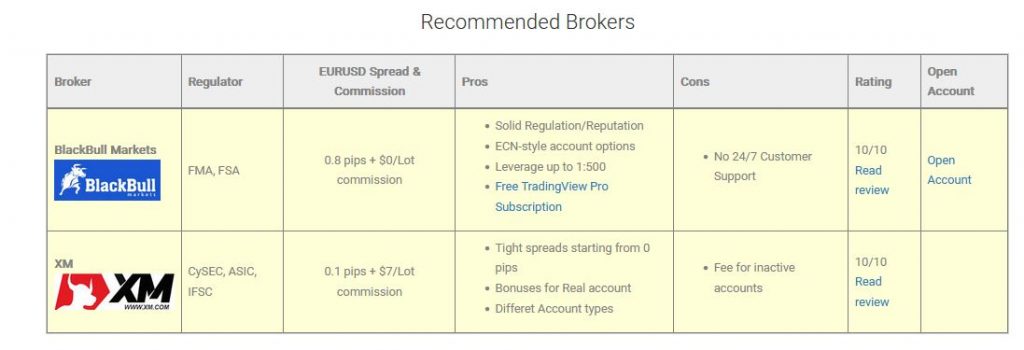
XM is an online broker that offers Forex and commodity trading services. It is regulated by three different regulators, namely The Cyprus Securities and Exchange Commission, The Australian Securities and Investments Commission, and the Financial Services Commission. XM offers a range of trading platforms, including MetaTrader 4 and MetaTrader 5, on all major operating systems, including Windows, Mac, iOS, and Android.
XM offers a spread starting from 0 pips on EURUSD and a commission of $7 per lot. It also provides educational resources for new traders, making it a suitable choice for beginners. The broker also has the lowest CFD and withdrawal fees in the market.
Pros and Cons of XM
While XM has several advantages, such as low fees and a range of trading platforms, it also has some drawbacks. One disadvantage is the limited product portfolio that could limit diversification for investors. Additionally, the broker doesn’t offer protection against market volatility for clients from Non-EU nations.
BlackBull Markets as a Forex Broker
BlackBull Markets is a respected broker based in New Zealand that adheres to strict anti-money laundering and counter-financing of terrorism policies and are deserving to be included int his blog as a top Forex Broker. Their spreads start at 0 pips, and standard spreads are at 0.8 pips, with a minimum commission of $6 per round lot.
Pros:
Low Forex and CFD trading fees
No deposit fees
User-friendly account opening process
Cons:
Limited research tools
Pepperstone
Pepperstone is a regulated Forex and CFD broker that offers a range of trading accounts with varying spreads and commission and have earned their place on our list for the coveted place for best Forex broker. During the most volatile crypto days, Pepperstone maintains the lowest spread for Bitcoin, with spreads starting as low as 0.1 pips on their Razor Accounts.
Pepperstone has great educational materials, and their account opening process is fully digital, user-friendly, and requires no minimum deposit for the Standard Account.
Pros:
Low Forex and non-trading fees
No inactivity or account fees
Great educational materials
Cons:
High CFD financing rates for a few assets
Limited range of asset classes
Trading 212 as a Forex Broker
Trading 212 is registered in England and Wales and authorized and regulated by the Financial Conduct Authority (FCA). It is well worth a look at them as your potential Forex broker. This means that they are held to high standards when it comes to security, transparency, and client protection.
Products
One of the advantages of Trading 212 is that they offer a diverse range of products. In addition to Forex trading, they also offer trading of Stocks, Indexes, and Commodities. This can be a great way to diversify your portfolio and potentially increase your profits.
Commission-Free Trading
Another big advantage of Trading 212 is that they offer commission-free trading for real stocks. This means that you won’t be charged any fees or commissions on your trades. Additionally, you can buy fractional shares of real stocks, which can be a great way to invest in expensive stocks without breaking the bank.
User-Friendly Platform
Trading 212 has an intuitive and easy-to-use mobile app that is perfect for beginners. It earned a best-in-class Forex Broker for ease of use in our annual review. Additionally, they offer a diverse range of 1785 symbols available for CFD and Forex Trading and they support several exotic FX pairs.
Indemnity Insurance
Trading 212 offers indemnity insurance of over 1 million Euro in excess of 20,000 Euro from Cypriot regulator. This means that your funds are protected in case the broker goes bankrupt.
Drawbacks
Of course, no broker is perfect, and Trading 212 is no exception. One of the drawbacks of Trading 212 is that they don’t offer desktop app trading. This means that you won’t be able to use popular platforms like MetaTrader 4 and MetaTrader 5. Additionally, Trading 212 has few written articles for education and does not accept U.S. citizens.
Conclusion
Ultimately, the best Forex broker for beginners will depend on your individual needs and preferences. However, Trading 212 offers a number of advantages that make it a great choice for beginners. With commission-free trading, a user-friendly platform, and strong regulations, it’s definitely worth considering.
Petko Aleksandrov is a seasoned trader, is known for his expertise in developing trading strategies and robots. In this blog post, he shares a fantastic strategy for trading Oil and introduces an Oil Trading Robot that can be downloaded for free at the end of this blog post.
Understanding Robots
Many traders make the mistake of buying expert advisors or robots from the marketplace without understanding how they work. They rely solely on the backtests they see in pictures or videos, which can lead to significant losses in the long run. As a trader, it’s crucially important to know how robots work and what conditions they use to open and close trades.
Money Management
To avoid blowing up an account, the most important thing you need to keep in mind is to keep good money management or to trade a very small portion of your capital. Petko recommends trading a small portion of your capital and avoiding risking too much for the sake of greed.
Petko’s Trading Accounts
Petko shows his two trading accounts to demonstrate his strategy. The first is on MetaTrader, where he has five top stocks he’s trading. These five robots are shared in his Top Five Stocks course. In a $10,000 account, he has a few trades open, and his margin is $575, which means he has only used $500 out of the $10,000.
The second account is on MetaTrader 4, where Petko trades Bitcoin. Here, he’s trading 1 complete lot in 10k, which is risky. He has nearly doubled his account, but it could have gone the other way around, and he could have blown his account. Petko advises against risking too much and recommends trading a small portion of your capital instead.
Oil Trading Strategy (included in the Free Robot for Oil)
Petko’s Oil Trading Robot has performed well for the last year and a half. The backtest on EA Studio shows that it brings in over $100 on average per day when trading with 1 lot. If he increases the lot size to 10, he could potentially earn $1000 of profits per day, but it’s super risky. Petko advises deciding how much you want to risk and sticking to that amount.
Using the Stochastic Indicator for Entry on the Oil Trading Robot
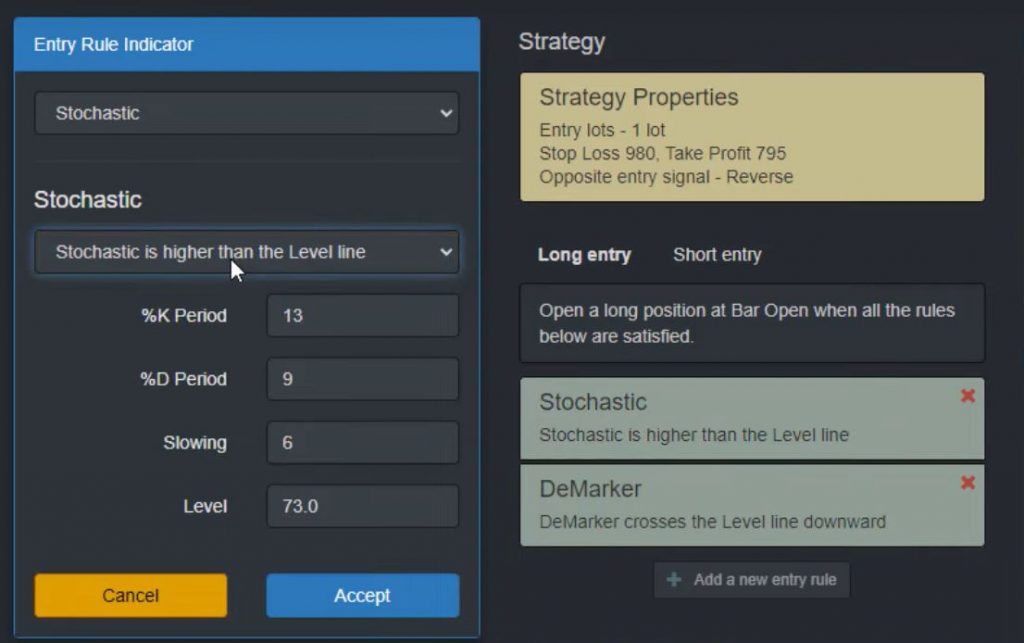
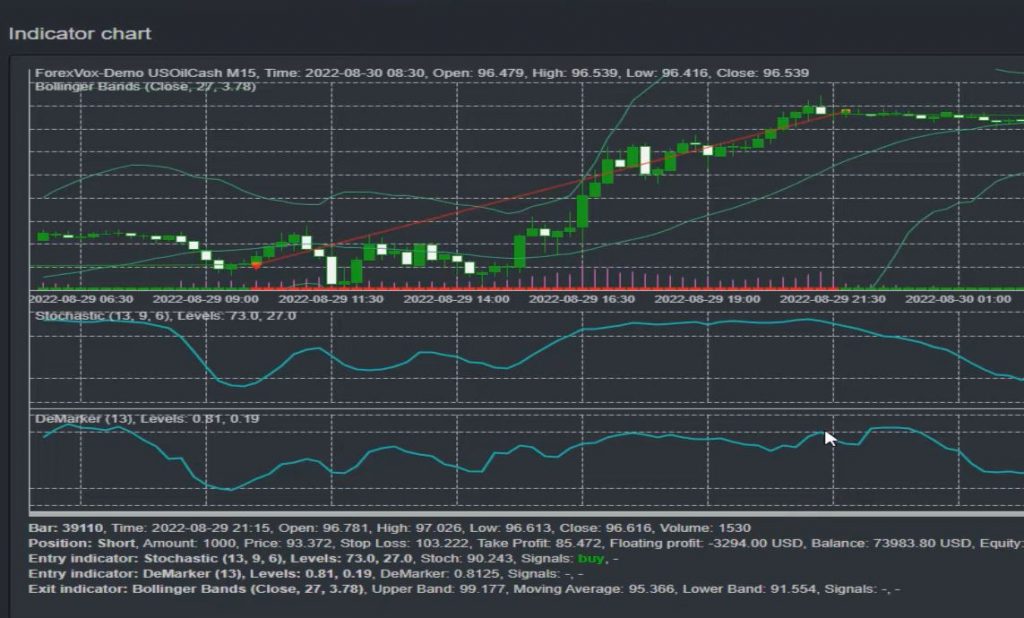
One of the key features of the Oil Trading Robot is its use of the Stochastic indicator for entry. To use this feature, you’ll need to set the K period to 13, the D period to 9, and the slowing to 6. You’ll also need to set the level to 73.
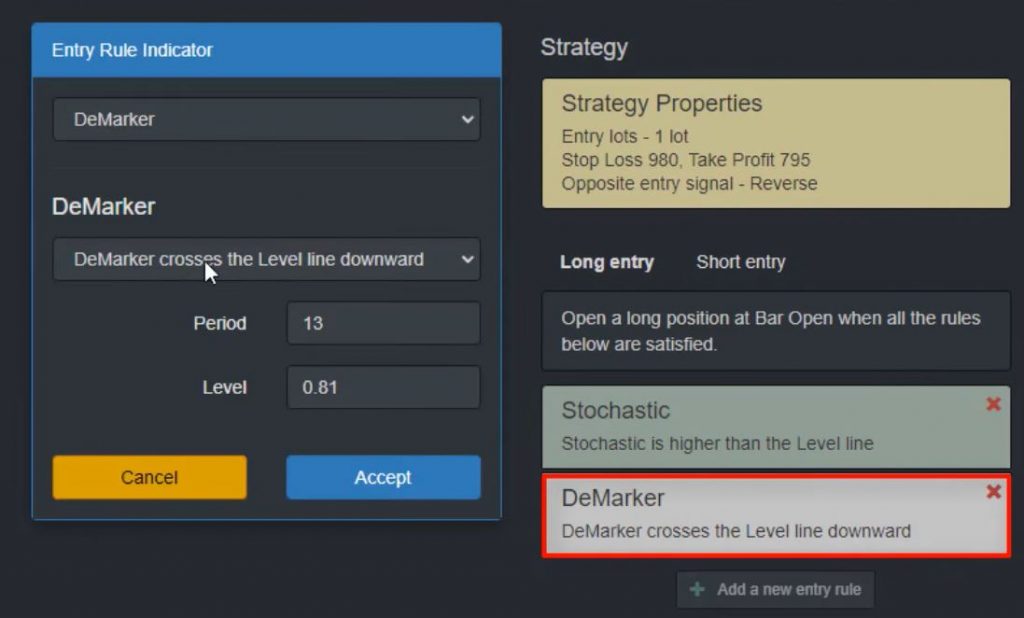
When you open the indicator chart, you should see the Stochastic indicator above the level line of 73. This is the signal that you can open long trades. When the Demarker crosses the level line downwards, you’ll have confirmation that it’s time to open a long trade.
Managing Risk with Reverse Trades
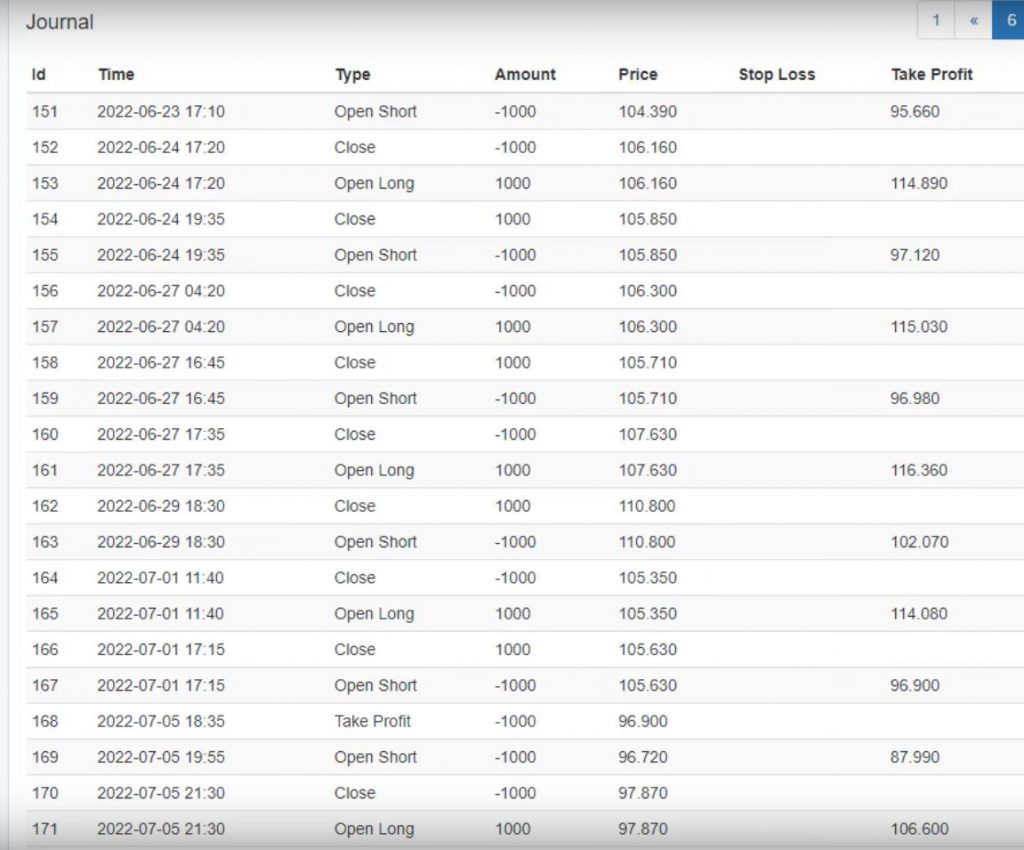
The Oil Trading Robot also has a reverse feature that helps you manage risk. If you open a short trade and it’s not going well, the reverse feature will automatically close the short trade and open a long trade. This can help you limit your losses and maximize your profits.
Using the Demarker Indicator for Entry Confirmation, included in the Oil Trading Robot
While the Stochastic indicator is the primary entry tool for the Oil Trading Robot, the Demarker indicator is used for confirmation. When the Demarker crosses the level line downwards, you’ll have confirmation that it’s time to open a long trade. The period should be set to 13, and the level should be set to 0.81.
Balancing Profit and Equity
When using the Oil Trading Robot, it’s important to balance your desire for profit with your need to maintain a healthy equity line. While it may be tempting to pursue bigger profits, it’s important to consider the long-term health of your trading account. By using a balanced approach to trading, you can maximize your profits while minimizing your risk.
Using Bollinger Bands within the Free Robot for Oil
To begin with, let’s take a look at how we can use Bollinger Bands for trading. The Bollinger Bands are a technical indicator that is used to measure market volatility. When the market is volatile, the bands widen, and when the market is quiet, the bands narrow.
To use Bollinger Bands for trading, we need to look for the bar opening above the upper band after opening below it. The period should be 27, and the deviation should be 3.78. To simplify this rule, we should see the Bollinger band going above the upper band if we are in a long trade.
Exit Conditions for Long and Short Trades
We should exit the long trade when the price goes above the upper band. On the other hand, we should exit the short trade when the price drops below the lower band of the Bollinger band. Usually, Bollinger Bands are crossing one or the other line whenever there is a volatility. So, this strategy aims to grab the profits right after the volatility.
Stop Loss and Take Profit Levels in the Oil Trading Robot
We need to set a Stop Loss of $9.80 and a Take Profit of $8. This way, we can minimize our losses and maximize our profits.
Exporting the Strategy as an Expert Advisor
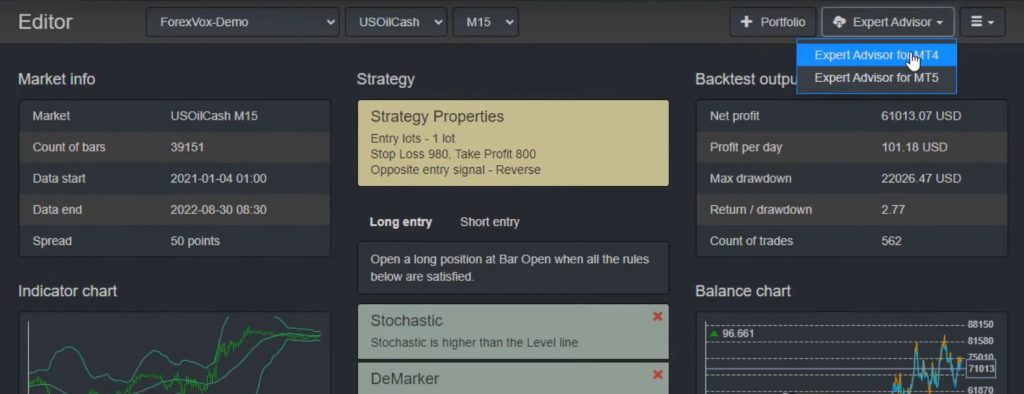
Now that we have our strategy in place, we need to export it as an Expert Advisor for MetaTrader 4. You can find the code for the Expert Advisor in the description. If you have programming skills, you can go through the code. Otherwise, it’s better to avoid it.
Once you put the Expert Advisor on MetaTrader and compile it, you will get the ex files, which are ready-to-use Robots.
Trading on a Demo Account
Before trading live, it’s essential to practice on a Demo account to learn and gain confidence in the results. You can use any of the Robots that are shared on YouTube for live trading, but it’s your personal decision and risk.
Remember, trading live involves risks, and you need to embrace them. Even experienced traders lose money sometimes. But that’s how we learn and improve our trading skills.
Conclusion
Using an Oil Trading Robot can save you time and effort while trading. By following the simple steps mentioned above, you can start using a free robot for oil (WTI) trading. But remember, practice on a Demo account before trading live and always use risk management strategies like stop loss and take profit levels.
If you want to learn more about trading strategies and get free Robots, make sure to subscribe and check out the links in the description. Happy trading!
When it comes to trading on the MetaTrader 5 platform, selecting the right broker is crucial to success. With over 300 brokers offering MetaTrader 5, it can be overwhelming to decide which one to choose. In this article, we’ll show you a simple method to select the best broker for MT 5, so you can trade with confidence.
Research and Regulation
Before you start trading with any broker, it’s important to do your research. Look for reviews on Google, YouTube, Forex forums, or check out our brokers’ page at EA Trading Academy. Choose brokers that are trustworthy, regulated, and have a good reputation. Regulation is crucial when selecting a broker because it ensures that your money is safe and the broker is held accountable for its actions. A reputable, reliable and legitimate the broker for MetaTrader 5 is Blackbull Markets.
Open a Demo Account
Once you’ve selected a few brokers, open a demo account to test them out. This will allow you to trade with virtual money and get a feel for the platform and its features. You can also test the broker’s execution speed, spreads, and commissions.
Test Expert Advisors
Testing expert advisors is a great way to see how well a broker performs. Use expert advisors from reputable sources like Petko Aleksandrov’s YouTube channel and test them on different brokers. This will allow you to compare the results and see which broker performs best and could be the best broker for MT5.
Compare Results
After testing expert advisors on different brokers, compare the results. Look at the number of trades executed, the profitability of the trades, and the difference in results between the brokers. This will give you a good idea of which broker is the best for MetaTrader 5. You can do this by following the following steps:
Step 1: Put five Expert Advisors on MetaTrader 5 for the three Brokers test them for one week
The first step in finding the best broker for MT5 is to test them with Expert Advisors (EAs). EAs are automated trading systems that can be used to test a broker’s speed of execution and overall performance. By testing five EAs on three different brokers for one week, you can compare the results and eliminate any brokers with issues with the speed of execution.
Step 2: Look at the total number of trades at the end of the day
Another important factor to consider is the total number of trades at the end of the day. A broker with a higher number of trades can indicate a better execution speed and overall performance. This data can be easily obtained through the MT5 platform.
Step 3: Look for the Broker that will bring you best results on the different markets to determine which is Best Broker for MetaTrader 5 for you
Different brokers may perform better or worse depending on the market you’re trading. It’s important to test brokers on different markets to find the one that suits your trading style. For example, you may need a different broker for stocks, forex, and crypto trading. Through thorough testing, you can find the right broker for each market.
Step 4: Choose the right account type and settings
Once you’ve selected the right broker, it’s important to choose the right account type and settings. For beginners, a standard account may be suitable, but more experienced traders may want to opt for an ECN account. You should also choose the right leverage and currency for your account.
Step 5: Download the MT5 platform and set up your account
Now that you’ve selected the right broker and account type, it’s time to download the MT5 platform and set up your account. This process is simple and can be done in a few steps. First, select the MT5 platform and download it for your preferred operating system. Next, log in to your account and create a nickname, select your preferred currency, and choose your account type. Finally, submit your application and your demo account will be opened in seconds.
Once you’ve downloaded the platform, follow the steps below:
Step 1: Set up the MT5 platform and trading account
First, make sure you have the MT5 platform installed and ready to use. Then, create a trading account and log in with your chosen broker’s login credentials. If you’re worried about internet connectivity, consider using a VPS to maintain a constant connection.
Step 2: Install and run multiple robots to find the Best Broker for MetaTrader 5
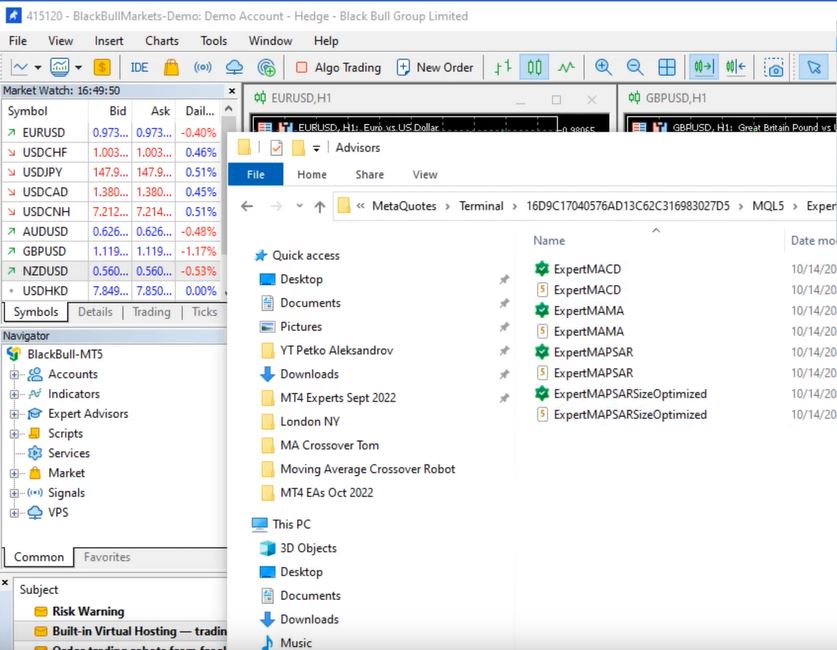
Once you’ve logged in, it’s time to install and run multiple robots. You can use free robots from YouTube videos or other sources. To install a robot, go to the Open Data Folder on the MT5 platform and select MQL5. From there, go to Experts and click on Advisors, then paste in the Expert Advisor code. Double-click on it to open the Meta Editor, and then compile it. Once you’ve done that, click on Expert Advisors and open the Advisors folder to see the Expert on top. To find the right symbol (e.g., Gold), look for XAUUSD and enable AlgoTrading before placing the robot on the chart.
Step 3: Test the brokers for at least a week
Now that you’ve installed and run multiple robots on the MT5 platform, it’s time to test the brokers for at least a week. You can do this by comparing results in the Account History on the MT5 platform or by connecting your accounts with FXBlue or MyFXBook websites, which make it easy to compare results when trading with multiple robots. Be sure to test at least two more brokers to get a good sense of which one performs best.
Step 4: Compare results and choose the best broker for MT5
After a week of testing, compare the results of each broker to determine which one is the best for your needs. Keep in mind that conditions can change over time, so it’s a good idea to retest every six months or so to ensure you’re always using the best broker for your situation.
Conclusion – Selecting the Best Broker for MetaTrader 5
Choosing the best broker for MT5 is an important decision that requires careful consideration and testing. By following the steps outlined in this guide, you can compare brokers and choose the one that works best for your needs. Whether you’re a seasoned trader or just starting out, taking the time to test different brokers and robots is an essential part of achieving success in the Forex market, and be sure to include Blackbull Markets in your testing.
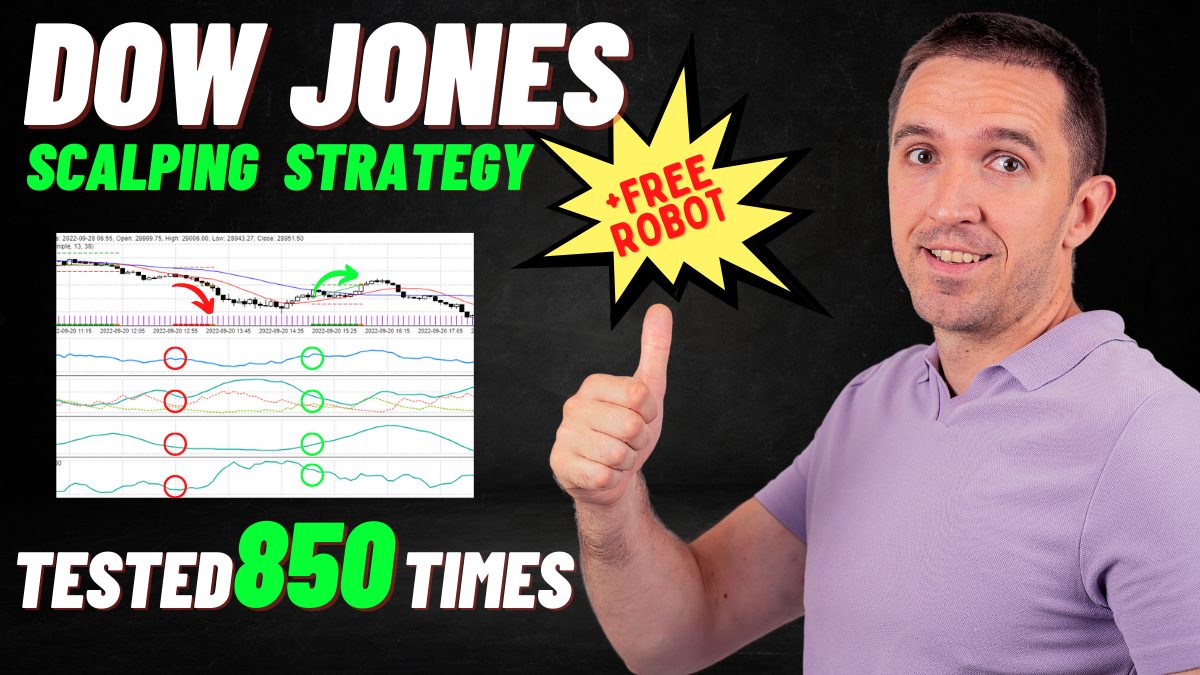
Trading stocks and indexes can be tricky, especially during times of rising interest rates and market crashes. That’s why many traders are looking for trading strategies that work despite the market conditions, such as scalping trading strategies for Dow Jones and SP. In this blog post, we’ll discuss a scalping trading strategy for Dow Jones that you can use to enter and exit the market quickly and profitably.
What is Scalping Trading Strategy?
Scalping is a short-term trading strategy that involves making quick trades for small profits. Traders who use this strategy hold positions for only a few seconds to a few minutes. Scalping focuses on making many small profits that can add up to a larger overall profit.
Scalping Trading Strategy for Dow Jones
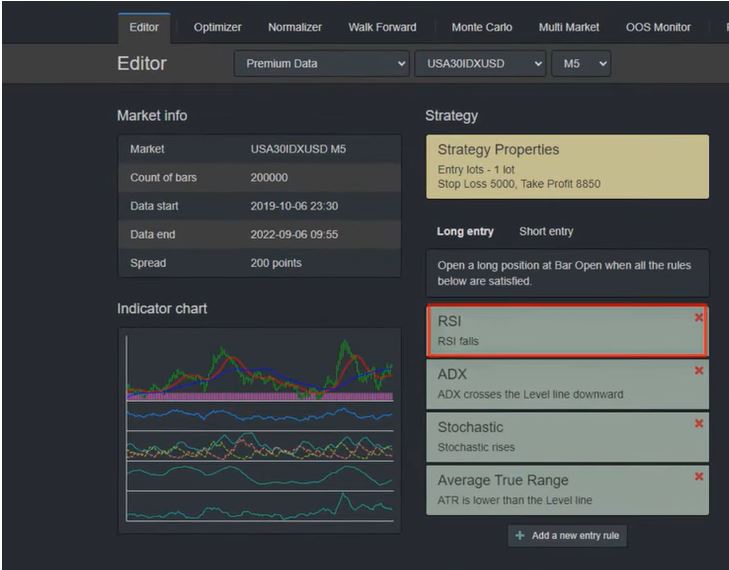
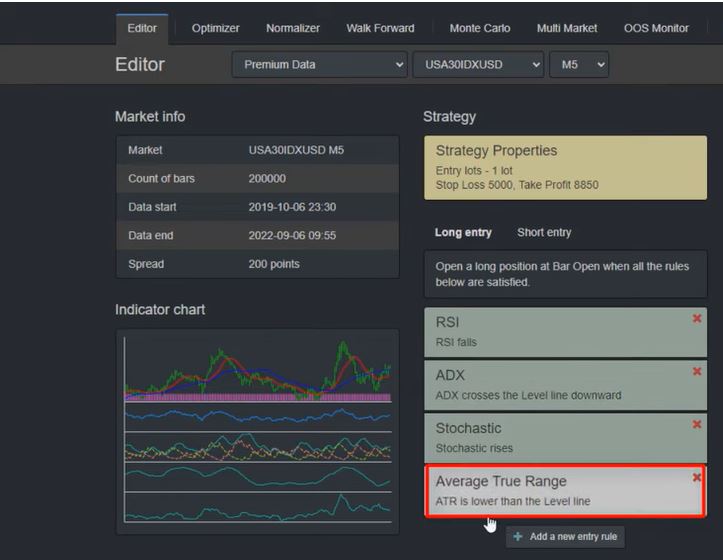
In this trading strategy, there are four entry rules, one exit rule, a stop loss, and a take profit. Here’s a brief overview of the rules:
The price should be above the 50-period moving average.
The RSI should be above 50.
The MACD histogram should be above the signal line.
The Stochastic oscillator should be oversold.
Exit Rule:
When the MACD histogram crosses below the signal line.
Stop Loss:
Place the stop loss 5000 points away or if the broker uses 2 digits it must be $50 away.
Take Profit:
Take Profit for that strategy is 8850 points.
The Benefits of Scalping Trading Strategy
Scalping allows traders to enter and exit the market quickly, making small profits along the way. This strategy does not rely on fundamental analysis, making it suitable for trading during times of market volatility.
Using a scalping trading strategy for Dow Jones offers traders the following benefits:
It allows traders to make quick trades and generate small profits that add up to a larger overall profit.
It does not rely on fundamental analysis, making it suitable for trading during times of market volatility.
It allows traders to enter and exit the market quickly, reducing the risk of losing money due to sudden market movements.
Tips for Using Scalping Trading Strategy for Dow Jones
Here are a few tips to help you make the most of this scalping trading strategy:
Use a reliable trading platform that offers real-time data and charts.
Set your stop loss and take profit levels before entering a trade to reduce the risk of losing money.
Use technical indicators to confirm the trend and identify potential entry and exit points.
Practice with a demo account before using real money to get a feel for how the strategy works.
RSI Falls: The First Entry Indicator
The first entry indicator for this trading strategy is RSI Falls. We use a period of 15 and a level of 30 for this indicator. When RSI falls below the level line, it confirms the other rules.
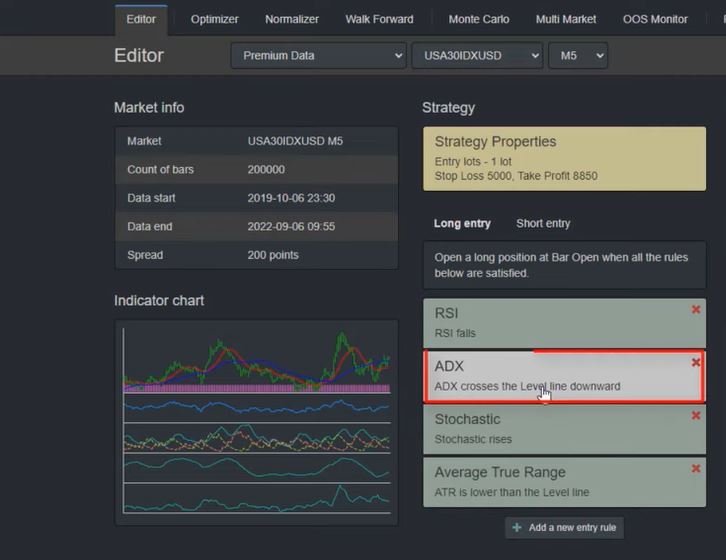
IDX Crosses the Level Line Downward: The Second Entry Condition for Scalping Trading Strategy for Dow Jones
The second entry condition for this trading strategy is when IDX crosses the level line downward. We use a period of 14 and a level of 41 for this indicator. We need to look for the moment when IDX is going below the level line, and when it does, it confirms the other rules.
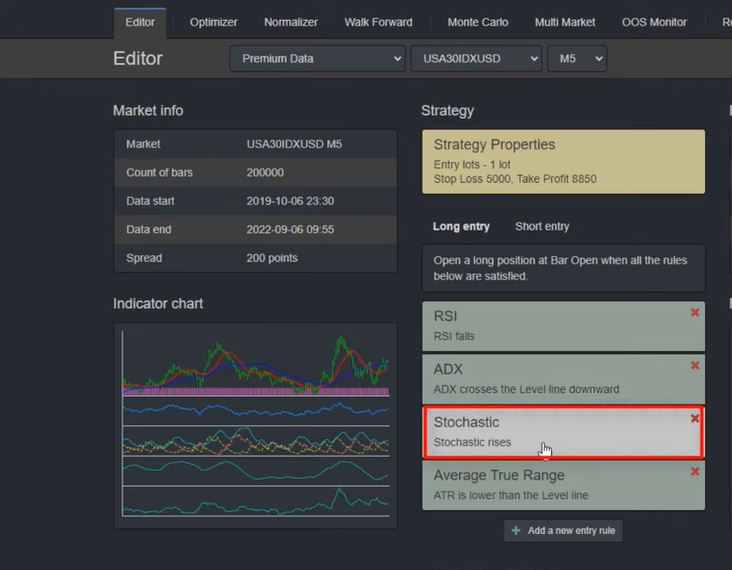
Stochastic Rises: The Third Entry Condition Scalping Trading Strategy for Dow Jones
The third entry condition for this trading strategy is when Stochastic rises. We use a K period of 20, D period of 1, Slow Wing of 15, and a level of 20 for this indicator. We need to see Stochastic rising at the same moment, which confirms the trade.
ATR of the Average True Range: The Fourth Entry Condition
The last entry condition for this trading strategy is the ATR of the Average True Range. We use a period of 5 and a level of 104 for this indicator. We need to see the ATR lower than the level line, which confirms the trade.
Long and Short Trades
For long trades, we use the above conditions to enter the market, and for short trades, we look for the opposite conditions. We set the Stop Loss at 5000 pips and the Take Profit at 8850 pips.
Max Drawdown: 10%
One of the most important statistics to consider when evaluating a trading strategy is the maximum drawdown. With EA Studio, you can see that the maximum drawdown is only 10%, which is a great result.
Profit Factor: 1.12
Another key statistic to consider is the Profit Factor. This is the ratio of all profits to all losses in a trading strategy. A Profit Factor above 1 indicates that the strategy is profitable. EA Studio has a Profit Factor of 1.12, which is a decent result.
Return Drawdown Ratio and Win Loss Ratio in Scalping Trading Strategy for Dow Jones
In addition to these key statistics, EA Studio provides information on other important factors such as Return Drawdown Ratio and Win Loss Ratio. These metrics help traders understand how a strategy performs over time and what to expect in terms of profitability.
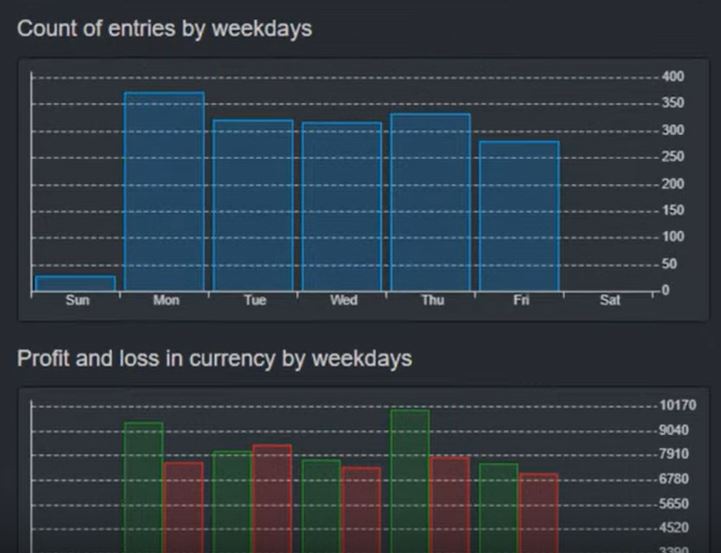
Day of the Week and Trading Hours Analysis
With EA Studio, you can also analyze how your trading strategy performs on different days of the week and during specific trading hours. This can help you optimize your trading plan and avoid losses during times when the market is less favorable.
While some trading strategies can be challenging to implement manually, EA Studio provides a free robot for advanced strategies. This can help you maximize your profitability while minimizing your time investment.
Free Trial and Integration with EA Trading Academy
If you’re interested in trying out EA Studio for yourself, you can sign up for a free 15-day trial. And if you’re already a member of EA Trading Academy, you can benefit from the seamless integration of EA Studio and FSB Pro, the best strategy builders in the market.
Conclusion
EA Studio is an excellent tool for traders looking to optimize their strategies and maximize their profitability. With advanced statistics and a free robot for advanced strategies, it’s no wonder why so many traders trust EA Studio. So why not give it a try and see how it can help you succeed in the market?
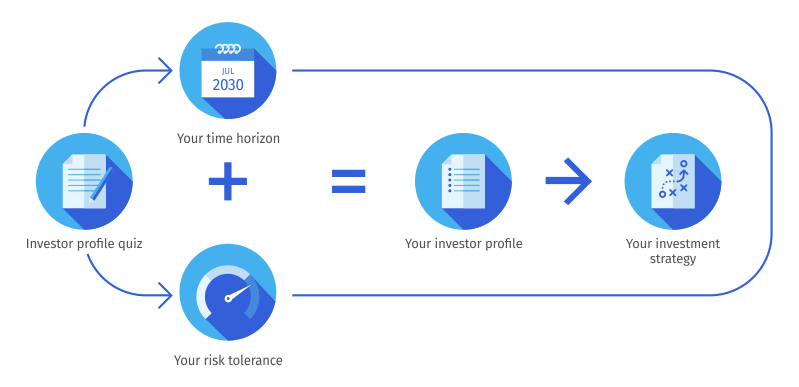
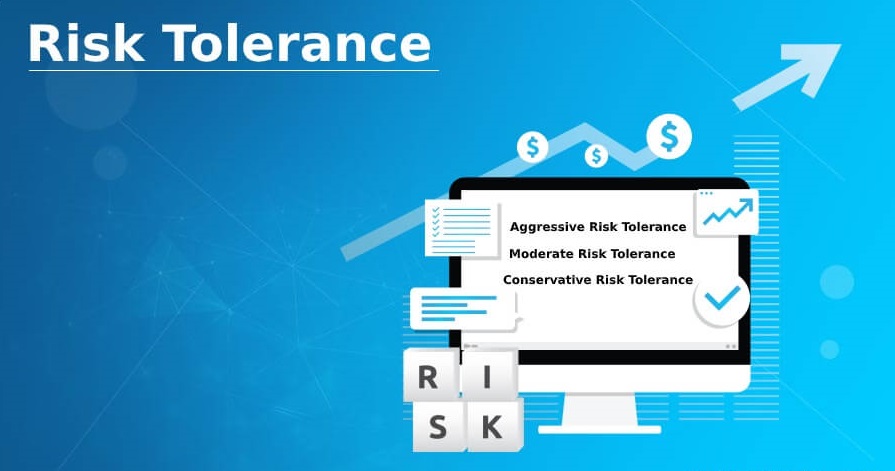
Risk tolerance in trading is the amount of loss an investor is willing to accept when making an investment decision. Several variables decide the amount of risk an investor can tolerate. Knowing one’s risk tolerance level assists investors in planning their entire portfolio and influences their investment. For example, if a person’s risk tolerance is low, investments will be made cautiously, with more low-risk and fewer high-risk investments.
How Risk Tolerance Works
Using an online calculator or speaking with a financial planner, you can assess your own level of risk. Financial planners adapt their financial guidance to a person’s risk tolerance. Risk tolerance can also be used to classify their customers’ investing approaches as aggressive, average, or cautious. Firms use these three categories to describe asset options, recommend asset allocations, and offer strategies to their clients.
Risk tolerance also includes a trait known as “risk capacity,” which determines how much danger you can tolerate. It varies depending on how much risk you are prepared to accept. For example, you may be okay with an aggressive, high-risk portfolio, but if you only have a few years to reach your goal, a portfolio of 100% stocks is not in your best interests—they’re too volatile.
Assume you’ve just begun a new job and intend to retire in 40 years. Your income is low, and you have no savings, but your cost of living is low, and you’re young so those things will come in time. Assume it’s also natural to go big, roll the dice, and take risks when given the opportunity. (In other words, you are naturally risky.) Your tolerance for danger is strong.
Given all this information, taking a more aggressive strategy makes sense, but your income and savings are limited, so you may need help to withstand a significant decline in stock prices.
While you may have a high-risk tolerance, your risk potential is lesser. In that case, you may be better off with a more conservative portfolio than you prefer to preserve the assets you’ll need to retire.
Factors that Influence Risk Tolerance in trading
Timeline
Each investor will choose a different time horizon based on their investment plans. If there is more opportunity, more risk can typically be accepted. A person who needs a certain amount of money at the end of 15 years can take on more risk than someone who needs the amount by the end of five years. It is because the market has shown an upward trend over the years. In the short term, however, there are constant lows.
Goals
Financial goals differ from individual to individual. Many people’s primary goal in financial planning is to accumulate less money than possible. The amount needed to achieve specific goals is calculated, and an investment strategy to achieve such returns is typically pursued. As a result, depending on their goals, each person will have a different risk tolerance.
Age
Generally, young individuals should be able to take more risks than older individuals. Young people can earn more money while working and have more time to deal with market fluctuations.
Portfolio size
The more extensive the portfolio, the more tolerant of risk. An investor with a $50 million portfolio can take more trouble than one with a $5 million. If the portfolio’s value falls, the percentage loss is much lower in a more extensive portfolio than in a smaller one.
Same if you are trading with $100 000 or $100. With a more extensive trading account, you can handle more considerable losses and afford to keep a bigger Stop Loss, increasing your chances of having a profitable strategy.
More, if you wish to diversify the risk, you better use different strategies and not just one:
Investor comfort level
Each investor approaches risk uniquely. Some investors are inherently more comfortable with taking risks than others. On the other hand, for some investors, market fluctuations can be extremely worrisome. Risk tolerance is thus directly related to an investor’s comfort level when taking risks.
Types of Risk Tolerance
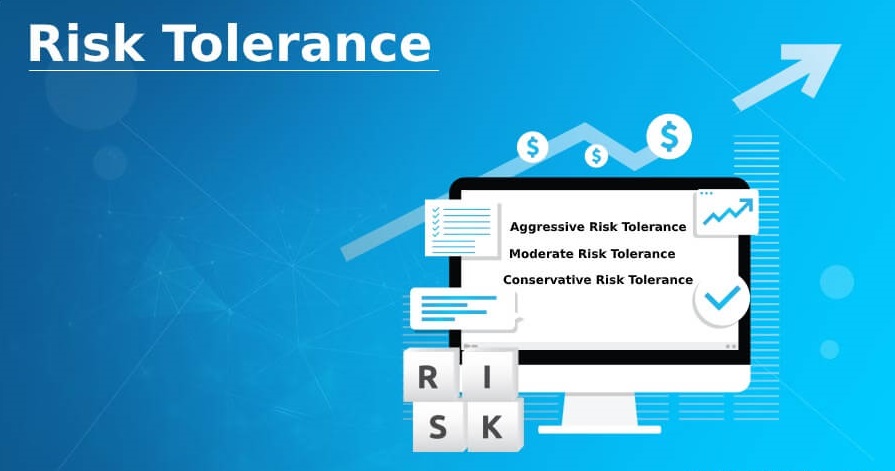
Investors are typically divided into three categories based on their risk tolerance. The categories are determined by various variables, only a few of which have been described above. The three divisions are as follows:
Aggressive
Aggressive risk speculators understand the market and are willing to take large chances. Such buyers are accustomed to significant upward and downward fluctuations in their portfolios. Aggressive investors are typically affluent, seasoned, and have a diverse inventory.
They prefer asset classes with volatile price movements, such as stocks. Because of the amount of risk they take, they benefit from better yields when the market is performing well but suffer massive losses when the market performs poorly. They do not, however, panic sell during market crises because they are used to daily fluctuations.
Moderate
Compared to aggressive risk investors, moderate risk investors are less risk tolerant. They accept some risk and typically designate a proportion of losses they can tolerate. They diversify their investments across risky and safe asset classes. When the market is doing well, they earn less than aggressive investors but do not suffer significant losses when it falls.
Conservative buyers are the ones who assume the least risk in the market. They avoid risky investments and instead choose the options they believe are the safest. Also, they value averting losses over earning profits. They only invest in a few asset classes, such as FDs and PPFs, where their capital is safe.
Ignoring Risk Tolerance
Investing without considering risk tolerance can be disastrous. When the worth of property declines, an investor must know how to respond. Many investors flee the market, selling at a loss. At the same time, a market downturn can be an excellent opportunity to purchase. As a result, determining risk tolerance aids in making informed decisions rather than hasty, erroneous ones.
Final Words
The quantity of market danger that an investor can tolerate is referred to as risk tolerance. Financial managers frequently classify risk profiles as cautious, average, or aggressive. Because they have more opportunity to recoup from market swings, younger buyers often take on more risk. Stocks dominate aggressive portfolios, while fixed-income assets dominate cautious portfolios.
Have you ever wondered if it’s possible to create a profitable trading robot without any programming knowledge? Well, I did, and that’s why I turned to Chat GPT, a powerful AI language model that can write code. In this blog post, I’ll show you how I created and tested a trading robot using Chat GPT, and the results I got.
Creating the Trading Robot
I asked Chat GPT to make a trading robot for me that uses the MACD indicator and has a good risk-reward ratio, and that can trade on MetaTrader 4. The AI responded with a code that looked suitable for MetaTrader, and I copied and pasted it into the Meta Editor.
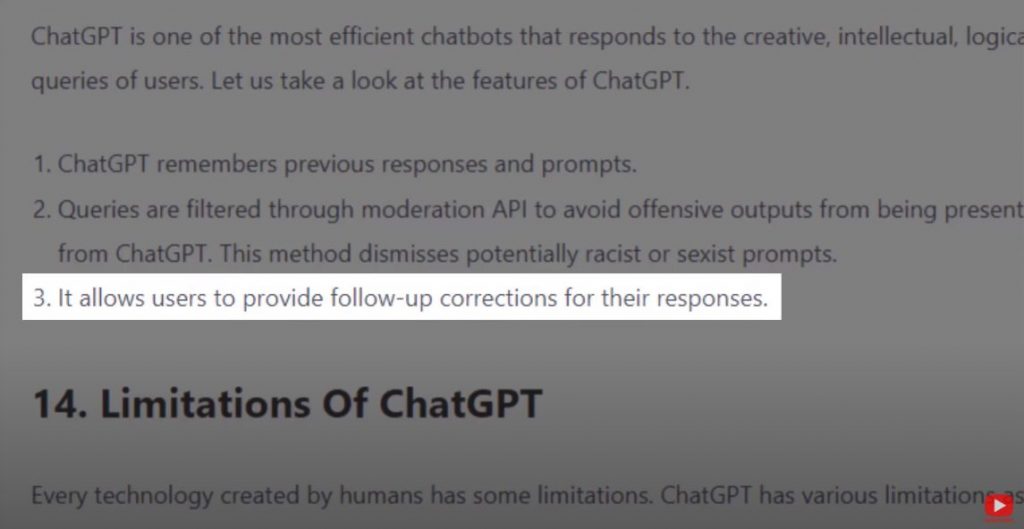
When I compiled the code, I got two errors, but the beauty of Chat GPT is that it remembers previous responses and prompts, so I just asked it to rewrite the code for me.
The AI provided me with a new code that I copied and pasted into the Meta Editor, and this time, I got zero errors.
Testing the Chat GPT Trading Robot
Next, I attached the trading robot to the chart in MetaTrader 4 and backtested it. Unfortunately, no orders were executed during the backtest, and I had to figure out what went wrong.
After some trial and error, I discovered that the problem was with the inputs of the robot. I had to adjust the settings to make the robot work. Once I did that, I retested the robot, and this time, it executed orders and made a profit.
The Results
In the end, the trading robot that Chat GPT created for me was profitable. It made a 32% return on investment over a period of three months, with a maximum drawdown of only 4%. I was pleasantly surprised by the results and impressed by the power of Chat GPT.
Creating a profitable trading robot can be a daunting task, especially if you don’t have programming knowledge. However, with the help of Chat GPT, it’s possible to create a profitable trading robot in a matter of minutes. The AI can write code for you, and you can make adjustments as needed to optimize the robot’s performance.
Of course, it’s important to keep in mind that past performance is not indicative of future results, and trading always carries risk. However, the use of a well-designed and tested trading robot can help you minimize risk and increase profitability in your trading.
The Initial Challenge
At first, I asked the Chat GPT to modify the Robot multiple times to place a fixed Stop Loss and a Take Profit, to write for me a code that has a profitable backtest. After spending probably a few hours, I still could not get the results I was looking for.
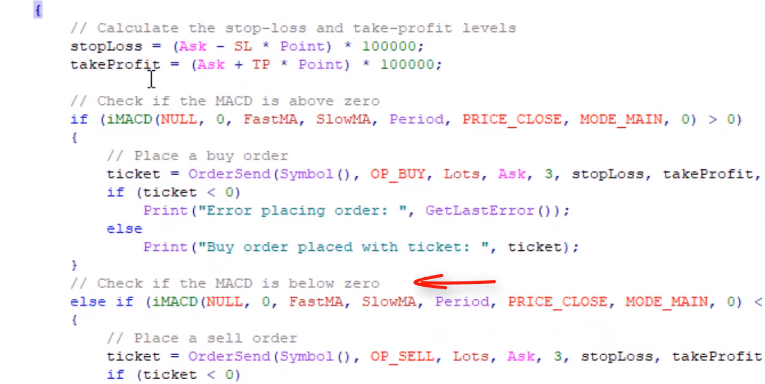
However, I soon realized that the Chat GPT gave me the idea for the entry and exit rules. In the code, I saw that it said to check if the MACD is below zero for a short trade and above zero for the long trade.
Implementing the Trading Strategy into the Chat GPT Trading Robot
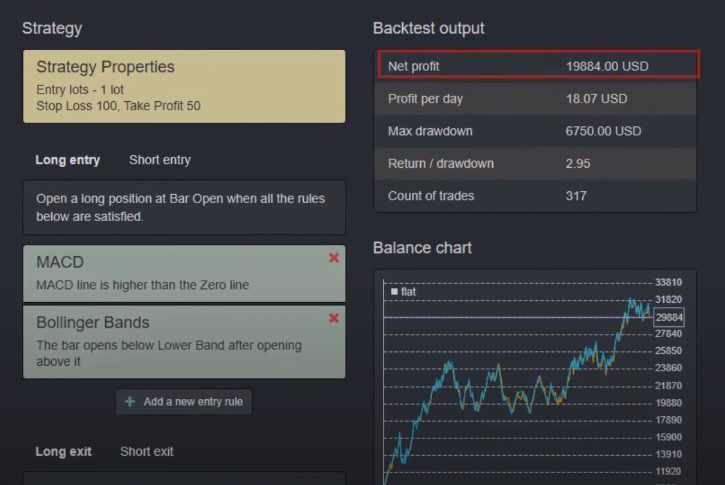
To implement this trading strategy, I decided to use the EA Studio Strategy Builder. I added the MACD indicator with the rule that the MACD line is higher than the zero line, using the default parameters as suggested by the Chat GPT.
Unfortunately, this resulted in a complete loss in the balance chart. Even when I switched to different time frames, the strategy was still losing.
Adding Stop Loss and Take Profit
To try and salvage the strategy, I decided to add a Stop Loss and Take Profit. I went for a Stop Loss of 30 Pips and Take Profit of 60 Pips, but it was still a losing strategy.
I increased it to 40 and 80, and then 50 and 100, but the results were still not satisfactory.
Adding Entry and Exit Indicators to the Chat GPT Trading Robot
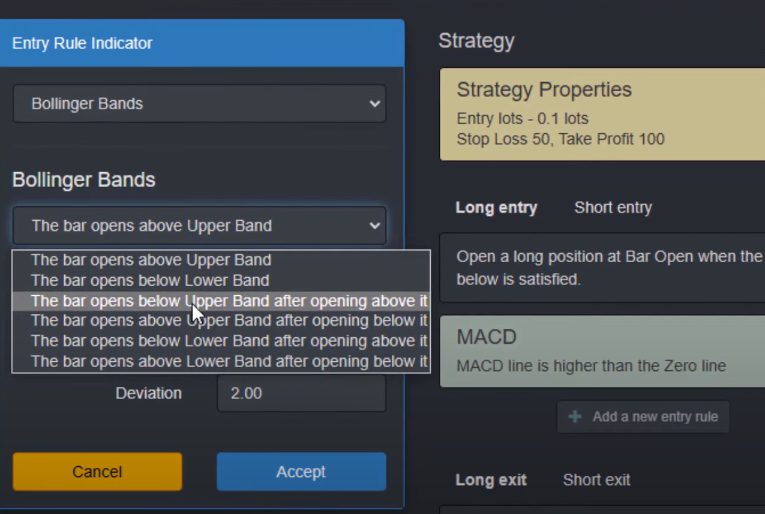
Next, I decided to add a second entry indicator that should confirm with the MACD rule. I chose to use Bollinger Bands, which is one of the indicators I use a lot for algorithmic trading. I went with the rule that the bar should be below the lower band after opening above it. In other words, for a long trade, we should see the bar opening below the lower band of the Bollinger Bands.
This resulted in a slightly better balance chart, but it was still losing. So I added an exit indicator, the Demarker, and selected the third option – Demarker is higher than the level line.
I increased the period to 30, then 40, and then 50, but nothing changed. So I started increasing the level of the Demarker, going up to 0.70, which was a little bit better. I continued increasing it to 0.90, and finally, I got a way better strategy:
Making Sure You Consider the Pros and Cons of the Chat GPT Trading Robot
Anyone who gets involved in trading wants to achieve success, and one of the ways in which they can achieve this goal is by turning to the right tools and platforms. Of course, there are no guarantees when it comes to making money, but having the right tools can certainly help you. This is where solutions such as the Chat CPT Trading Robot can help, as it can make your life easier as a trader if you use it correctly.
It is important to ensure you do thorough research and look at the pros and cons of the Chat GPT Trading Robot. When it comes to trading, it is crucial that you have the right strategies in place, and you need to ensure you familiarize yourself with ChatGPT trading strategies to help you to make more informed decisions.
You should also keep in mind that this tool is one that you might have to experiment with for a while to get a feel for how it works and how it can help you as a trader. As with most other trading tools and platforms, there are advantages and disadvantages that have to be weighed up, and we will outline some of the pros and cons within this article.
As you will see from the pros and cons that we discuss below, you do need to have some level of tech knowledge if you want to make the most of this trading tool. However, you also have the added benefit of a customizable tool that uses market trends and price movements to help traders, as well as offering a range of other benefits. So, let’s take a look at some of the key pros and cons of using the Chat GPT Trading Robot.
Benefits of Chat GPT Trading Robot
One of the significant advantages of using Chat GPT Trading Robot is that it can generate trading signals based on market trends and price movements. It can analyze large amounts of data and identify profitable trades that traders might miss. Moreover, it can execute trades automatically, eliminating human errors and emotions.
Another advantage of using Chat GPT Trading Robot is that it can be customized to meet the specific needs of traders. Traders can define their trading strategies, including entry and exit points, stop-loss levels, and take-profit targets. Additionally, traders can adjust the robot’s parameters as per their risk appetite and trading goals.
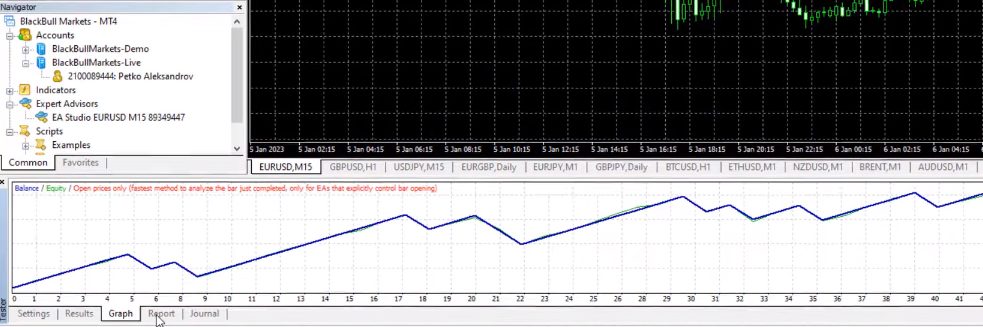
In the end, I placed the Chat GPT Trading Robot on MetaTrader and performed a backtest. The results were positive.
Drawbacks of Chat GPT Trading Robot
Despite its benefits, Chat GPT Trading Robot has some drawbacks. One of the most significant drawbacks is that it requires a certain level of technical knowledge and skills to develop and use it. Traders need to have knowledge of programming languages, such as Python and MetaTrader, to develop a trading robot.
Another drawback of using Chat GPT Trading Robot is that it can’t account for unexpected events that may affect the markets. For example, it can’t predict the impact of geopolitical events or natural disasters on the markets. Therefore, traders need to monitor the markets constantly and adjust their trading strategies accordingly.
Chat GPT Trading Robot can be a useful tool for traders who want to automate their trading strategies and reduce their workload. However, traders need to have some technical knowledge and skills to develop and use it. Moreover, they need to monitor the markets constantly and adjust their strategies as per the market conditions.
Chat GPT will find the Right Robot for you as well!
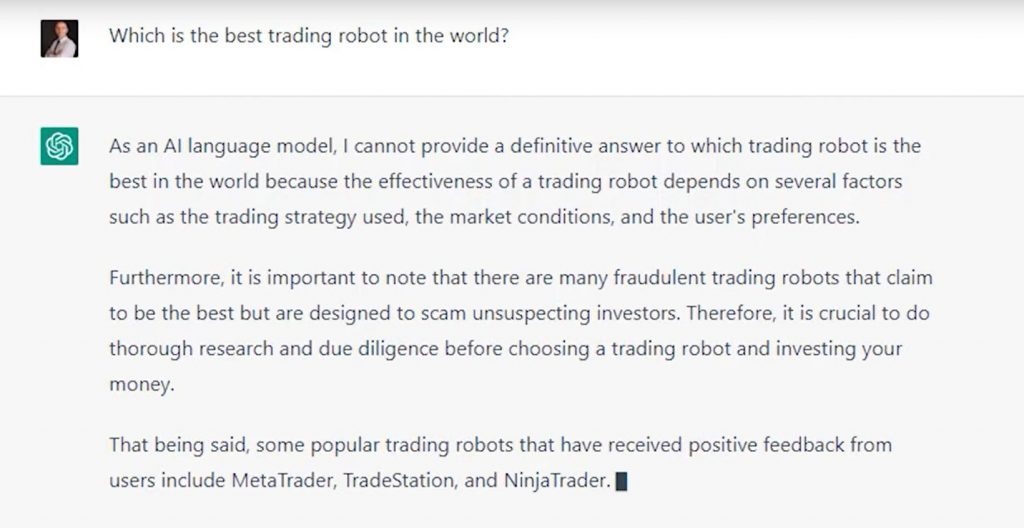
Chat GPT is an AI language model that can provide valuable advice on various topics, including trading robots. However, I quickly realized that I needed to ask the right questions to get the information I needed. In this blog post, I will share my experience of how I asked Chat GPT to provide me with insights on how to select the best trading robot.
Factors to Consider When Choosing a Chat GPT Trading Robot
After several attempts, I finally asked Chat GPT the right question: “How to select the best Expert Advisor on the market?” To my delight, Chat GPT provided me with six key factors to consider when choosing a trading robot. Here they are:
Backtesting: Before using a trading robot, it is crucial to check its performance using historical data. Backtesting helps to evaluate the robot’s performance and identify any potential weaknesses.
Risk Management: A good trading robot should have robust risk management features to minimize potential losses. Look for robots that have features like stop-loss and take-profit orders, as well as money management tools.
Trading Strategy: It is essential to understand the trading strategy used by the robot. Different robots use different strategies, such as trend following or mean reversion. Choose a robot whose strategy aligns with your trading goals and preferences.
Trading Frequency: The trading frequency of a robot determines how often it enters and exits trades. Choose a robot that matches your preferred trading style, whether it’s scalping, day trading, or swing trading.
Market Conditions: A trading robot’s performance can vary depending on market conditions. Look for robots that perform well in a range of market conditions, including trending and ranging markets.
Support and Updates: It is essential to choose a robot that comes with good customer support and regular updates. This ensures that the robot stays up-to-date and can adapt to changing market conditions.
The Importance of Using these Factors
By considering these six factors, you can increase your chances of choosing a reliable and profitable trading robot. However, it’s important to remember that no robot can guarantee profits, and you should always be prepared for potential losses.
In my conversation with Chat GPT, I asked which trading robot is the best in the world, but I quickly realized that Chat GPT cannot provide a definite answer. Instead, Chat GPT gave me six key factors to consider when selecting the best Expert Advisor on the market. These factors helped me to navigate the vast marketplace of trading robots and find the one that best suits my trading strategy, performance history, user feedback, credibility, customization, and backtesting and forward testing needs.
The Six Factors when looking for a Chat GPT Trading Robot
Trading Strategy
The first factor that Chat GPT suggested is to determine what type of trading strategy we want to use, whether it is scalping, swing trading, or trend following. By selecting the right trading strategy, we can narrow down our search and find a trading robot that is compatible with our style of trading.
Performance History
The second factor is to look for Expert Advisors that have a proven track record of performance. We should always do our due diligence and research the trading robot’s historical performance, including its win rate, drawdown, and overall profitability.
User Feedback
The third factor is to look for user feedback from traders with similar goals and strategies to our own. User feedback is essential in helping us gauge the trading robot’s effectiveness and whether it is worth investing our money into.
Credibility
The fourth factor is to consider the reputation of the developer selling the Expert Advisor. It is important to trust the developer behind the trading robot, as they are responsible for creating and maintaining it. A reputable developer is more likely to produce a high-quality trading robot that will perform well in the market.
Customization and Flexibility
The fifth factor is to look for Expert Advisors that offer customization options and flexibility in settings. This includes the ability to adjust the stop loss and take profit levels, tweak indicator parameters, and set risk levels to match our risk tolerance.
Backtesting and Forward Testing
The sixth factor is to ensure that the Expert Advisor provides the option to backtest it on the MetaTrader platform. Backtesting allows us to test the trading robot’s performance in different market conditions, while forward testing enables us to monitor its performance in real-time.
Chat GPT Trading Robot: Applying the Key Factors on MQL5 Marketplace
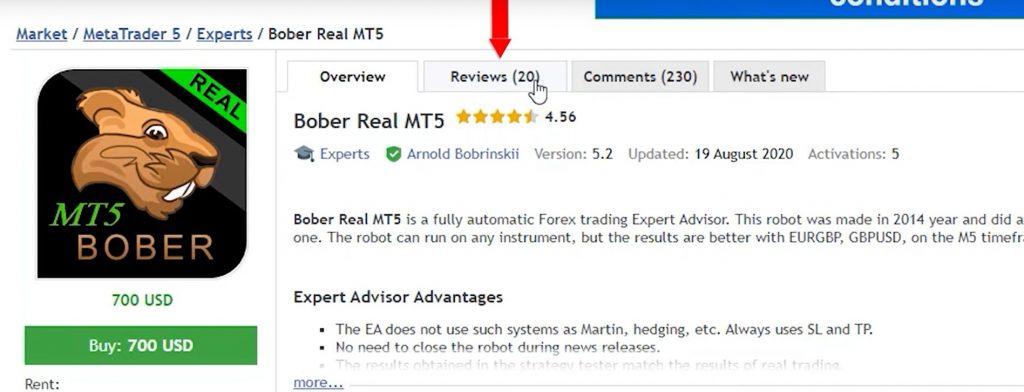
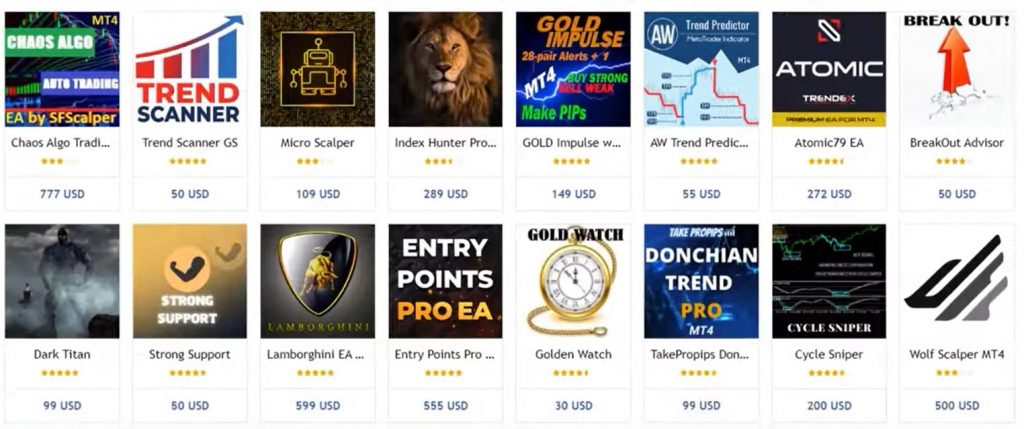
After understanding the six key factors, I applied them on the MQL5 Marketplace, the official website of MetaTrader, to find the best trading robot for my needs. Using the filter option on the left side of the page, I selected the scalping strategy, and filtered by price range between $500 and $1000.
By applying the six key factors, I was able to narrow down my search and find several trading robots that met my criteria. From there, I did further research by reviewing the historical performance of each trading robot, checking user feedback, and verifying the credibility of the developer. This process helped me to make an informed decision and choose the best trading robot for my needs.
Searching For The Right Chat GPT Trading Robot
Before you start looking for a trading robot, you need to have a clear idea of your trading strategy and goals. Ask yourself: What markets do you want to trade? What is your risk tolerance? What is your target profit? Answering these questions will help you narrow down your search for a trading robot.
Chat GPT Trading Robot: Check Reviews and Feedback from Traders
When you have identified some trading robots that fit your trading strategy and goals, it’s time to do some research. Check reviews and feedback from other traders who have used the robot. Look for robots with at least 4 stars and read the comments carefully to get an idea of the robot’s performance and any potential issues.
Check the Developer and Trader
It’s important to check the developer and trader behind the trading robot. Is the developer reputable? Do they have a track record of success? And moreover, is the trader experienced and knowledgeable? A good trading robot should come with clear instructions and support from the developer and trader.
Two popular options that have received positive reviews from users.
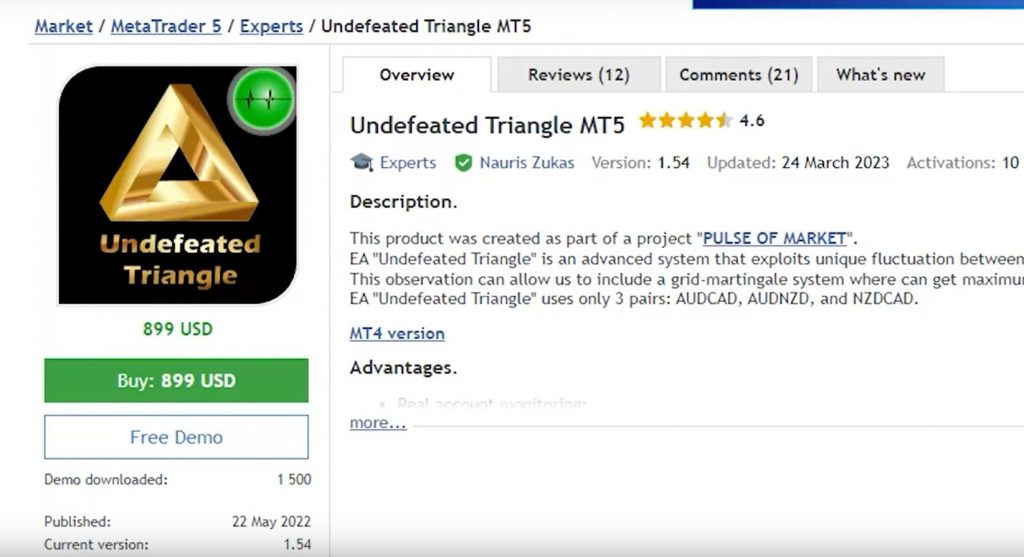
The Undefeated Triangle MT5: A Promising Choice
Upon examining user reviews, the Undefeated Triangle MT5 emerges as a top contender. Reviews for this trading robot have been overwhelmingly positive, with only one negative rating, which lacked any accompanying comment. Considering the impressive performance of this robot, boasting profits exceeding 3000% and incorporating risk management settings, it proves to be a robust choice for those employing a grid trading strategy. Furthermore, the Undefeated Triangle MT5 operates on multiple accounts, including those with minimal capital, such as $1.
The Golden Tree: A Reliable Alternative
While the Golden Tree receives a lower overall rating, it still garners positive reviews from users. With 21 reviews, this trading robot exhibits potential despite its lower rating. Interested readers are encouraged to explore the reviews further to gain a comprehensive understanding of user experiences. In the overview, we note that the Golden Tree requires a minimum investment of $100, indicating accessibility for traders with varying capital levels. Additionally, this robot has been recently updated, and the seller appears responsive to inquiries and support requests.
The Best Robot I have Found
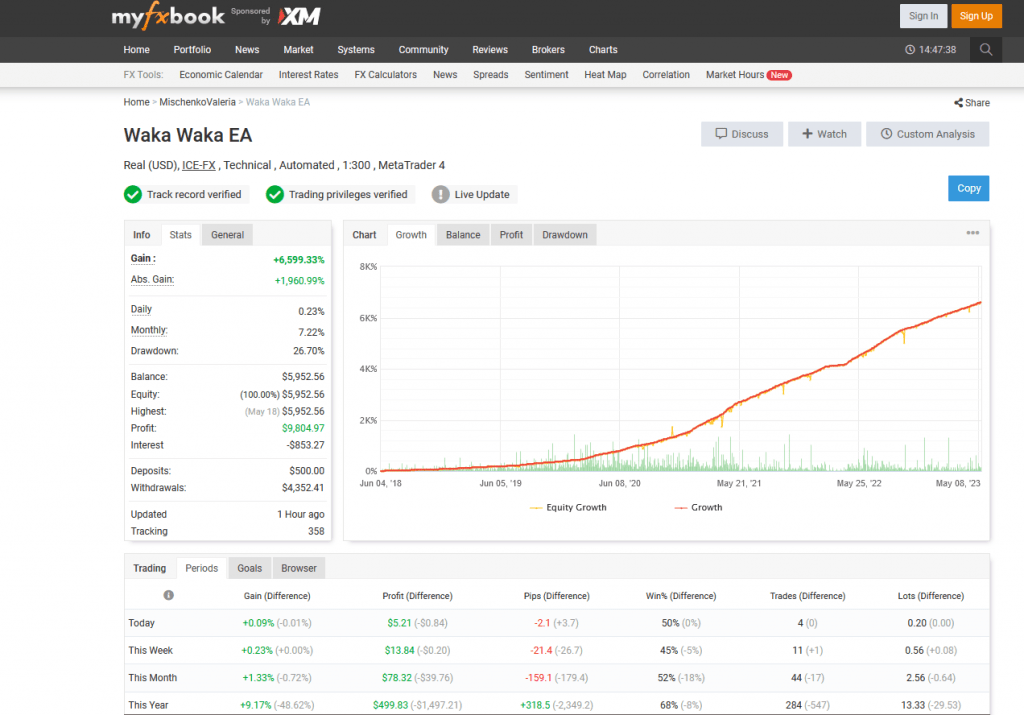
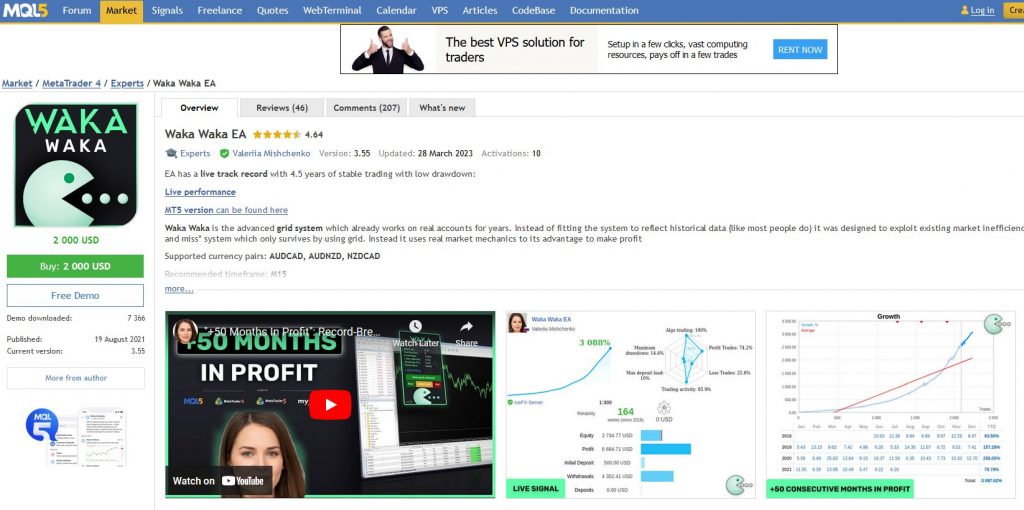
After trying many different Robots, I have started using what I believe is the most consistent and reliable one. This is based on the proven track record, which has been verified on MyFXBook, as well as personal experience. The Robot I am talking about is the Waka Waka EA. The developer has several successful EAs, and has once again created an advanced and profitable EA.
Applying Key Factors for Evaluation
While the Undefeated Triangle MT5 and the Golden Tree show promise, it is essential to exercise caution and conduct further evaluations. These trading robots should not be mistaken for financial advice. Instead, thorough testing on demo and live accounts is crucial to gauge their effectiveness. In addition to testing, we recommend considering three key factors proposed by Chat GPT for a comprehensive evaluation:
Seller/Developer Information: Seek detailed information about the seller or developer of the trading robot. Research their reputation, track record, and support provided.
Flexibility of Inputs: Assess whether the trading robot offers flexibility in adjusting inputs to align with your trading strategy and preferences.
Backtesting Performance: Perform thorough backtesting to evaluate the robot’s performance in different market conditions and assess its potential for consistent profitability.
Chat GPT Trading Robot: Utilizing the 6 Key Factors for Selection
To make an informed decision, we encourage traders to consider six key factors we discussed above when selecting a trading robot. To recap, here they are again:
Define Your Needs: Determine your trading goals, risk tolerance, and preferred market.
Price Range: Filter the marketplace based on your comfortable price range.
Trading Strategy: Identify a trading strategy that aligns with your trading style.
User Reviews and Backtest Results: Prioritize trading robots with positive user reviews and impressive backtest results.
Developer and Trader Information: Gather information about the seller/developer and their track record.
Input Flexibility and Support: Ensure the trading robot offers flexible inputs and reliable support channels.
Join the Discussion and Find the Best Expert Advisors
To create a community-driven approach to finding the best trading robots, we invite you to participate in the discussion. Share your experiences, recommendations, and insights in the comments section. By collectively applying the six key factors outlined above and sharing our findings, we can uncover the most effective trading robots available.
Final Thoughts
In conclusion, Chat GPT Trading Robot has its benefits and drawbacks, and traders need to consider them before using it. Nonetheless, with the right tools and knowledge, traders can develop a profitable trading robot that can generate consistent profits in the long run. If you’re interested in developing a trading robot using Chat GPT, there are several resources available online that can help you get started.
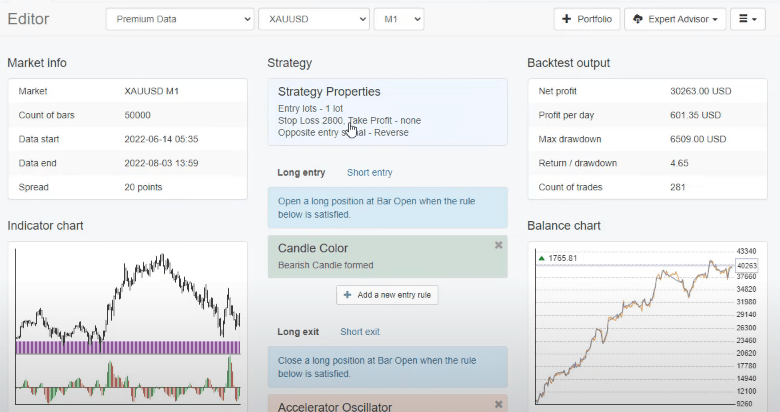
An advanced Gold trading EA can help you to eliminate your emotions during your trades. We’ve been working on this Expert Advisor for several months, and we’re excited about our results.
We’re giving the EA to you for free. So, after reading this post, you will see how to download and test this Advanced Fold Trading Expert Advisor.
What Is a Gold EA?
An EA or Expert Advisor is a robot we can use to trade on MetaTrader. Many traders like to use MetaTrader for algorithmic trading.
We’ll soon have a new tool for you that will be useful for algorithmic trading and strategy signals on TradingView. We’ll let you know when that app is ready.
The strategy behind this advanced gold trading EA we will share in this post will work on any platform. We always test the strategies that we share on our blog.
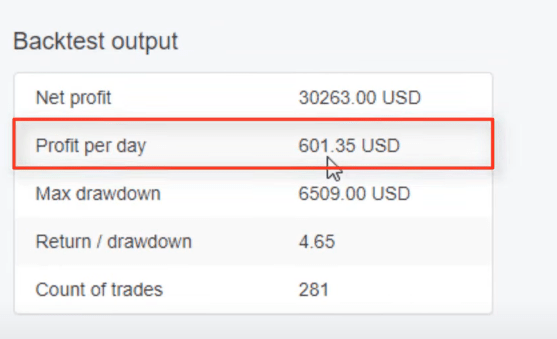
This strategy makes over $600 per day if you’re trading one lot.
This advanced gold trading EA makes over $600 per day if you’re trading one lot. This strategy was backtested over 200 times.
Candlestick-Based Advanced Gold Trading EA
This advanced gold trading EA uses candlesticks. So, you won’t need to worry about many other signals. You’ll need to observe the color of the candlesticks.
Our Entry Signal
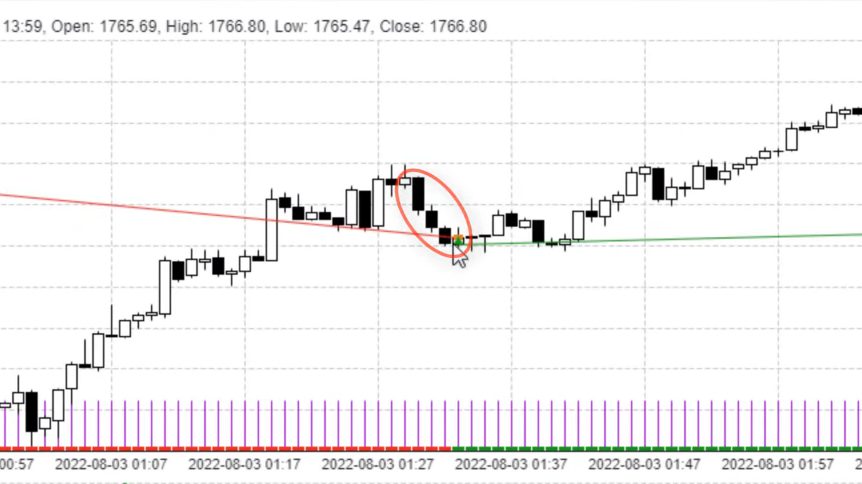
We have a simple entry signal. So, we’ll look for three bearish candlesticks before we buy.
Three bearish bars formed
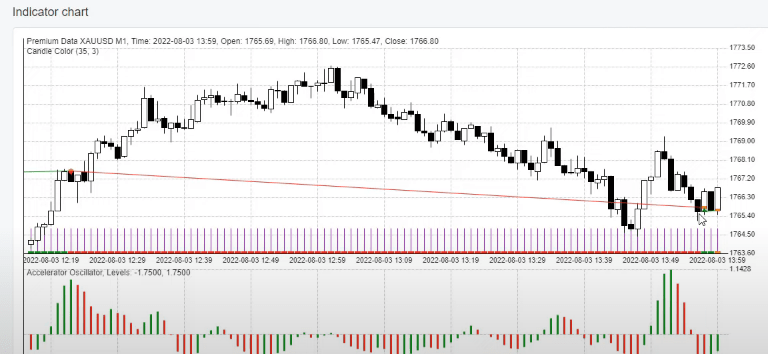
When you look at the indicator chart in EA Studio, wait to see three bearish candlesticks. When the fourth candlestick opens, you should buy.
Candlesticks Represent Time
Remember, candlesticks represent time. So, if you open the Gold chart on TradingView, one candlestick represents one day. So, the last bar that you see represents the present time (today).
This advanced gold trading EA works on the M1 (1-minute) time frame. So, each candlestick represents one minute.
The difference between a daily and 1-minute time frame is significant. This strategy will not work on a daily time frame.
Entry Signal
Our sell signal is the opposite of our buy signal. So, if we see three bullish candlesticks, that’s a signal to sell.
We can get very specific with the body height of the candlesticks that we use for our buy or sell signals. So, we can go into the Editor and set a minimum body height of 35 pips.
When we do that, we’ll need to see three consecutive candlesticks in the same direction. All three candlesticks must exceed the minimum body height. That’s how we enter or exit a trade.
Exit Condition for the Advanced Gold Trading EA
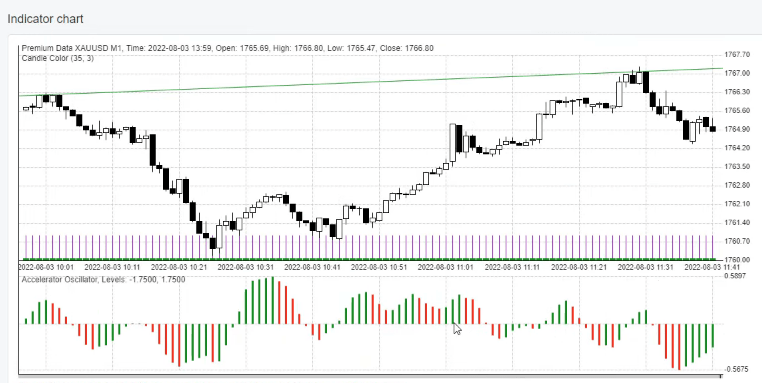
We can use the Accelerator Oscillator to confirm our exit. So, the Accelerator Oscillator should be lowerthan the level line.
We use a level of -1.75. The Accelerator Oscillator goes above and below the zero line. It forms green bars when it rises. It forms red bars when it drops.
Check if the Accelerator Oscillator is going below -1.75
So, we need to ensure that the Accelerator Oscillator is going below -1.75 before we exit a long trade. We also use a Stop Loss with our advanced gold trading EA.
For beginners, a Stop Loss is a level where you’ll automatically exit the trade if the price reaches that price. For example, if we bought gold at $1,700 and we have a stop loss of $28 we would exit the trade when the price goes down by $28. So, we would exit the trade at $1,672.
When we use a robot to trade and put our Stop Loss in it, the trade will close automatically when the price reaches there. The robot will also automatically enter the trade.
We set a Stop Loss for the robot
Opposite Signals
If you see the opposite signal, reverse it with this advanced gold trading EA. So, if you buy but get the opposite signal, you should reverse the trade. So you should close the buy trade and open a short trade.
We bought gold at $1700, and we have a Stop Loss of $28 lower, that would be $1672. So, we should exit that trade when the price goes down by $28.
Remember, with this advanced gold trading EA, if we see three negative candlesticks, it means that it’s time to buy. You should always watch for the opposite signals with any asset, whether you’re using M1 scalping strategies or advanced gold trading.
Even if you’re investing in Bitcoin and you think it will rise in time, if you see the opposite signal then you should close the trade. Take your profit and wait for the next opportunity.
Sometimes you need to reverse your trade, so you can go short and take profits on the other side. If you see at the entry point that the price is going up, it’s time to buy.
Three negative candlesticks show us that it’s time to buy
You can close your short trades and open long ones because you see the opposite signal.
Final Thoughts on This Advanced Gold Trading EA
This is a good strategy, but like any other strategy, you must pay attention to and respond to the signals. Being willing to reverse is something that will change your trading.
If you can observe the developments on the chart and apply them, you’ll become successful in trading. So, if you get the robot on our YouTube channel, you can backtest it yourself on MetaTrader.
Always test it with a Demo account first. Don’t use real money until you’re satisfied with its performance. However, remember that when you backtest the strategy, that doesn’t mean that your strategy will perform in the same way in the future.
Even so, we prefer to trade with profitable strategies in the last few months. Random strategies from the market are risky if we don’t have any proof of their performance.
Thanks for reading this post. We hope you found it helpful. And click that button if you wish to download the Robot:
Trading gold on MetaTrader 4 (MT4) is a straightforward process, especially with the platform’s user-friendly interface and robust features. Follow below 10 simple steps to start trading gold on MT4.
Trading gold has long been a popular investment choice due to its historical significance and stability. Understanding the dynamics of gold, also known as XAUUSD in the financial markets, as a precious metal and its significance in the global economy is crucial for effective trading. Gold is a unique financial instrument that blurs the lines between a commodity and a currency. In times of economic uncertainty, gold often serves as a safe haven, attracting investors seeking stability. Additionally, gold’s industrial applications in sectors like electronics and jewelry contribute to its demand.
On the other hand, the MT4 platform, also known as MetaTrader 4, is a widely used software for online trading. MetaTrader 4 (MT4) serves as a comprehensive trading platform. It is designed to provide traders with a user-friendly interface and a range of powerful tools for analyzing financial markets and executing trades. With its intuitive design and extensive features, MT4 has become the go-to platform for both novice and experienced traders alike. Its significance in online trading lies in its ability to offer real-time market data, advanced charting capabilities, automated trading through expert advisors (EAs), and access to a vast library of technical indicators. Moreover, MT4 supports multiple asset classes such as forex, stocks, commodities, and indices. This versatility makes it an indispensable tool for traders seeking efficiency and convenience in their trading activities.
This article aims to provide readers with a comprehensive guide on how to trade gold using MT4. With step-by-step instructions and detailed explanations, you will gain valuable insights into the process of trading gold on this popular platform. From understanding the basics of gold trading to advanced strategies, this article aims to equip you with the knowledge and skills necessary for successful trading. Whether you are a beginner or an experienced trader, this guide will serve as an invaluable resource in navigating the gold market using MT4.
Step-by-Step Guide How to Trade Gold on MT4
And now let’s move to our Step-by-Step Guide How to Trade Gold on MT4.
Step 1: Download and Install MT4
Ideally, you have already downloaded and Installed MetaTrader 4 platform from a trusted broker’s website. However, if you are a beginner, you can learn how to start from the scratch here. Also, you can check out our guide/tutorial about MT4.
Step 2: Open a Trading Account
After installing MT4, you’ll need to open a trading account with a broker that offers gold trading on the platform. Choose a reputable broker with competitive spreads, reliable execution, and regulatory compliance (check out our Brokers’ page for more information). You can create a demo or live account on MT4 for practicing or real money trading. Follow the broker’s account opening process and complete any necessary verification steps.
Step 3: Log In to MT4
Launch the MT4 platform and log in using the credentials provided by your broker. Once logged in, you’ll be greeted by the MT4 interface, which consists of various windows and panels, including the Market Watch, Chart, and Navigator.
Step 4: Add Gold Trading Instrument
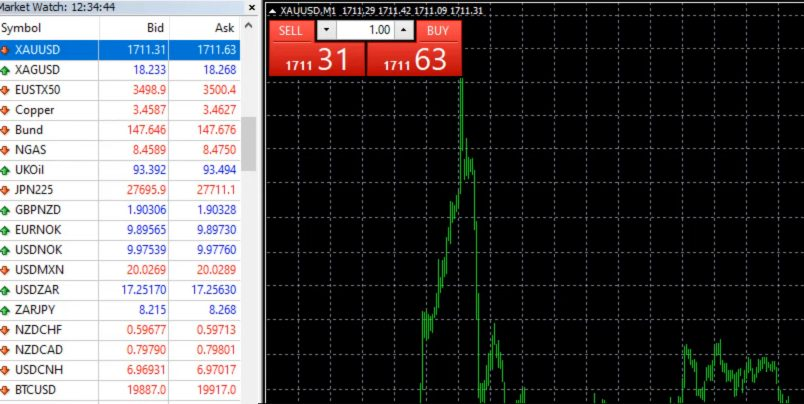
How to add XAUUSD on MT4? To add the Gold trading instrument, also known as XAUUSD, on MT4, you can follow these steps. First, open your MT4 platform and go to the “Market Watch” window. Right-click within this window and select “Symbols.” A new window will pop up displaying all available trading instruments. Look for gold-related symbols, such as XAU/USD (spot gold) or GOLD (gold futures), and double-click on the chosen symbol. This will add the Gold trading instrument to your Market Watch window. You can now start trading Gold by simply dragging the XAUUSD symbol onto your chart or by right-clicking on it and selecting “Chart Window.” With XAUUSD added to your platform, you can now analyze its price movements and execute trades with ease.
Step 5: Analyze Gold Price Movements
Next, analyze the price movements of gold using the charting tools and technical indicators available on MT4. Customize the charts according to your preferences, such as timeframes, chart types, and drawing tools. Utilize technical analysis techniques to identify potential entry and exit points. Analyzing gold market trends is a crucial task for investors seeking to make informed decisions. To achieve this, experienced traders often rely on various predictive tools, such as Fibonacci retracement levels. These additional tools offer valuable insights into the potential future price movements of gold. Technical analysis tools are invaluable in this regard, offering valuable insights into the market’s behavior. Two popular technical indicators that can assist traders in identifying trends in the gold market are moving averages and the relative strength index (RSI).
Step 6: Place a Trade
Once you’ve identified a trading opportunity, it’s time to place a trade. Right-click on the desired gold trading instrument in the Market Watch window and select “New Order” to open the order window. Specify the trade parameters, including the trade volume (lot size), stop-loss and take-profit levels, and order type (market or pending).
When placing trades on the MT4 platform, traders have two primary options: market orders and limit orders. Market orders allow traders to buy or sell assets at the current market price instantly, while limit orders enable them to set specific entry or exit points before executing trades. Effective risk management is vital in trading, and several strategies can help mitigate potential losses.
One such strategy is setting stop-loss orders, which automatically close positions at predetermined levels if the market moves against the trader’s expectations, limiting potential losses. Additionally, calculating position sizes based on risk tolerance levels helps traders ensure that they only risk a predetermined amount of their capital on each trade. These risk management techniques are essential for preserving capital and maximizing long-term trading success.
Step 7: Monitor Your Trade
Monitoring is fundamental aspect of successful trading, especially when it comes to trading gold on the MT4 platform. MT4 offers a range of tools to help traders stay informed about their gold trades. Utilizing price alerts and notifications allows traders to stay updated on market movements even when they’re not actively monitoring the platform.
After placing the trade, monitor its progress using the Terminal window, which displays your open positions, account balance, and trade history. Keep an eye on market developments and adjust your trade management strategy accordingly.
Step 8: Close the Trade
Closing the trade is a critical step that requires careful consideration and strategic decision-making. Once you have entered a position and achieved its desired profit or determined that the trade is no longer viable, it’s time to close the trade. When you’re ready to close the trade, right-click on the open position in the Terminal window and select “Close Order” to liquidate your position. Alternatively, you can set predefined take-profit or stop-loss levels to automatically close the trade when certain price levels are reached.
Step 9: Review Your Performance
After closing the trade, take some time to review your trading performance. Analyze the outcomes of your trades, identify any strengths or weaknesses in your strategy, and make adjustments as necessary to improve your future trading results.
Step 10: Continue Learning and Practicing
Trading gold on MT4 is a skill that takes time and practice to master. Continue learning about gold markets, refining your trading strategy, and honing your skills through education, research, and hands-on experience. With dedication and persistence, you can unlock the full potential of gold trading on MT4 and achieve your trading goals.
With our course Gold Trading Strategy for Beginners (including FREE MT4 Gold Trading Robot), you’ll learn when to buy and sell and how to trade gold on MT4.
BONUS: Trading Strategies for Gold on MT4 and Examples for Manual and Automated Trading
A.Short-term strategies: 1.Scalping technique – exploiting small price movements within short timeframes. 2.Intraday trading – taking advantage of daily fluctuations in gold prices.
B.Long-term strategies: 1.Swing trading – capitalizing on broader market trends over days or weeks. 2.Positional/long-term investing- holding onto positions for extended periods based on fundamental analysis.
How to Trade XAUUSD – The Strategy
The first thing you should know is that this strategy only trades on the M15 chart. The first indicator we’ll use is the Accelerator Oscillator, for example the one from Everget, as it’s very visual and easy to read.
The Accelerator Oscillator
The Accelerator Oscillator is a histogram that shows the difference between the Awesome Oscillator and its 5-period moving average. When the AC is above the 0 line, it’s in green, and when it’s below the 0 line, it’s in red. For this strategy, we’ll use the 0 line as our only parameter.
When the Accelerator Oscillator crosses the 0 line downwards, we have a buy signal. This occurs when the AC is above the 0 line on one bar, and then below the 0 line on the next bar. The confirmation comes at the opening of the next bar. At this point, you can place a long position.
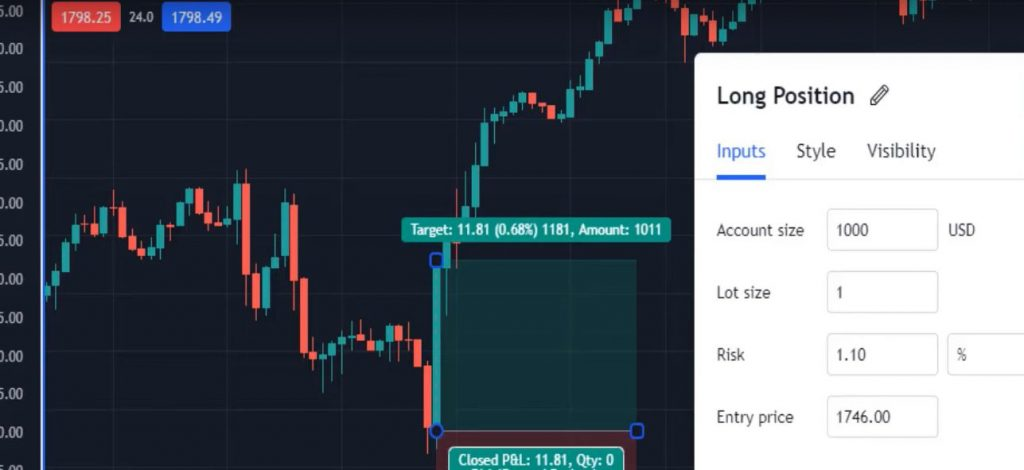
For a long position, the entry is at the opening price of the bar, which in this case is 1746. The Take Profit is $80 from the gold price, which would be 1826 in this example. The Stop Loss would be 1739.5, which is $6.50 below the entry price.
It’s important to note that we need to see one bar as confirmation before placing the trade. The risk-to-reward ratio for this strategy is 12.31, which is excellent.
Buy or sell with a single click
Bollinger Bands as an Exit Condition
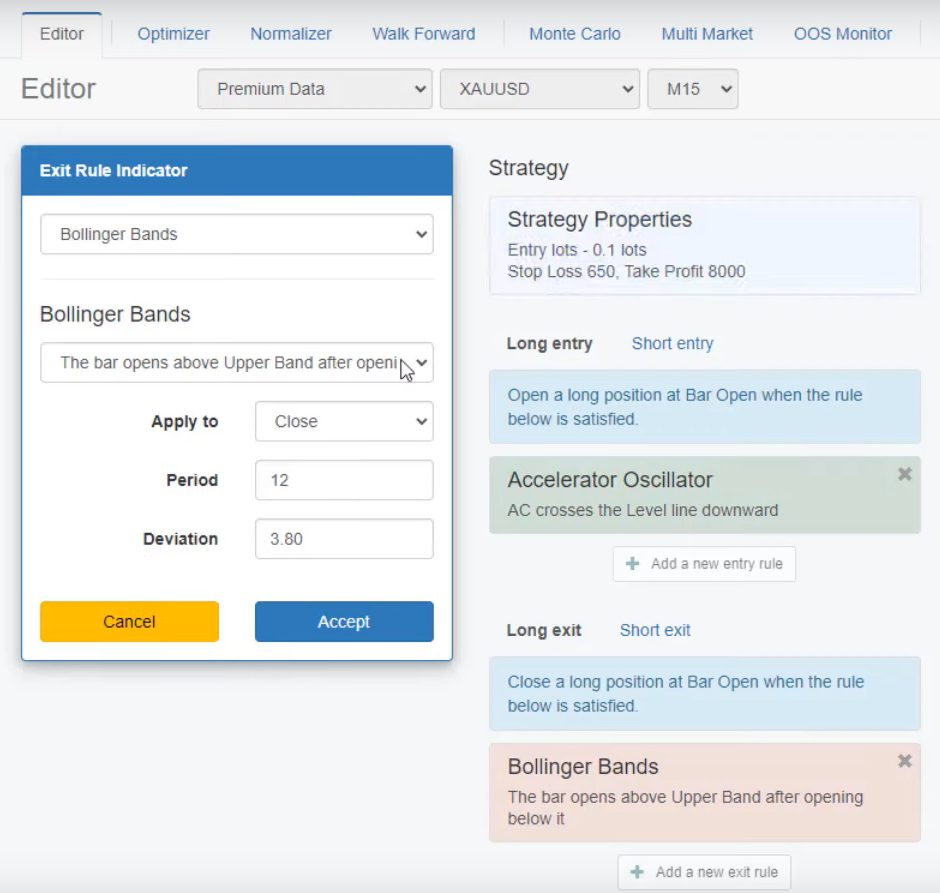
However, we also have an exit condition from the Bollinger Bands. When using this indicator, we need to adjust the length to 12 and the deviation to 3.8. We should exit a long trade whenever we see a bar that opens above the upper band of the Bollinger Bands.
For short trades, we need to see the Accelerator Oscillator crossing the 0 line upwards. As an exit, we should see the price below the lower band of the Bollinger Bands.
It’s up to you whether you want to use only the stop loss and take profit or also include the Bollinger Bands as an exit condition.
Manual Trading
You can trade manually with the gold trading strategy. You can right-click and go to one-click trading.
When you decide it’s a good time to buy, you can buy from right there. When you decide to sell you can do it there.
Buy or sell with a single click.
Always look for brokers that have low spreads. For example, a spread of 35 pips is relatively tiny. That makes it suitable for algorithmic trading.
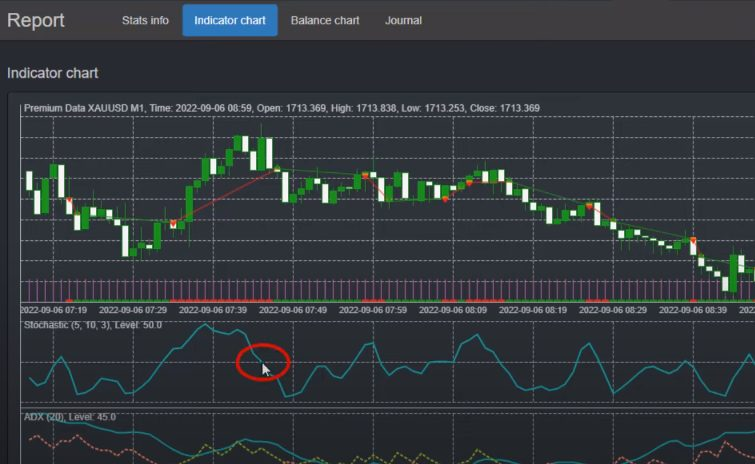
When the Stochastic crosses the 50-level line in the middle it’s time to buy. So, you would buy at the next bar.
Example Long Trade
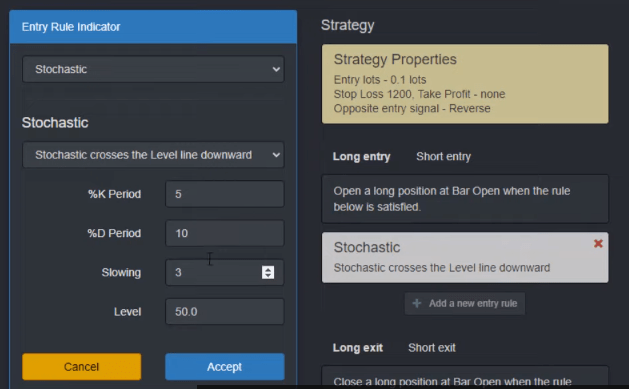
And here are the parameters for the Stochastic Indicator:
Stop Loss for the Gold Strategy
It would be best if you also used a Stop Loss with this strategy. We use a Stop Loss of 1,200 pips or $12 from the value of Gold.
We hardly ever reach the Stop Loss. However, a Stop Loss helps to protect our capital.
Trade GOLD on MT4 With This Exit Condition
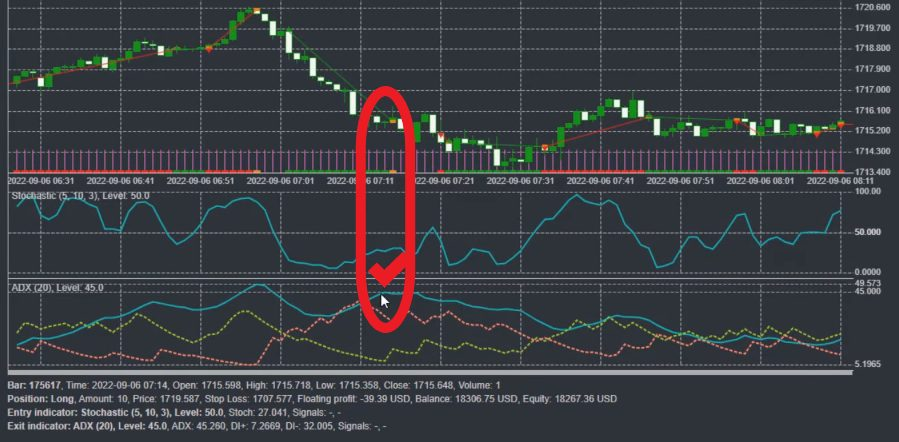
Our exit condition uses the ADX. This gives us an indication of trend strength.
So, we look for the ADX to cross the level line upward. With this strategy, we use a K period of 5 and a period of 10.
How to Trade XAUUSD using Algorithmic (Automated) Trading
Benefits of Algorithmic Trading
Algorithmic trading has several benefits. Some of these benefits include:
Faster Execution: With algorithmic trading, you can execute trades much faster than you could with manual trading. This is because the computer can execute trades in a matter of milliseconds, whereas it could take you much longer.
Removes Emotions: Algorithmic trading removes emotions from trading. You might be tempted to make emotional decisions based on fear or greed when trading manually. With algorithmic trading, all decisions are based on pre-determined rules.
Backtesting: With algorithmic trading, you can backtest your trading strategies using historical data. This allows you to see how your strategy would have performed in the past, which can help you make better decisions in the future.
Now that we’ve covered the benefits of algorithmic trading let’s take a look at how to trade gold using algorithmic trading on MetaTrader.
How to Trade XAUUSD on MetaTrader using EA
To trade gold on MetaTrader, you can create a trading robot on expert advisor (EA) using EA Studio. The strategy we’ll use is the Accelerator Oscillator as an entry rule, the Bollinger Bands as an exit rule, and Stop Loss and Take Profit in Pips.
Or you can try our Free M15 Gold Robot. Once you’ve installed the robot, you can set the parameters as described above and let it do the trading for you. More on that a little later.
Backtesting XAUUSD Trading Strategy
Once you’ve created or downloaded the robot, you can backtest it using historical data. Backtesting allows you to see how your strategy would have performed in the past. If your backtesting results are satisfactory, you can then trade live using the robot.
The backtesting results for this strategy show that it performs well on Mondays and Tuesdays. However, there will be losing periods, so it’s important to perform regular backtesting to ensure the strategy is still performing well.
Conclusion
In conclusion, trading gold on MT4 can be a profitable endeavor if you have the right strategy. Remember to always practice proper risk management and wait for confirmation before entering a trade.
An S&P 500 day trading strategy can help you buy and sell companies’ stocks in this index. This strategy can also help you to trade exchange-traded funds (ETFs) that hold the securities of this index.
But most importantly, you will learn when to buy and when to sell it.
Rising interest rates have made some traders uncertain about buying stocks. Our S&P 500 Index (SPX) day trading strategy can be useful to traders who are wondering whether it’s a good time to trade the S&P 500.
Some traders want an S&P 500 trading strategy that they can apply in their day trading. We’ll share a strategy with you today.
A Versatile Strategy
You can apply this S&P 500 day trading strategy on any trading platform. However, we suggest that you stick to MetaTrader. That’s because you can trade with the Robot that will share with you.
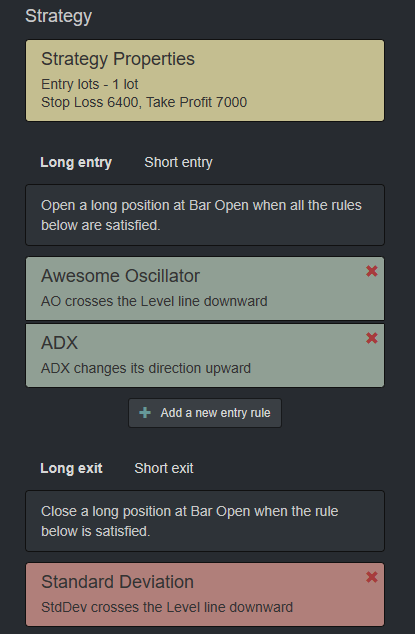
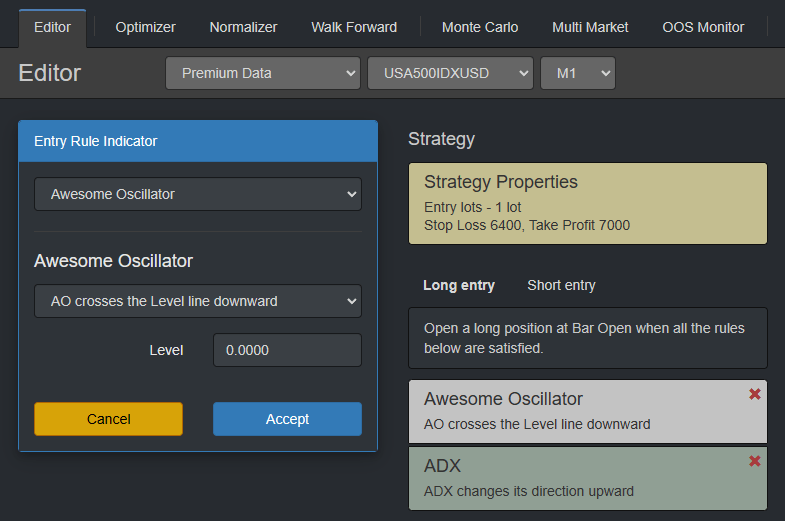
Our S&P 500 day trading strategy has two entries and one exit rule. So, it’s a very simple strategy. As you can see in the image below, we have a Stop Loss and our Take Profit. However, it would help if you remembered that this strategy is for the M1 time frame.
So, it’s very active, and the trades won’t last until the next day.
Avoid Swap Fees
We created this strategy to help you avoid paying a swap fee to the broker. This type of fee is necessary if a broker has to roll over your trade to the next day.
You’ll lose money if you open an account with a broker that charges you for commissions, swaps, and spreads. It’s hard to trade stocks, Dow Jones, or the S&P 500 with a broker that charges so many fees.
This is especially true when their spreads are high. It’s always best to look for a broker that doesn’t charge you any commissions.
Stick to M1 for This S&P 500 Day Trading Strategy
This S&P 500 day trading strategy works for the M1 time frame. If you switch to another chart, you might lose money.
M% will result in losses
For example, if you switch to M5, in the long term, you’ll lose money. Similarly, you’ll lose money on M30 and H1. So, the time frame is very important.
This S&P 500 day trading strategy was tested nearly 700 times. The Stop Loss is 6,400, and the Take Profit is 7,000 pips. To simplify, the Stop Loss is $64 on the S&P 500 price, and Take Profit is 70.
If you buy S&P at $4,000 you’ll have to put a Stop Loss of $64 below that and a Take Profit of $70 above that, or at $4,070. Our entry rules use the Awesome Oscillators and the ADX, so you’ll need to confirm these two indicators.
Using the Awesome Oscillator With the S&P 500 Day Trading Strategy
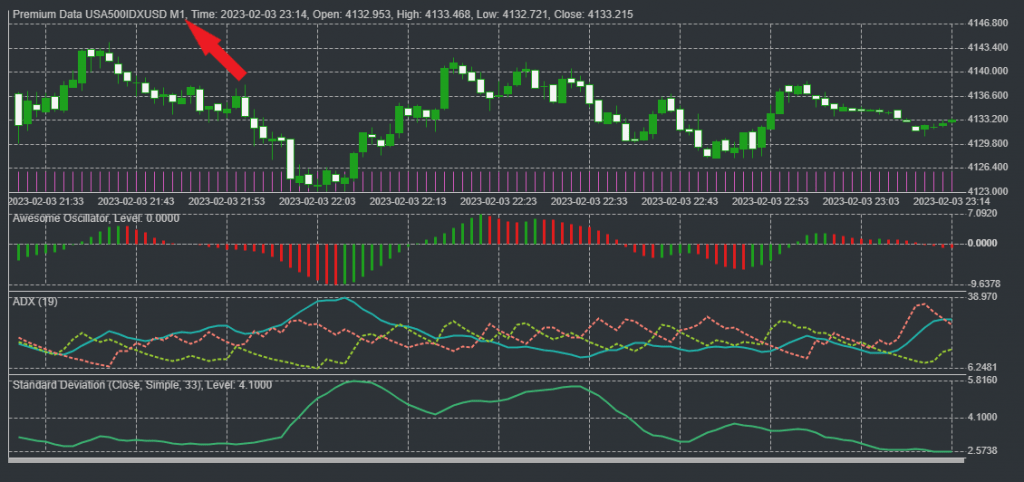
Look for the Awesome Oscillator to cross the level line downwards for a long trade. The level is zero.
Look for the Awesome Oscillator to cross the level line downwards.
When the Awesome Oscillator crosses the zero line downwards, this is a signal to buy. However, we need to have confirmation from the ADX.
Using the ADX Indicator for the S&P 500 Day Trading Strategy
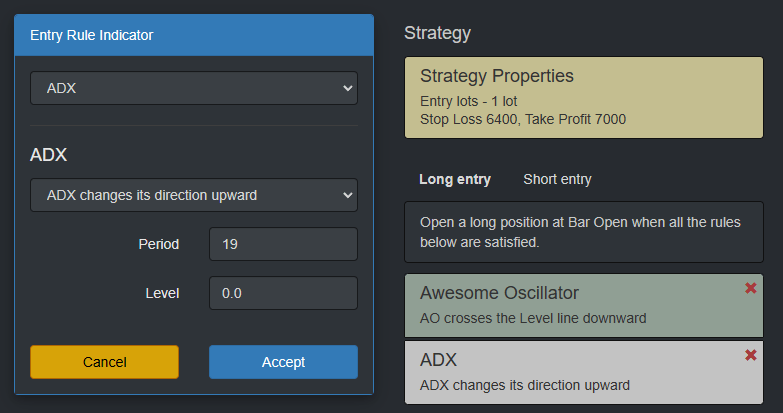
We can use the ADX indicator to confirm our buy signal. The ADX should change its direction upwards with a period of 19.
In the image below, the ADX is the blue line. So, we should see it changing upwards. So if it’s dropping, the moment when it starts rising again, we can open a long trade.
Example of Buy Signals for the S&P 500 Day Trading Strategy
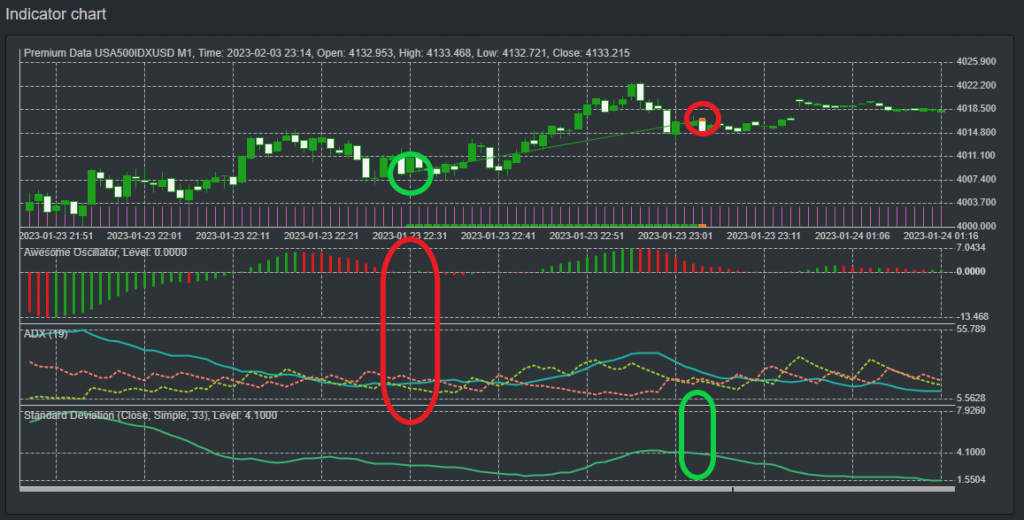
The image below shows the Awesome Oscillator going below the zero line during that bar. When the next bar opens, we’ll have a long trade. You can see that the oscillator changes its direction upwards. This works with one-minute bars.
We also see the ADX turning downwards. We closed the trade at that point because of the exit condition, which was the Standard Deviation crossing the line.
Our Exit Rule
For this S&P 500 day trading strategy, we have a simple exit rule. We use the Standard Deviation. So we look for the Standard Deviation to cross the line.
In our editor, we set the exit rule as Standard Deviation crossing the level line downloads. We used a period of 33 and level 4.10.
To recap, whenever the Standard Deviation crosses the level line downward, it’s time to close the trade. That’s our exit rule and we have to follow it.
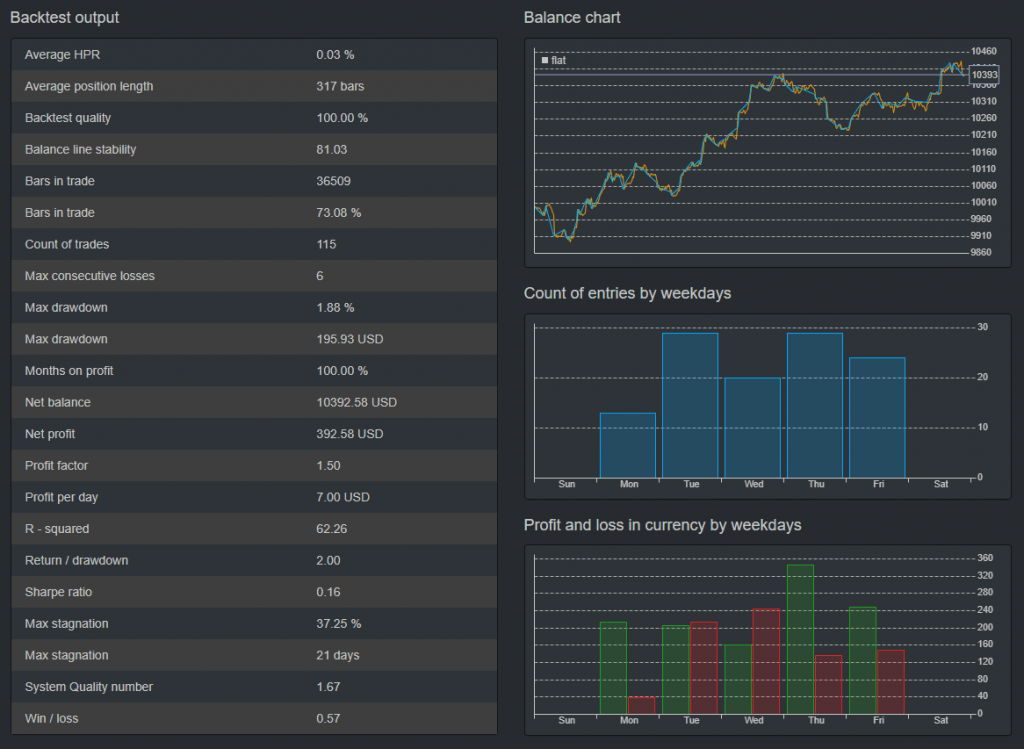
We got good results when we tested the robot for this S&P 500 day trading strategy. However, it would be best if you did your own backtest. There’s no guarantee that this strategy will continue to profit in the future.
With everything, if you’re trading or investing by using a particular strategy and it’s been profitable so far, there’s no guarantee that it will be profitable in the future. It’s always wise to trade a small portion of the capital that you have prepared for trading or investing.
Final Thoughts
This is a decent strategy for the M1 time frame. However, it’s challenging to follow the strategy manually because the ADX changes direction really quickly on the M1 time frame.
You’ll have to keep staring at your chart to follow the strategy manually. We have a robot for this S&P 500-day trading strategy that we’ve shared with you. You can drop the Expert Advisor on the MetaTrader platform, and the expert will start trading automatically.
It will buy when there’s the buy signal and the confirmation. The robot will also sell when there’s an opposite signal. It will place the Stop Loss and the Take Profit automatically.
Please let us know how your own test went by sharing it in the comments.
Forex Brokers for US traders make it easy for you to trade on the go. Many brokers have mobile apps but you can also trade from your favorite browser.
In this post, you’ll learn about the top three Forex brokers for US traders that we reviewed at EA Trading Academy. Thousands of students at the Academy use these brokers, and the post is not sponsored. It is a fair review.
We’re not recommending any of them. We’re only providing you with information on the ones our students prefer. You should always do your due diligence before you open an account at a broker.
You can sleep at night because these Forex brokers are regulated and you can fund your account with your credit card at these US Forex brokers. Additionally, all of these brokers have low fees.
Finding Forex Brokers for US Traders
We know it’s hard to find good Forex brokers for US traders. That’s because some Forex brokers don’t offer their services to traders in the United States. Those brokers aren’t regulated in the US.
However, we’ve gotten useful feedback about Forex brokers for US traders from our students. We’ll share the top three so that you’ll know what you can look for in a Forex broker.
Criteria for Forex Brokers
There are three important criteria that you should consider before investing your money. If you stick to those criteria, you won’t get burned.
Important criteria that you should consider before investing your money.
Always look for a broker that’s regulated. Even if you’re trading from outside of the United States, ensure that you use regulated international brokers.
If you’re in the US, look for a broker that has relatively low fees on each of your transactions. The cost of your transactions will add up over time.
You also need a broker that lets you fund your account easily. They should also offer a world-class trading platform that you can use on your preferred device.
The brokers that we’ll mention in this post all satisfy these criteria. You’ll find all of them on our Brokers’ page. However, always do your own research and decide which broker is best for you. Don’t take anything that we are saying here as financial advice.
Choose Regulated Forex Brokers for US Traders
The top Forex brokers for US traders are regulated. Regulation protects traders, so whether you’re based in the United States or another country, you should never do business with a broker that isn’t regulated.
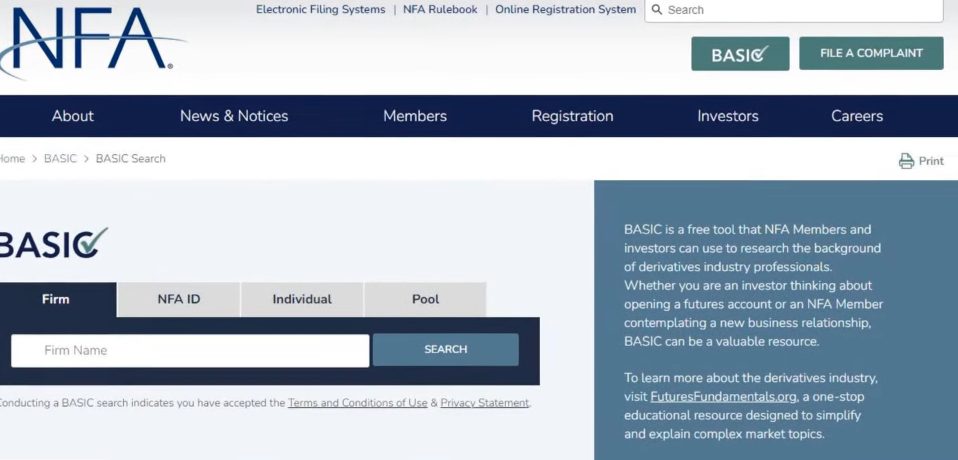
The best Forex brokers for US traders are regulated in the United States by the National Futures Association (NFA) and the Commodity Futures Trading Commission (CFTC). The NFA and CFTC help to prevent fraud, stop scams and preserve market integrity.
Unregulated brokers must abide by the directives that are set by these bodies. For example, the NFA and CFTC determine how much leverage brokers can offer.
Use Leverage Carefully
American retail traders can get leverage of 1:50 for major currency pairs and 1:20 for all other currency pairs. In this way, the NFA and CFTC are like traffic cops, encouraging you to drive within the speed limit.
The leverage that’s offered by Forex brokers for US traders might seem restrictive. However, it helps you to limit your losses. Remember, when you’re using leverage, sometimes a trade might not go your way. Using more leverage gives you less breathing room.
Some US traders like to hedge with Forex trades. However, hedging isn’t offered by Forex brokers for US Traders. Hedging goes against the rules that have been sent by the NFA.
All brokers in the United States must abide by the NFA’s first in first out (FIFO) rule. The FIFO rule says that you must close trades in the order that you open them but only if they are the same trading amount.
Some American Forex traders get around the FIFO rule by opening two accounts with the same broker. So, they can go long and short on the same currency pair by using both accounts. That allows them to enjoy the benefits of hedging while staying within the boundaries that the NFA has set.
By opening two accounts with the same broker. So, they can go long and short on the same pair.
Be Cautious With International Brokers
There are international brokers that accept traders from the United States. They might not stick to the standards of authorities in the United States, so you should always be careful.
Some retail traders are surprised that only a few brokers are authorized to offer their services in the US. That’s because the US has 19.5% of global over-the-counter Forex turnover.
That’s the way it is at this point, so you should always check to ensure that any broker sticks to US rules. If a broker isn’t regulated, they’re not accountable to anyone for how they handle your money.
So, they don’t have to stick to any rules and they’re free to do whatever suits them. You could invest with them today and they could disappear with your funds tomorrow.
Minimum Capital Requirement
A Forex broker must maintain a minimum amount of capital in order to do business in the United States. So, all the brokers that we’ll mention in this post maintain a net capital of at least USD $20 million.
So here are the Top 3 Forex Brokers for US Traders
IG
Trading.com
Forex.com
That minimum capital requirement is similar to that of Forex brokers in the United Kingdom and other regions. In the UK, brokers must have at least €730,000 to show that they’re financially stable.
If a broker can’t meet that requirement, you can expect that they might not be able to meet their financial obligations. So, you could sign up for an account with them but they might close down within a short time.
US brokers have different minimums for your starting capital. Trading.com makes it easy for you to start trading Forex with just $5 in your account. However, IG wants you to have at least $250 in your account.
Forex.com has a minimum capital requirement of $100 when you fund your account with a credit card or debit card. Remember, you should never use more than about 1% of your account balance on a Forex trade. If you use more than that, you’ll increase your risk.
Background Information on the Top Forex Brokers for US Traders
Forex.com
Forex.com is the leading Forex broker in the United States. It’s registered with both the NFA and CFTC. Plus, it’s been in business for many years. Over that time, it’s become a leader in the market.
Additionally, its parent company is GAIN Capital Holdings. GAIN is on the New York Stock Exchange (NYSE). So, that increases its credibility.
Forex.com has sister companies. Major markets like Japan, Canada, and the United Kingdom regulate those companies. That means it consistently meets the standards of operation that are in place in those regions.
IG
IG does business in all of the highly regulated trading zones around the world. So, in that way, it’s like GAIN Capital Holdings and it’s safe.
IG’s currency conversion fee
IG is on a stock exchange. Plus, it discloses its financials regularly. IG is also popular among US traders because of its low spreads.
Low spreads make it easy to enter your ideal position whether the market is falling or rising. IG has over 40 years of experience in the financial markets and it operates the North American Derivatives Exchange (Nadex). The CFTC regulates Nadex.
If you’re using MT4, you’ll get low spreads from IG and other Forex brokers for US traders. You’ll also get attractive offers if you’re a high-volume trader.
Trading.com
Trading.com has low spreads, like the other two brokers. However, they have the lowest capital requirement. You can place your orders online or over the phone.
They don’t charge commissions. Plus, they place over 99% of their orders in less than a second. However, you should continually evaluate your trades carefully and not let speed get you into trouble.
If you’re an American Forex trader, you’ll have access to more than 50 markets with Trading.com. You could trade currency pairs such as GBPUSD and USDYEN.
Trading.com is the US branch of the XM group. Markets such as the European Union and the United Kingdom regulate it. So, clients invest safely.
Trading.com is also popular among Forex traders because of its low costs. For example, their spread for popular currency pairs starts from 0.6 pips on EURUSD.
Minimum Deposit, Base Currency, and Fees
If you want to open an account with these Forex brokers for US traders, you can use your debit or credit card. At Forex.com, you only need to deposit $100. After making your deposit, you can usually start trading within a few hours.
Some payment methods at Forex brokers for US traders fund your account within a few hours. However, others take a few days. Some brokers charge a fee of 1% for using your card to fund your Forex trading account.
These three Forex brokers for US traders let you freely choose your preferred base currency. However, it would be best if you always kept in mind that whenever you buy or sell in currencies other than your base currency, you’ll need to pay a currency conversion fee. For example, in that situation, IG charges a standard fee of 0.5%.
Platforms at Forex Brokers for US Traders
The top Forex brokers for US traders all offer MT4 or MT5. MT4 and MT5 are very popular trading platforms. Traders can access third-party APIs as well.
IG and Forex.com offer MT4. Trading.com uses MT5. So, if you use any of these Forex brokers for US traders, you’ll benefit from advanced chat and a user-friendly interface.
In fact, IG offers American Forex traders additional perks, such as its Pro real-time chat software. MT4 fully integrates that.
Both MT4 and MT5 are reliable platforms. No one can easily manipulate these platforms, unlike web-based trading platforms at some unregulated Forex brokers.
With web-based platforms, brokers can adjust the platform so that you initially profit but then sustain huge losses when you’re ready to withdraw your profits. So, in that case, the problem isn’t you, it’s their manipulation.
When you’re using MT4 and MT5, you’ll be able to use several technical analysis indicators and automated strategies. This world-class software also lets you trade from any web browser, so you won’t need browser extensions or any additional software. Here at EA Trading Academy, we like to use MetaTrader because we can trade with the robots that we create in EA Studio.
Do Your Due Diligence
Always do your own due diligence if you’re considering signing up with any of these brokers. Always test your strategies with their demo accounts first.
If you open an account with real cash, always use relatively small sums of money to test how easy it is to deposit and withdraw funds from your Forex account. You should definitely do that before you make a large investment.
You should also check for information on each broker in the NFA’s BASIC register. A BASIC check can help you to avoid problems. You can search for any broker on the NFA’s BASIC system. Use the firm’s name, an individual’s name, or another identifier.
If you can’t find any information by using those BASIC searches, you should avoid doing business with them. All legitimate introducing brokers register on the NFA’s BASIC system.
Final Thoughts
If you’re an American trader, you have several options for trading Forex. Regulated brokers offer popular platforms like MT4 and MT5. They also have several convenient deposit methods and minimum deposit requirements to suit your trading style.
We hope that you liked this post on Forex brokers for US Traders. Please let us know in the comments below if you try any of the brokers from today’s post. This way the post will be useful to everyone reading it after you.